
In a dramatic turn of events during his U.K. State Visit, President Donald Trump openly criticized Russian President Vladimir Putin for failing to meet expectations in the quest for peace between Russia and Ukraine. Trump, known for his ambitious promises, expressed disappointment in Putin’s actions, highlighting the complexities of ending the conflict that arose from Russia’s invasion of Ukraine in 2022. Despite Trump’s initial optimism and his personal rapport with Putin, the road to peace seemed increasingly elusive, leading to a public rebuke from the U.S. President.
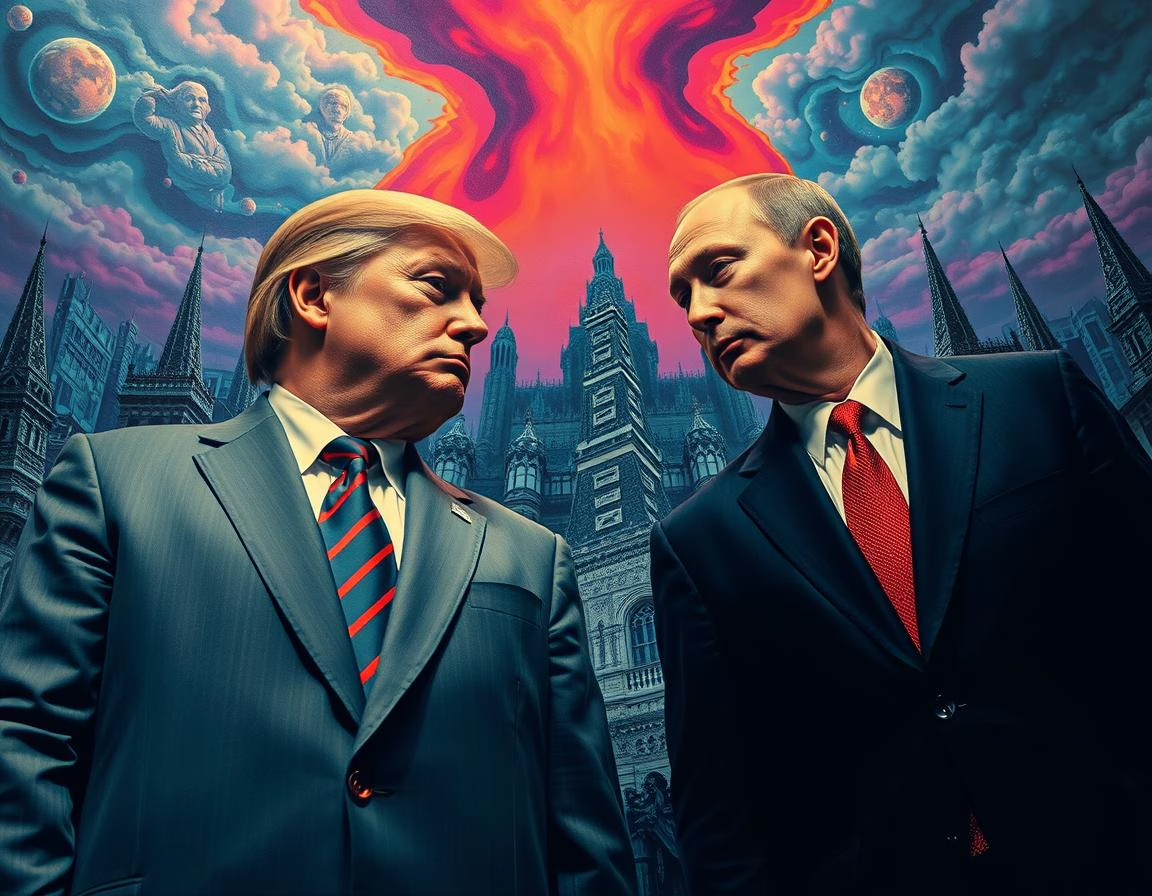
During a joint press conference with British Prime Minister Sir Keir Starmer, Trump acknowledged the challenges faced in resolving the Russia-Ukraine war, a conflict he had pledged to end promptly upon the commencement of his second term. The disappointment in Putin’s perceived lack of cooperation was palpable as Trump remarked, “He’s let me down. He’s really let me down.” This candid remark underscored the gravity of the situation, with Trump emphasizing the human cost of the ongoing conflict and the disproportionate casualties suffered by Russian forces.
The high-stakes summit between Trump and Putin in Alaska, designed to pave the way for a potential cease-fire, ended abruptly without a concrete agreement. Subsequent efforts by Trump to impose sanctions on Russia, particularly in response to aggressive military actions such as airstrikes targeting Ukrainian government facilities, met with mixed results. The Kremlin’s dismissal of Western sanctions as ineffective added another layer of complexity to the diplomatic standoff, prompting Trump to reassess his approach and criteria for imposing sanctions.
In a strategic shift, Trump linked the imposition of sanctions on Russia to broader international dynamics, including NATO countries’ oil purchases from Russia and China’s support for Moscow. This nuanced approach aimed to leverage economic pressures on Russia while navigating geopolitical alliances to maximize impact. Trump’s emphasis on aligning sanctions with collective actions by NATO members signaled a strategic recalibration in response to the evolving dynamics of the conflict in Ukraine and broader global interests.
Against the backdrop of escalating tensions, British Prime Minister Starmer’s unwavering support for Ukraine and calls for intensified pressure on Putin resonated with Trump’s evolving stance. The imperative of bolstering Ukraine’s defenses and sustaining international solidarity emerged as a central theme in the discourse on resolving the conflict. The commitment to supplying military aid to Ukraine and enhancing deterrence against Russian aggression underscored the united front presented by key Western allies in confronting the challenges posed by the conflict in Eastern Europe.
Amidst discussions on defense spending and alliance commitments, the significance of NATO’s role in countering Russian aggression and safeguarding regional stability came to the fore. Trump’s recognition of NATO’s contributions and the strategic imperative of collective defense underscored the interconnectedness of global security challenges and the need for cohesive multinational responses. The alignment of U.S. and U.K. positions within the NATO framework highlighted the enduring strength of transatlantic partnerships in navigating complex geopolitical landscapes.
In conclusion, the public rebuke of Putin by President Trump during the U.K. State Visit symbolized a pivotal moment in diplomatic relations, reflecting the intricate interplay of personal dynamics, geopolitical realities, and strategic considerations. The quest for peace in Ukraine, marred by setbacks and challenges, epitomized the complexities of conflict resolution on the world stage. As global leaders navigate the shifting sands of international relations, the imperative of unity, resolve, and principled diplomacy remains paramount in addressing the enduring challenges of our time.
- The Trump-Putin rift underscores the challenges of diplomatic negotiations in conflict resolution.
- The evolving dynamics of international alliances shape the strategic responses to geopolitical crises.
- Collective action within NATO highlights the importance of multilateral cooperation in safeguarding global security.
- The imperative of supporting Ukraine underscores the commitment to upholding democratic principles and defending sovereignty.
- Economic leverage and targeted sanctions play a crucial role in shaping the behavior of state actors in the international arena.
Read more on time.com



