
In the ever-evolving landscape of medicine and biotechnology, groundbreaking discoveries are continually reshaping our understanding of health and disease. One such revelation that has garnered significant attention in recent years is the intriguing connection between infections and heart attacks. Contrary to traditional beliefs that heart attacks are solely triggered by factors such as high cholesterol and hypertension, emerging research suggests that certain infections may also play a pivotal role in precipitating these life-threatening events.
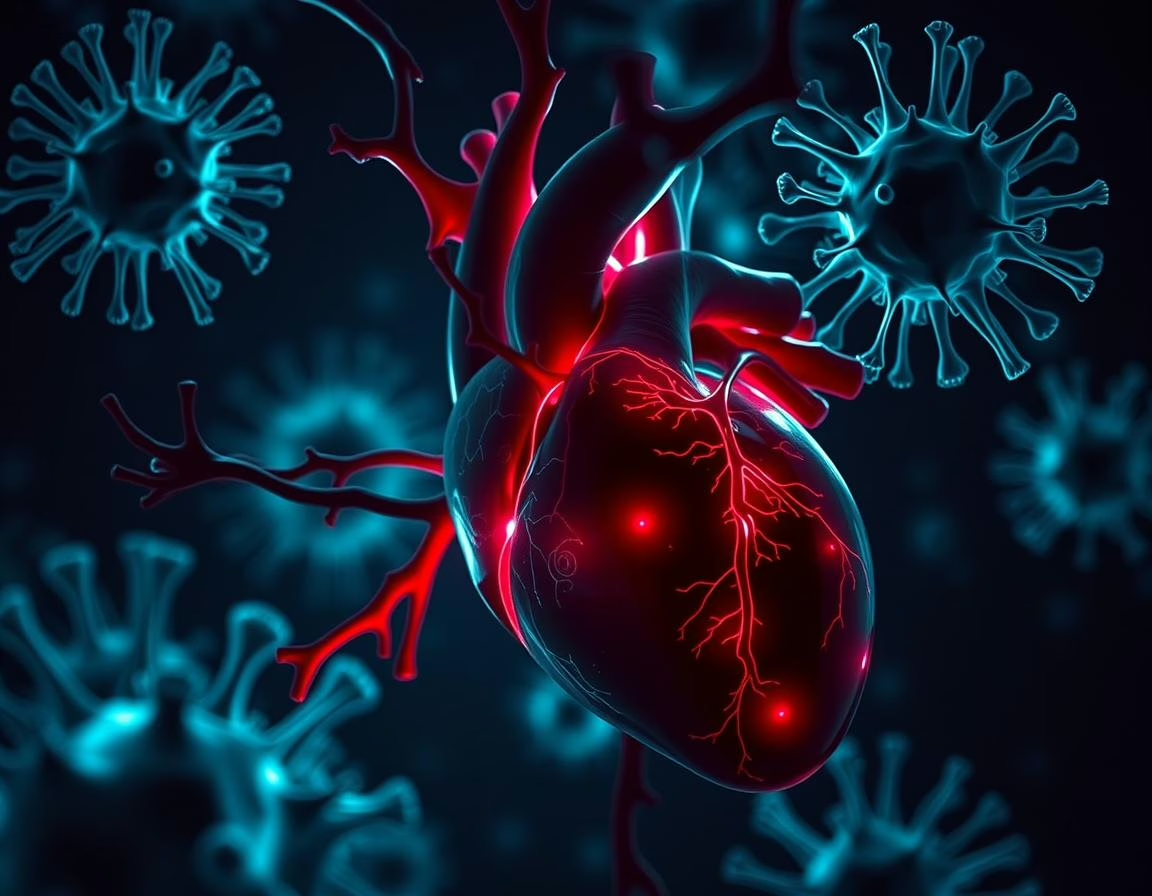
The Intriguing Interplay Between Infections and Heart Health
When we think of heart attacks, we typically envision them as the result of a gradual buildup of plaque in the arteries, leading to a blockage that deprives the heart of oxygen. While this mechanism certainly holds true in many cases, scientists are now exploring an additional dimension to this cardiovascular conundrum – the potential role of infections. Studies have shown that various pathogens, including bacteria and viruses, could incite inflammation in the arteries, setting the stage for the formation of blood clots that can trigger a heart attack.
Unmasking the Infectious Culprits
Among the diverse array of infectious agents implicated in the development of heart attacks, one of the most notorious is Chlamydia pneumoniae. This sneaky bacterium has been detected in atherosclerotic plaques – the fatty deposits that narrow the arteries – suggesting a potential link between Chlamydia infection and cardiovascular disease. Similarly, the herpes simplex virus and the influenza virus have also been identified as potential instigators of arterial inflammation, paving the way for heart attacks.
The Innovative Potential of Vaccines in Cardiovascular Health
In light of these compelling findings, researchers and biotechnologists are now exploring a fascinating avenue for cardiovascular disease prevention – vaccines. While we commonly associate vaccines with safeguarding against infectious diseases such as measles and influenza, their potential in preventing heart attacks represents a revolutionary paradigm shift in the field of preventive medicine. By targeting infectious agents that contribute to arterial inflammation, vaccines could serve as a powerful tool in mitigating the risk of heart attacks and enhancing cardiovascular health.
Harnessing the Immune System for Heart Protection
Vaccines operate by priming the immune system to recognize and combat specific pathogens, thereby conferring immunity against future infections. In the context of heart health, vaccines designed to target infectious agents implicated in arterial inflammation could offer a dual benefit – not only protecting against infections but also reducing the risk of heart attacks. By training the immune system to mount a swift and effective response against these pathogens, vaccines could potentially avert the cascade of events that culminate in a heart attack.
Pioneering Research in Cardiovascular Vaccinology
In the realm of cardiovascular vaccinology, pioneering research initiatives are shedding light on the feasibility and efficacy of using vaccines to prevent heart attacks. Scientists are delving into the intricate mechanisms by which infections contribute to arterial inflammation, seeking to identify key targets for vaccine development. By unraveling the complex interplay between infectious agents and cardiovascular health, researchers are paving the way for the creation of innovative vaccines that could revolutionize the prevention of heart disease.
A Promising Path Towards Cardiovascular Wellness
The prospect of leveraging vaccines to enhance cardiovascular wellness holds immense promise for public health initiatives worldwide. By shifting the focus from simply treating heart disease to proactively preventing it through vaccination, healthcare systems could potentially avert a substantial burden of morbidity and mortality associated with heart attacks. Moreover, the preventive nature of vaccines aligns with the overarching goal of promoting holistic health and well-being, transcending the boundaries of traditional disease management.
Navigating Challenges and Opportunities in Cardiovascular Vaccinology
While the concept of cardiovascular vaccines presents a compelling avenue for disease prevention, it also poses challenges that must be navigated with precision and diligence. One of the key hurdles lies in identifying the most suitable infectious targets for vaccine development, considering the diverse array of pathogens that may contribute to arterial inflammation. Additionally, ensuring the safety and efficacy of cardiovascular vaccines demands rigorous clinical trials and regulatory scrutiny to uphold the highest standards of patient care and public health.
A Vision for a Future Free of Heart Attacks
As we stand on the cusp of a new era in cardiovascular health, fueled by the potential of vaccines to prevent heart attacks, a vision emerges of a future where these devastating events may become increasingly rare. Through ongoing research, innovation, and collaboration across disciplines, we have the opportunity to redefine the landscape of cardiovascular disease prevention and usher in a new era of wellness and vitality.
Key Takeaways:
- Infections such as bacteria and viruses may contribute to the development of heart attacks by triggering arterial inflammation and blood clot formation.
- Pathogens like Chlamydia pneumoniae, herpes simplex virus, and influenza virus have been implicated in arterial inflammation and cardiovascular disease.
- Vaccines designed to target infectious agents involved in arterial inflammation could potentially prevent heart attacks by bolstering the immune response against these pathogens.
- Pioneering research in cardiovascular vaccinology is exploring the feasibility and efficacy of using vaccines to enhance heart health and reduce the burden of cardiovascular disease.
- The development of cardiovascular vaccines presents opportunities to shift towards proactive disease prevention and promote holistic cardiovascular wellness on a global scale.
Read more on source



