
A groundbreaking study from Harvard Medical School has provided new insights into the mechanisms by which mutations in the BRCA1 gene contribute to breast cancer development. This research highlights the potential for a single defective copy of the BRCA1 gene to significantly elevate a patient’s risk, even when paired with a normal counterpart.
Understanding BRCA1’s Role in Cancer Risk
For years, scientists have acknowledged that mutations in the BRCA1 gene can increase breast cancer susceptibility. The established two-hit hypothesis suggested that a woman with one normal and one mutated BRCA1 gene may be at a greater risk because the normal gene could later acquire a mutation. Conversely, women with two functional copies of BRCA1 enjoy a protective effect.
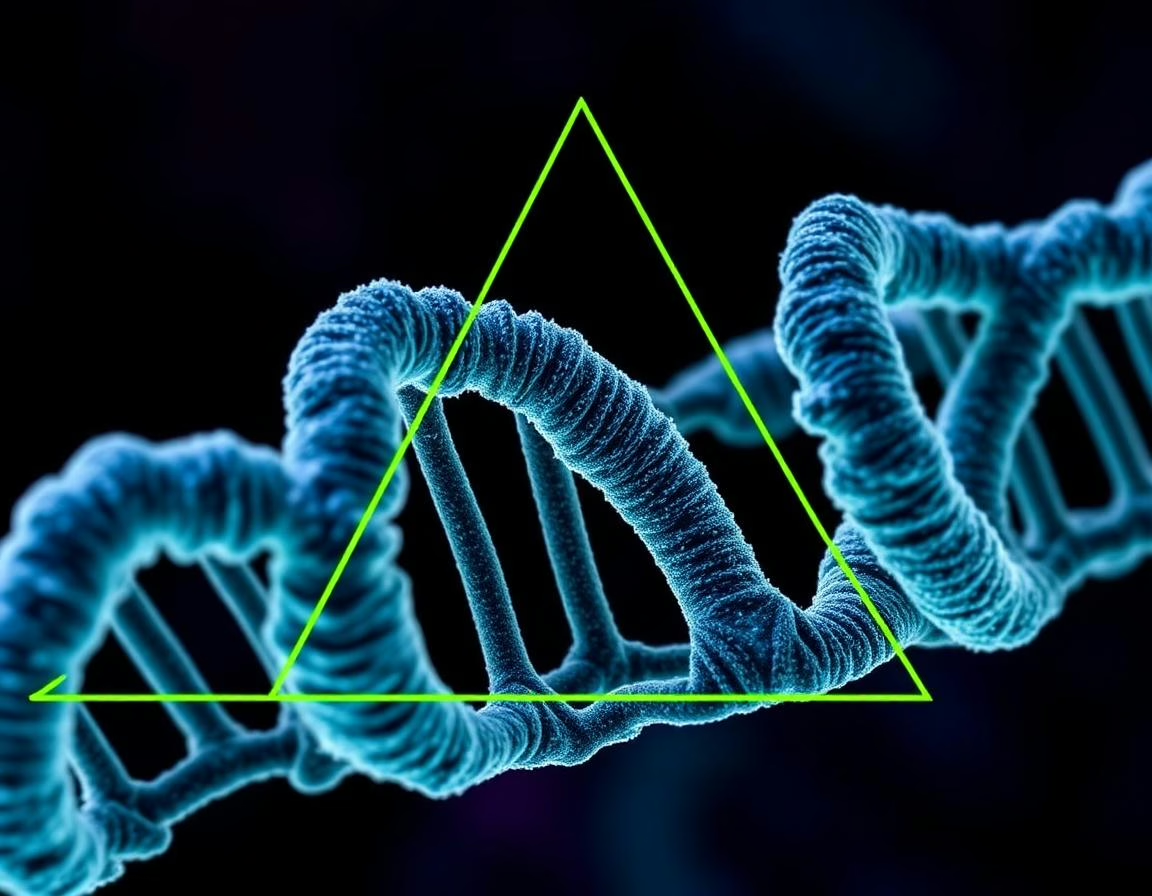
However, the recent findings challenge this perspective by revealing that the mere presence of a single defective BRCA1 copy leads to structural changes in chromatin—the complex of DNA and proteins essential for organizing genetic material. These alterations make the cells more prone to tumor growth, as evidenced by increased activity in the WNT10A gene, which is pivotal for regulating cell division and growth.
Experimental Insights from Mouse Models
The research team conducted experiments involving two distinct groups of mice: one group possessed two normal BRCA1 copies, while the other had one normal and one mutated copy. When the researchers deactivated the normal BRCA1 genes, the mice with the defective gene developed mammary tumors approximately 20 weeks earlier than their counterparts with two functional copies.
This significant difference in tumor development time suggests that the two-hit hypothesis alone does not fully explain the heightened breast cancer risk in individuals with one normal BRCA1 copy. The study opens the door for further exploration into other biological factors that may contribute to cancer susceptibility in this population.
New Dimensions of Genetic Research
Joan S. Brugge, a professor at Harvard and co-author of the study, emphasized that these findings enrich our understanding of the genetic alterations associated with inheriting a mutated BRCA1 copy. The precise molecular mechanism responsible for the chromatin changes triggered by the loss of one BRCA1 gene remains unclear. However, the study provides a critical framework for future research.
Brugge noted the importance of investigating the specific alterations caused by the loss of BRCA1, stating, “At least one can try to track it backwards. If you know what kind of alterations there are, you can try to figure out how one copy of BRCA1 is affecting that.”
Exploring Gene Haploinsufficiency
Carman Man-Chung Li, a postdoctoral researcher and co-author, expressed hopes that this study will inspire investigations into other instances of gene haploinsufficiency. This condition occurs when the loss of a single gene copy disrupts the normal production of a protein, potentially leading to various diseases.
Li posited that the research raises important questions about the prevalence of similar phenomena in other genes and the potential implications for disease mechanisms. “It inspires the question of: How widely is this phenomenon being observed, and are there other effects of gene haploinsufficiencies that we didn’t know about that we can now discover because of this mouse model?” she queried.
Translating Research into Clinical Applications
The implications of this research extend beyond the laboratory. Li emphasized the potential to translate findings into practical applications for cancer prevention and treatment. By gaining a deeper understanding of the chromatin changes linked to breast cancer risk in women with a defective BRCA1 gene, researchers could potentially unlock new strategies for early detection and intervention.
“Can we leverage these observations and turn them into something that can be applied to patients for early detection or early intervention?” Li asked, highlighting the urgency for practical solutions in the fight against cancer.
Future Directions in Breast Cancer Research
The study’s findings underscore the need for continued research into the nuances of genetic contributions to breast cancer. Understanding the multifaceted relationship between BRCA1 mutations and chromatin structure could illuminate pathways for novel therapeutic strategies.
As scientists build on this research, they may uncover additional genetic interactions that influence cancer risk, paving the way for tailored approaches to treatment and prevention.
In summary, the Harvard Medical School study offers a fresh perspective on BRCA1 mutations and their role in breast cancer progression. By revealing the complexities of chromatin alterations, this research not only deepens our understanding of genetic cancer risks but also sets the stage for future advancements in patient care.
- Takeaways:
- A single defective BRCA1 gene copy significantly elevates breast cancer risk.
- Chromatin structural changes linked to BRCA1 mutations enhance tumor growth.
- Future research may explore broader implications of gene haploinsufficiency.
- Understanding these mechanisms could lead to improved cancer detection and treatment strategies.
Read more → www.thecrimson.com



