
DNA-based computing, although not poised to replace silicon technology imminently, shows promising advancements. Researchers at the University of Rochester have unveiled a groundbreaking molecular computing system capable of computing square roots of integers up to 900. This innovative computer is constructed using synthetic biochemical logic gates that leverage hybridization – a process where two DNA strands unite to form double-stranded DNA, alongside strand displacement reactions.
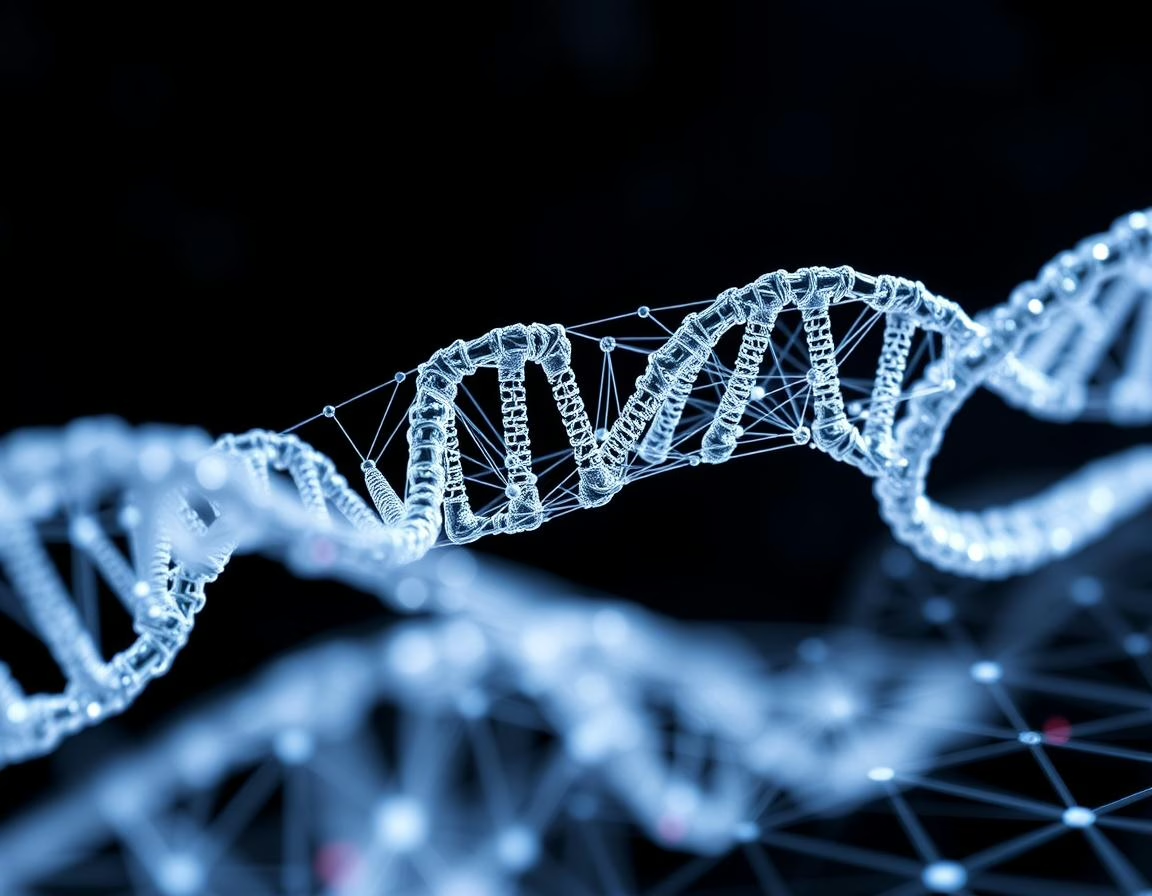
While DNA-based circuits have previously demonstrated the ability to execute complex logic functions, the recent breakthrough showcases a significant milestone by enabling the calculation of square root operations. Unlike prior circuits, which were limited to 4-bit binary numbers, this new prototype features a 10-bit square root logic circuit, facilitating operations up to the decimal integer 900.
The DNA-based computer employs a sophisticated architecture comprising 32 DNA strands for information storage and processing. The computational process unfolds in three modules: initially encoding a number on the DNA strands, associating each combination with a fluorescent marker that undergoes signal alteration during hybridization in the second module, and ultimately executing the square root calculation by manipulating signals, with the outcome reflected by the final color based on a predefined threshold in the third module.
As the limits of Moore’s Law loom closer, major semiconductor companies such as Intel and AMD grapple with the challenges of shrinking transistors to 10 nm dimensions. However, given that DNA molecules are approximately ten times smaller than the most advanced transistors available today, coupled with the continuous evolution of DNA computing systems towards greater sophistication, biochemical circuits could potentially offer solutions for enhancing computational speed beyond the realms of traditional silicon-based computing.
The Evolution of Smart Bulbs: Integrating Motion Sensors
Revolutionizing Vehicle Safety: The Intriguing World of Airbags and Mercedes-Benz’s Acoustic Hacking
Exploring the Versatility of 3D Scanners: Repurposing Kinects for Novel Applications
Unveiling the Radiant History of Spark Plugs: From Radioactivity to Modern Innovations
Surgical Precision in Space: Current Practices and Future Prospects
Anticipating the 2025 Hackaday Supercon: An Array of Inspirational Speakers
Diving into the Latest Hackaday Podcast: Delving into the Realm of Programming Languages, Space Surgery, and Innovative 3D Printer Hacks
The convergence of DNA computing with traditional silicon technology heralds a new era in computational capabilities. With DNA molecules offering a potential avenue for circumventing the limitations of silicon-based systems, the realm of biochemical circuits holds the promise of catalyzing unprecedented advancements in computing speed and efficiency. As the research landscape continues to evolve, bridging the realms of biology and computer science, the future undoubtedly holds boundless possibilities for revolutionizing the technological landscape.



