
Tests detecting industry-disruptive blueberry viruses started failing. It has been a puzzling phenomenon over the last five years as the once reliable tests for studying major blueberry viruses, namely scorch and shock, began to falter. This development posed a significant challenge for Canadian agriculture, particularly in British Columbia, where the blueberry industry thrives as a vital economic pillar with a value of $630 million. Notably, 90% of the berries in this region are sourced from British Columbia.
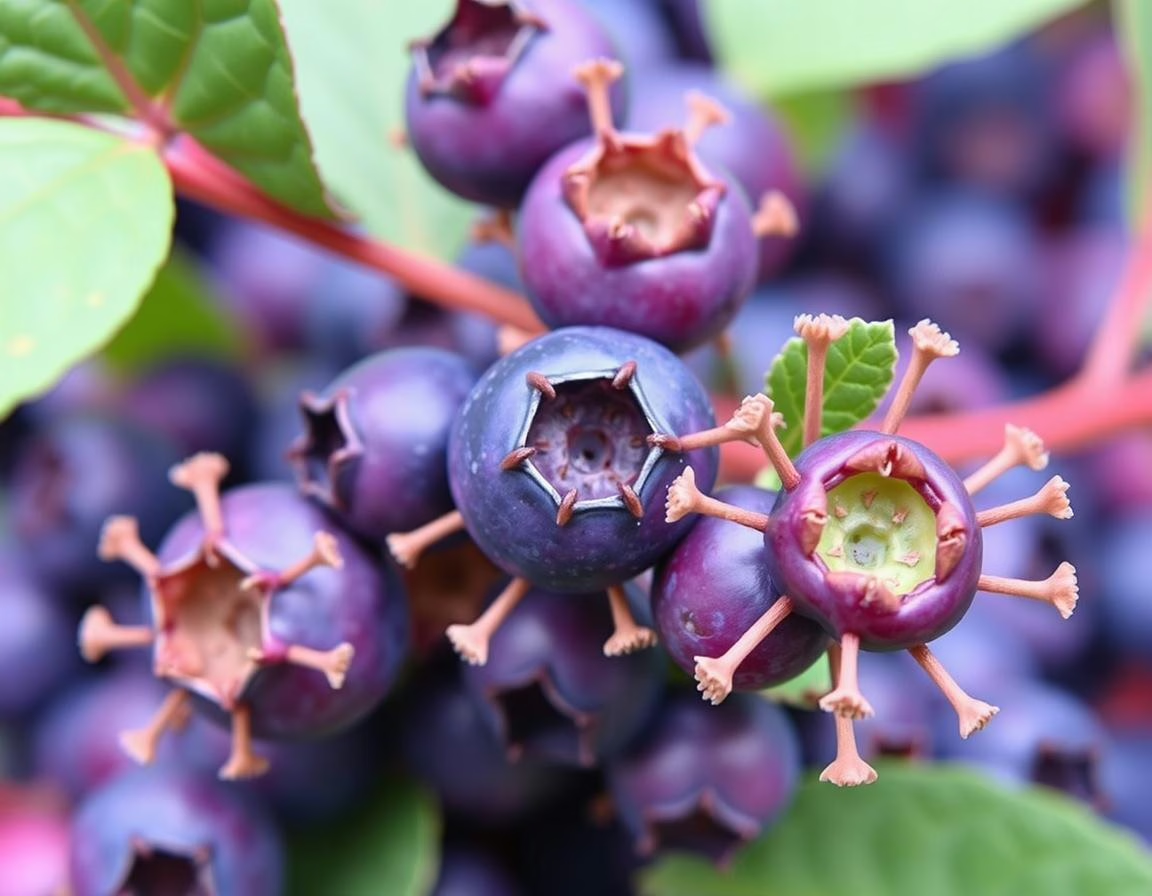
Fortunately, a breakthrough came through research funded by Genome BC, a collaboration between the BC Blueberry Council, Simon Fraser University (SFU), and Phyto Diagnostics Company Ltd., which shed light on the underlying issues behind the test failures.
Led by Jim Mattsson and Eric Gerbrandt, the research team unveiled that both blueberry viruses had evolved, rendering the older PCR tests ineffective in detecting them accurately. While these viruses do not pose a threat to human health, they have inflicted considerable damage on blueberry farmers in British Columbia, with Gerbrandt labeling them as the “two most economically important blueberry viruses in the Pacific Northwest.”
Blueberry shock virus spreads through pollen, making it challenging to contain, although infected fields tend to recover slowly once the disease is identified. Growers combat the infection by prioritizing less susceptible varieties. On the other hand, blueberry scorch virus, transmitted by aphids, presents a graver outlook. It leads to a progressive decline in plant yield, eventually becoming a terminal condition.
Despite their differing outcomes, the symptoms of these blueberry viruses closely resemble each other, complicating the differentiation process. Diagnostic tools such as ELISA and PCR tests have been instrumental in identifying the specific virus affecting the plants, with PCR tests being the primary detection method since the 1990s.
In 2020, a significant surge in plants exhibiting virus symptoms was observed across British Columbia, coinciding with a puzzling trend where PCR-tested samples from symptomatic plants were returning negative results. This anomaly prompted Gerbrandt’s team to conduct an extensive survey across blueberry fields in the Fraser Valley, collecting over 400 samples for genome sequencing.
Through meticulous research and analysis, the team discovered that the scorch and shock viruses had evolved into new variants that eluded traditional PCR tests. This evolutionary adaptation underscores the dynamic nature of blueberry viruses and the ongoing challenge of disease prevention and control in agriculture.
As viruses evolve over time, their enhanced survival mechanisms can lead to more virulent strains and challenging outbreaks. Understanding these new variants is crucial for developing improved detection and treatment strategies. The research team is now focusing on designing new primers to enhance PCR assays for laboratory use, signaling a proactive approach to combating evolving pathogens in the agricultural landscape.
While more studies are required to assess the symptomatic impact and disease severity of these new virus variants, the findings serve as a poignant reminder of the ever-evolving nature of agriculture. Adapting to these changes is essential for researchers and growers alike to effectively manage their fields and safeguard crop health amidst shifting viral landscapes.
Key Takeaways:
– Evolution of blueberry viruses has rendered traditional PCR tests ineffective in detecting new variants.
– Understanding virus evolution is crucial for enhancing disease prevention and control strategies in agriculture.
– Continuous research and adaptation are essential to address the dynamic nature of viral pathogens in crop cultivation.
Read more on freshfruitportal.com



