
In the dynamic realm of biotechnology, innovations continuously reshape the landscape of research and development. The recent surge of groundbreaking advancements unveils a tapestry of cutting-edge technologies driving progress in the biotech industry. From a pioneering hydrogel revolutionizing neuronal cell culture to an assay amplifying proteomic insights and an AI platform reshaping drug discovery models, the past fortnight has been ablaze with transformative discoveries. Let’s delve into the intricate details of these remarkable developments that are propelling the frontiers of biotechnology to new horizons.
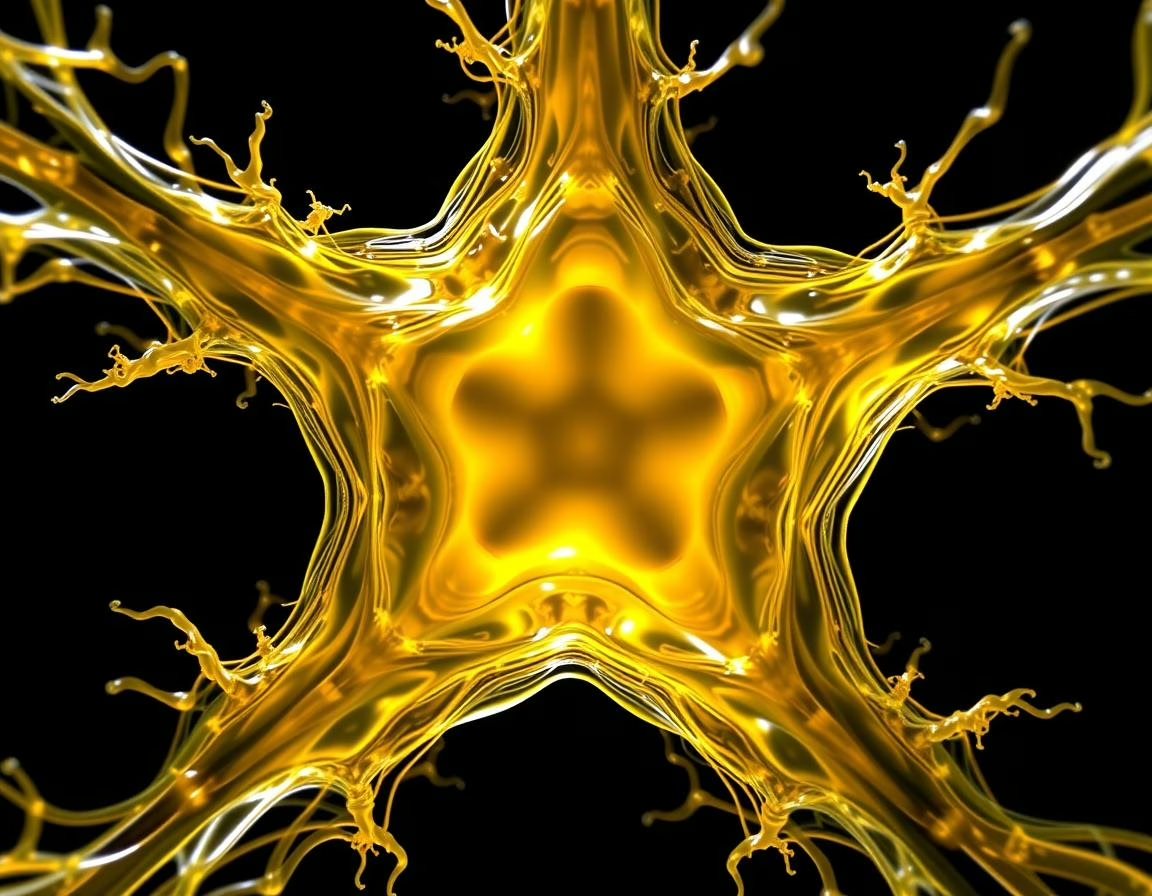
Revolutionizing Neuronal Cell Culture with VitroGel® NEURON
TheWell Bioscience, headquartered in NJ, USA, has recently introduced VitroGel® NEURON, an ingenious synthetic hydrogel that marks a pivotal breakthrough in neuronal cell culture. Distinctively engineered to surmount the constraints of animal-derived matrices, this xeno-free hydrogel empowers researchers by providing a versatile platform that supports both 2D and 3D neuronal cell culture. By offering a conducive environment for neuronal growth and interaction, VitroGel® NEURON heralds a new era of possibilities in neurobiology research, promising enhanced precision and reliability in experimental outcomes.
Augmenting Proteomic Insights through Advanced Assays
In the quest for deeper understanding at the proteomic level, the biotech industry has witnessed the emergence of novel assays that promise to illuminate the intricate complexities of cellular mechanisms. By harnessing cutting-edge technologies, researchers can now delve into the subtle nuances of protein interactions and functions with unprecedented clarity. These advanced assays not only enhance our comprehension of cellular processes but also pave the way for targeted interventions and personalized therapeutics, heralding a paradigm shift in precision medicine and drug development strategies.
AI-Powered Drug Discovery Models: A Glimpse into the Future
The integration of artificial intelligence into drug discovery has catalyzed a revolution in the pharmaceutical landscape, offering unparalleled opportunities for accelerating the development of novel therapeutics. By leveraging AI algorithms and machine learning systems, researchers can navigate the vast expanse of chemical space with precision and efficiency, identifying promising drug candidates and optimizing molecular structures with unprecedented speed. The advent of AI-driven drug discovery models holds the promise of streamlining the drug development process, reducing costs, and expediting the translation of scientific insights into tangible clinical outcomes.
Navigating the Complexities of Neurodegenerative Diseases
Neurodegenerative disorders pose a significant challenge to modern healthcare systems, necessitating innovative approaches to unravel the underlying pathophysiological mechanisms and develop effective treatments. The advent of advanced neuronal cell culture technologies, such as VitroGel® NEURON, offers a glimmer of hope in the fight against neurodegenerative diseases by providing researchers with a sophisticated platform to model disease pathologies, screen potential therapeutics, and unravel the intricacies of neuronal dysfunction. By simulating the complex microenvironment of the brain in vitro, these cutting-edge technologies pave the way for targeted interventions and personalized treatment strategies tailored to individual patients, heralding a new chapter in neurodegenerative disease research.
Optimizing Proteomic Profiling for Precision Medicine
The integration of advanced assays for proteomic profiling holds immense promise for advancing precision medicine and personalized healthcare. By delving into the intricate landscape of protein expression, post-translational modifications, and interactions, researchers can unravel the molecular underpinnings of disease states and identify biomarkers for early detection, prognosis, and treatment response assessment. These proteomic insights not only enhance our understanding of disease mechanisms but also pave the way for the development of targeted therapies that address the specific molecular signatures of individual patients, ushering in a new era of precision medicine tailored to the unique biological profiles of each individual.
AI-Driven Drug Discovery: Revolutionizing Therapeutic Development
The convergence of artificial intelligence and drug discovery represents a transformative leap in therapeutic development, offering unprecedented opportunities for accelerating the translation of scientific discoveries into clinical applications. By harnessing the power of AI algorithms to analyze vast datasets, predict drug-target interactions, and optimize molecular structures, researchers can expedite the drug discovery process, reduce costs, and enhance the efficiency of therapeutic development. The integration of AI-driven models not only accelerates the identification of novel drug candidates but also enables the design of tailored therapeutics that address the specific needs of patients, heralding a new era of precision medicine and personalized healthcare.
In conclusion, the recent advancements in biotechnology herald a new era of innovation and progress, offering transformative solutions to complex challenges in healthcare and drug discovery. From revolutionary hydrogels that redefine neuronal cell culture to advanced assays that amplify proteomic insights and AI platforms that revolutionize drug discovery models, the biotech industry is at the cusp of a paradigm shift that promises to reshape the future of medicine. By harnessing the power of cutting-edge technologies and interdisciplinary collaborations, researchers can unlock new frontiers in precision medicine, personalized therapeutics, and disease modeling, paving the way for a brighter and healthier future for all.
Tags: immunotherapy, drug delivery, automation, cell culture, biotech
Read more on biotechniques.com



