
Psychedelics have emerged as powerful tools that disrupt conventional thought patterns, leading to profound shifts in perception and understanding. Recent research highlights the potential of substances like psilocybin to reveal deeper truths about consciousness and the human experience.
A Personal Journey
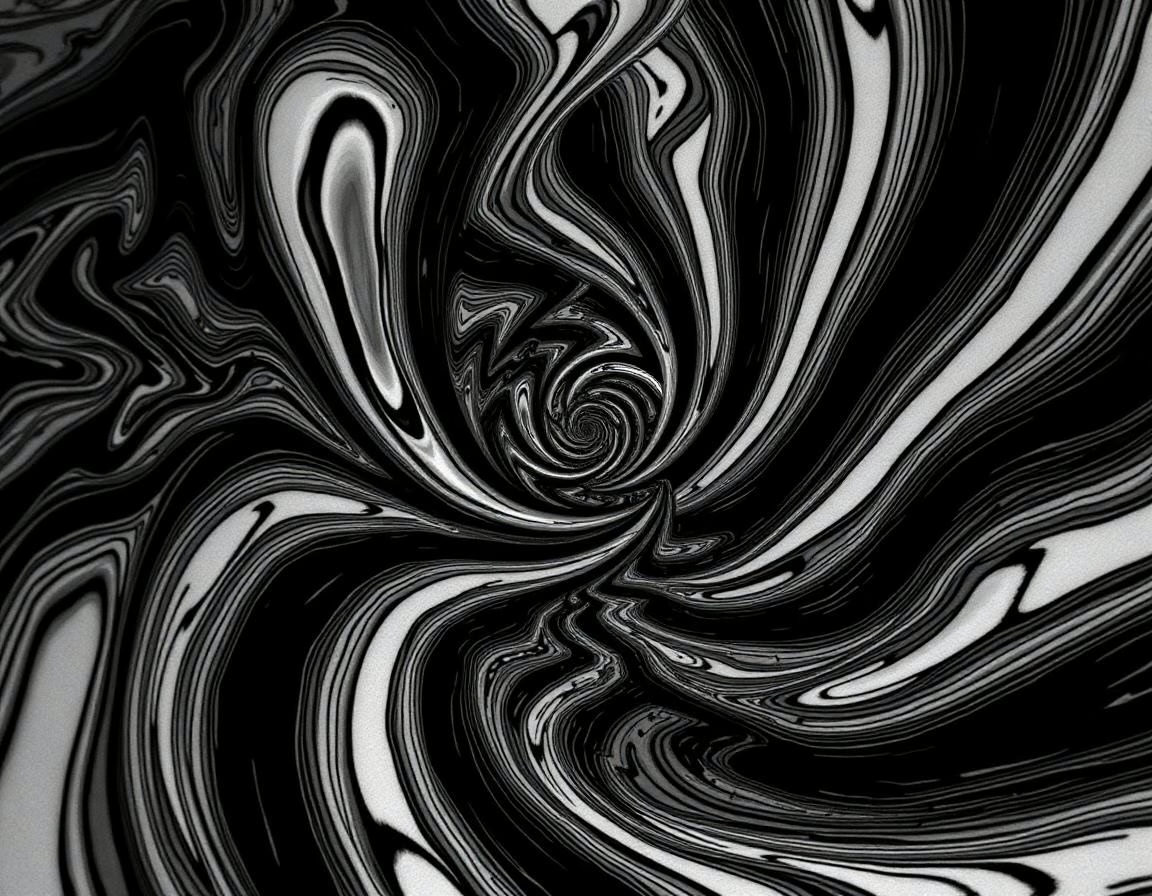
During a recent psilocybin experience, I found myself enveloped in a thick comforter, observing a painting that seemed to come alive. The flowers in the artwork stretched and dripped, while the sounds of nature transformed into an unsettling electronic buzz. What initially seemed soothing morphed into a dystopian echo of reality. This stark contrast foreshadowed the deep introspection that would unfold over the next several hours.
My psilocybin dose was intended to catalyze a transformative experience, and the ensuing emotional rollercoaster left me both weeping and laughing. It was during this journey that I confronted a long-held dichotomy: the rigid separation of good and bad, joy and sorrow. The realization that these opposites are intertwined, like yin and yang, was both liberating and terrifying. Embracing the duality of existence, rather than resisting the darkness, marked a pivotal shift in my understanding of life.
The Science Behind Psychedelic Experiences
This personal revelation aligns closely with the Relaxed Beliefs Under Psychedelics (REBUS) theory, which explains how psychedelics can dissolve rigid thought patterns. Developed by Robin Carhart-Harris, a leading figure in psychedelic research, this theory posits that psilocybin promotes neuroplasticity, allowing the brain to forge new connections and insights.
Neuroplasticity, the brain’s capacity to adapt and reorganize itself, is essential for mental health. When individuals become entrenched in negative self-beliefs, this rigidity can lead to anxiety and depression. Psychedelics, by facilitating a more flexible thought process, may offer a pathway to mental wellness. The REBUS model suggests that the unpredictable nature of psychedelic experiences enables individuals to confront and revise entrenched beliefs.
The Role of the Entropic Brain
Carhart-Harris describes the concept of the “entropic brain,” where psychedelics induce a state of chaos that disrupts habitual thought patterns. This entropic state allows for a freer flow of ideas and emotions, potentially leading to transformative insights. The interaction of psychedelics with serotonin receptors, particularly the 5-HT2A receptor, plays a crucial role in this process. When activated, these receptors modulate neurotransmitter release, influencing thought patterns and emotional states.
Research indicates that psychedelics can enhance glutamate activity, the primary excitatory neurotransmitter, leading to increased neuronal firing. This surge of activity can overwhelm established neural pathways, producing a more random, entropic firing pattern. Such unpredictability may encourage individuals to break free from fixed narratives, fostering new perspectives on their beliefs and experiences.
Insights from Recent Research
A study led by Richard J. Zeifman examined the effects of psilocybin on participants’ beliefs. Researchers assessed confidence in personal beliefs before, during, and after the psychedelic experience, revealing a significant decrease in negative self-beliefs post-session. The intensity of the experience correlated with greater shifts in these beliefs, particularly when participants felt a sense of connection or wholeness.
Interestingly, while psilocybin influenced negative self-perceptions, it did not appear to alter negative beliefs about others. This raises questions about the broader implications of psychedelic experiences on interpersonal relationships and social cohesion. It suggests that while personal insights may flourish, collective beliefs require different mechanisms for change.
Structural Changes in the Brain
Emerging studies hint at the potential for psychedelics to induce structural changes in the brain. Preliminary findings suggest that psilocybin may alter the physical wiring of neural networks. In rodent models, researchers observed increased branching in neural pathways following psilocybin administration, indicating a potential for enhanced connectivity. However, translating these findings to human experiences remains an ongoing challenge.
Zeifman cautions against oversimplifying the relationship between neurobiological changes and belief transformation. Instead, he emphasizes that the context of the psychedelic experience significantly influences the development of adaptive beliefs. Therapeutic interventions, both before and after dosing, could enhance the efficacy of psychedelics in fostering positive change.
Embracing New Perspectives
The insights gained from psychedelic experiences may not always be immediately evident. Often, individuals are unaware of their restrictive beliefs until confronted with the opportunity for change. This suggests that psychedelics may serve as catalysts for self-discovery, revealing hidden narratives that shape our understanding of ourselves and the world.
As research continues to unveil the complexities of psychedelics, their potential applications in mental health, personal development, and consciousness exploration become increasingly compelling. The intersection of neuroscience and psychedelics offers a promising frontier for understanding human experience.
Takeaways
- Psychedelics can disrupt rigid thought patterns, promoting neuroplasticity and mental wellness.
- The REBUS theory highlights how psychedelics facilitate new connections in the brain, allowing for belief revision.
-
The entropic brain concept suggests that unpredictability during psychedelic experiences encourages transformative insights.
-
Recent studies indicate that intense psychedelic experiences can lead to significant changes in negative self-beliefs.
-
Structural changes in the brain following psychedelic use may enhance neural connectivity, although more research is needed.
In conclusion, psychedelics hold the potential to unlock new dimensions of understanding, revealing the interconnectedness of our beliefs and experiences. As science continues to explore this fascinating terrain, we may discover not only how to heal but also how to embrace the full spectrum of life.
Read more → www.popularmechanics.com



