
The endocannabinoid system plays a significant role in regulating stress, yet the use of cannabis does not consistently support this process. As anxiety levels among U.S. adults rise, cannabis wellness marketing has swiftly adapted, promoting the plant as a natural remedy for stress relief by aligning it with the body’s biological systems. However, the existing scientific evidence presents a more intricate picture, necessitating careful consideration for those contemplating cannabis as part of their mental health regimen.
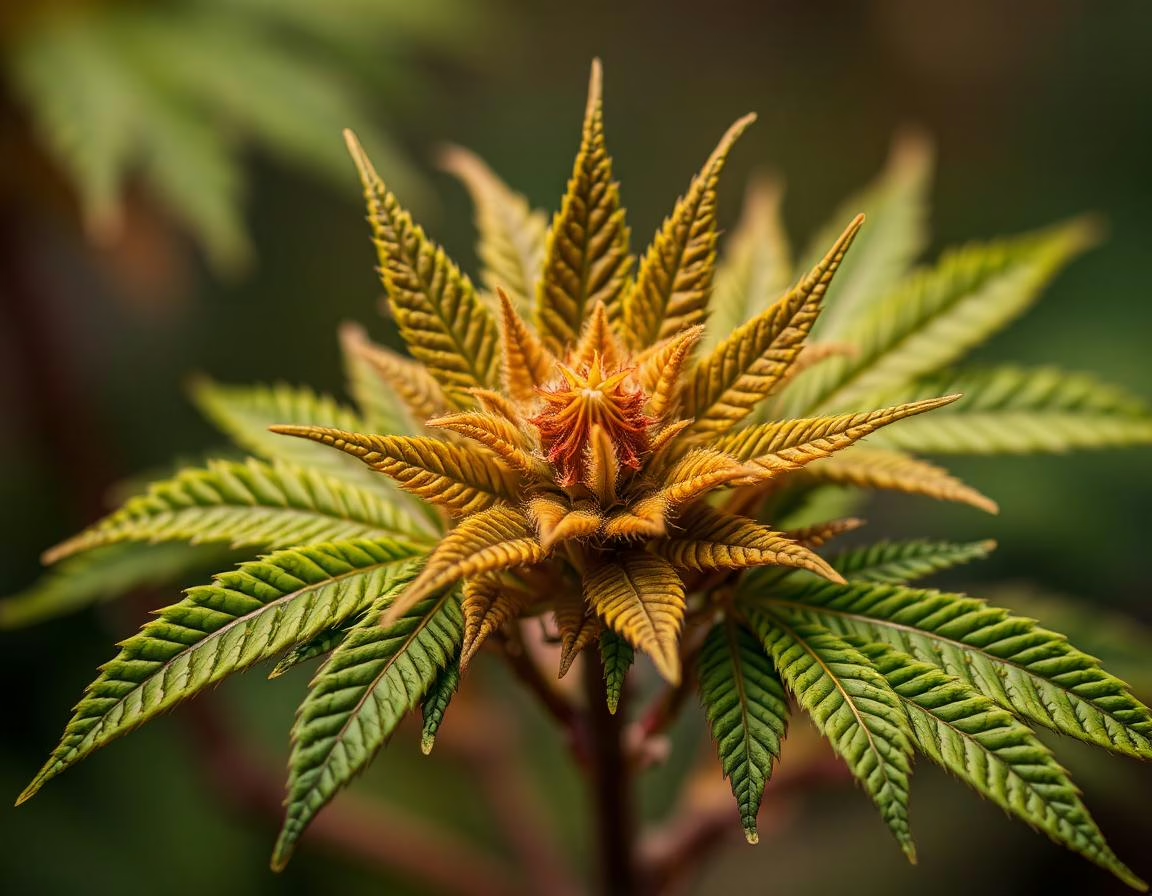
The Role of the Endocannabinoid System
The endocannabinoid system (ECS) is pivotal in how the body manages stress responses. It operates through various brain regions, including the prefrontal cortex and hypothalamus, to modulate the hypothalamic-pituitary-adrenal (HPA) axis, which is responsible for cortisol production during stress. Two primary molecules, anandamide (AEA) and 2-arachidonoylglycerol (2-AG), influence this process. Acute stress can lead to decreased AEA and increased 2-AG levels, while chronic stress can downregulate CB1 receptors, which are the primary cannabinoid binding sites in the brain.
This connection explains why cannabis may appeal to those experiencing stress; it interacts with a system already challenged by chronic stress. However, using THC or CBD to engage this system is not the same as restoring its function, a distinction that is crucial for understanding the implications of cannabis use for stress relief.
Research Insights on Cannabis and Stress
A notable study by Childs et al. involved a double-blind, placebo-controlled design that examined the effects of low and moderate doses of THC on acute stress. Participants receiving 7.5 mg of THC reported lower stress levels and quicker recovery compared to the placebo group. Conversely, those given 12.5 mg experienced heightened anxiety and negative mood, while cortisol levels remained unchanged across groups.
This biphasic dose-response, wherein a smaller dose may alleviate stress while a larger dose exacerbates anxiety, complicates the landscape of commercial cannabis products. The variability in THC concentrations among retail cannabis makes precise dosage challenging, and the study’s focus on occasional users in a controlled setting does not accurately represent regular users who may rely on cannabis for daily stress management.
Chronic Cannabis Use and Stress Response
Research indicates that chronic cannabis users exhibit different stress responses compared to non-users. In a controlled study utilizing the Maastricht Acute Stress Test, chronic users showed no significant increase in cortisol and reported lower subjective stress levels when faced with stressors. Reviews of existing literature consistently reveal blunted cortisol responses and altered diurnal cortisol patterns among regular cannabis users, raising questions about whether this reflects resilience or a diminished ability to respond adaptively to stress.
A healthy stress response is essential; it mobilizes energy, sharpens focus, and encourages proactive behavior. Continually suppressing this response could have unintended consequences not captured by short-term self-reports.
Evaluating CBD’s Role in Stress and Anxiety
CBD has garnered attention for its potential calming effects, but the controlled evidence supporting its efficacy in healthy adults remains limited. The most robust evidence pertains to acute anxiety reduction in individuals with social anxiety disorder. However, recent randomized controlled trials in healthy participants have produced inconsistent results, with a 2024 systematic review revealing varied efficacy across different disorders and dosages.
While the pharmacological mechanisms of CBD suggest potential anxiolytic effects, the gap between mechanistic plausibility and demonstrated clinical efficacy is considerable. The majority of human studies do not provide strong support for the use of CBD as a reliable treatment for anxiety.
Cannabigerol (CBG) and Emerging Research
A recent double-blind, placebo-controlled trial investigating cannabigerol (CBG) found that a 20 mg dose significantly reduced anxiety and stress ratings in participants without causing cognitive or motor impairment. Conducted remotely with a sample of 34 experienced cannabis users, the study presents a promising, albeit preliminary, finding in the realm of cannabinoids and stress management.
The Risks of Using Cannabis to Cope
Motivation for cannabis use significantly influences its outcomes. Among young adults, using cannabis as a coping mechanism is linked to a higher risk of developing cannabis use disorder, elevated stress levels, and increased symptoms of depression. In contrast, using cannabis for social or enhancement purposes does not carry the same risks.
Research highlights that coping motives mediate the relationship between stress exposure and cannabis-related issues. This suggests that relying on cannabis as the primary strategy for managing psychological distress is problematic, as the overall evidence for cannabis as a treatment for anxiety and depression remains of low quality.
Cannabis and Sleep: An Indirect Benefit
A 30-day diary study involving 347 cannabis users with affective symptoms revealed that cannabis use correlated with improved subjective sleep quality, particularly with edible and CBD-dominant products. Given that sleep deprivation can heighten stress responses, enhanced sleep quality may serve as an indirect benefit of cannabis use. However, findings from controlled studies on sleep architecture are more complex, indicating potential risks of tolerance and dependence associated with regular cannabis use for sleep.
Conclusion
The gap between the marketing of cannabis for stress relief and what scientific research can substantiate is significant. While the ECS plays a role in stress regulation, the effects of THC are dose-dependent and not universally beneficial. CBD’s anxiolytic effects are inconsistent across studies, and motivations for cannabis use can lead to negative outcomes. Understanding these distinctions is vital for integrating cannabis into a mental health strategy rather than using it as a substitute for comprehensive care.
Key Takeaways
- The endocannabinoid system is involved in stress regulation, but cannabis does not reliably restore its function.
- Cannabis use can produce a biphasic response, with low doses potentially reducing stress and high doses increasing anxiety.
-
Chronic cannabis users may exhibit blunted stress responses, raising questions about long-term implications for mental health.
-
CBD’s effectiveness for anxiety in healthy adults is inconsistent and requires further research.
-
Using cannabis primarily as a coping mechanism can increase the risk of cannabis use disorder and related mental health issues.
Read more → cannigma.com



