
The EPA Victorica Agricultural School has advanced to the national stage of the Science Fair with their project “Residuos con Futuro” (Waste with a Future), a groundbreaking initiative in Argentina that converts poultry production waste into edible mushrooms, offering a sustainable and alternative food source while caring for the environment.
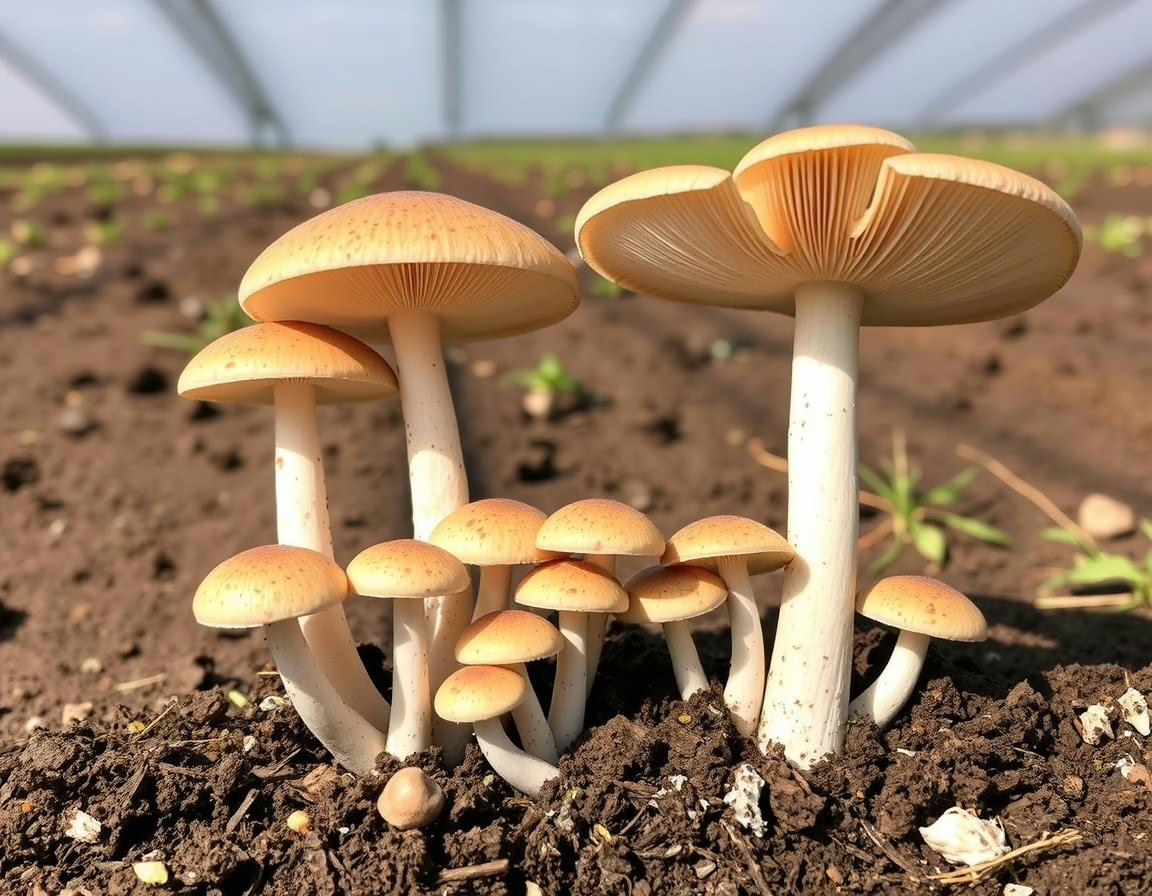
The project was presented by 7th-year students Kimey Funez and Juan Gabriel Gatica, alongside their teacher Marcos Salinas, at the provincial Science Fair. The idea stemmed from the need to manage chicken manure, a byproduct of poultry farming that poses environmental challenges. The team explored how to cultivate mushrooms from this material, which not only are edible but also provide health benefits such as being a source of protein and aiding in cholesterol reduction.
Kimey expressed excitement about the project’s accessibility, mentioning that the process can be replicated at home using simple materials like cardboard, logs, or inoculated seeds. This innovative approach required months of research, involving steps like preparing the mushroom spawn, pasteurizing the substrate to prevent bacterial growth, and maintaining strict hygiene protocols using 70% alcohol to avoid contamination. The entire cycle, from planting to harvesting, spans approximately three months, with an initial incubation period of 20 days.
At the Science Fair, due to restrictions on live specimens, the students showcased their work using 3D prints replicating the mushrooms. The educational community warmly received their proposal, supporting their progress to the national level and recognizing the value of their contributions.
Marcos Salinas, the teacher, highlighted the uniqueness of the project in Argentina. While similar initiatives exist using wood chips or tree logs, their trial-and-error approach led to the successful cultivation of mushrooms, providing valuable insights into biology and production processes.
The project’s interdisciplinary nature was underscored by Salinas, who mentioned the collaboration between different departments within the school. This multidisciplinary effort not only promotes sustainable waste management but also opens doors for potential entrepreneurial ventures, as the mushrooms could be marketed for additional income generation.
Looking ahead, Kimey expressed optimism about the project’s future growth potential, emphasizing the health benefits of mushrooms and the economic opportunities they present. Despite the time investment required, she believes that scaling up production is feasible and holds promise for both health-conscious consumers and aspiring entrepreneurs.
With this achievement, the EPA Victorica Agricultural School continues to lead the way in addressing environmental and production challenges through innovative solutions, showcasing knowledge and creativity from the Pampean region to the entire country.
Key Takeaways:
– The EPA Victorica project “Residuos con Futuro” transforms chicken manure into edible mushrooms, offering a sustainable food source.
– The initiative by students and teachers demonstrates innovative ways to address environmental challenges and promote sustainable practices.
– The project’s success highlights the potential for educational institutions to drive impactful solutions to real-world problems through interdisciplinary collaboration.
– Cultivating mushrooms from poultry waste not only provides a nutritious food source but also opens avenues for potential income generation and entrepreneurship.
– By showcasing their work at national science fairs, students from the EPA Victorica Agricultural School are contributing valuable insights and solutions to pressing environmental and agricultural issues.
Read more on infohuella.com.ar



