
In the realm of severe burns and traumatic injuries, the ability to regenerate skin can be a critical factor between life and death. Traditional methods of treating extensive burns involve transplanting a thin layer of epidermis from another part of the body, which often results in significant scarring and fails to restore the skin to its original functionality. Without regenerating the dermis, the layer beneath the epidermis that contains essential components such as blood vessels and nerves, the skin cannot truly be considered living and functional.
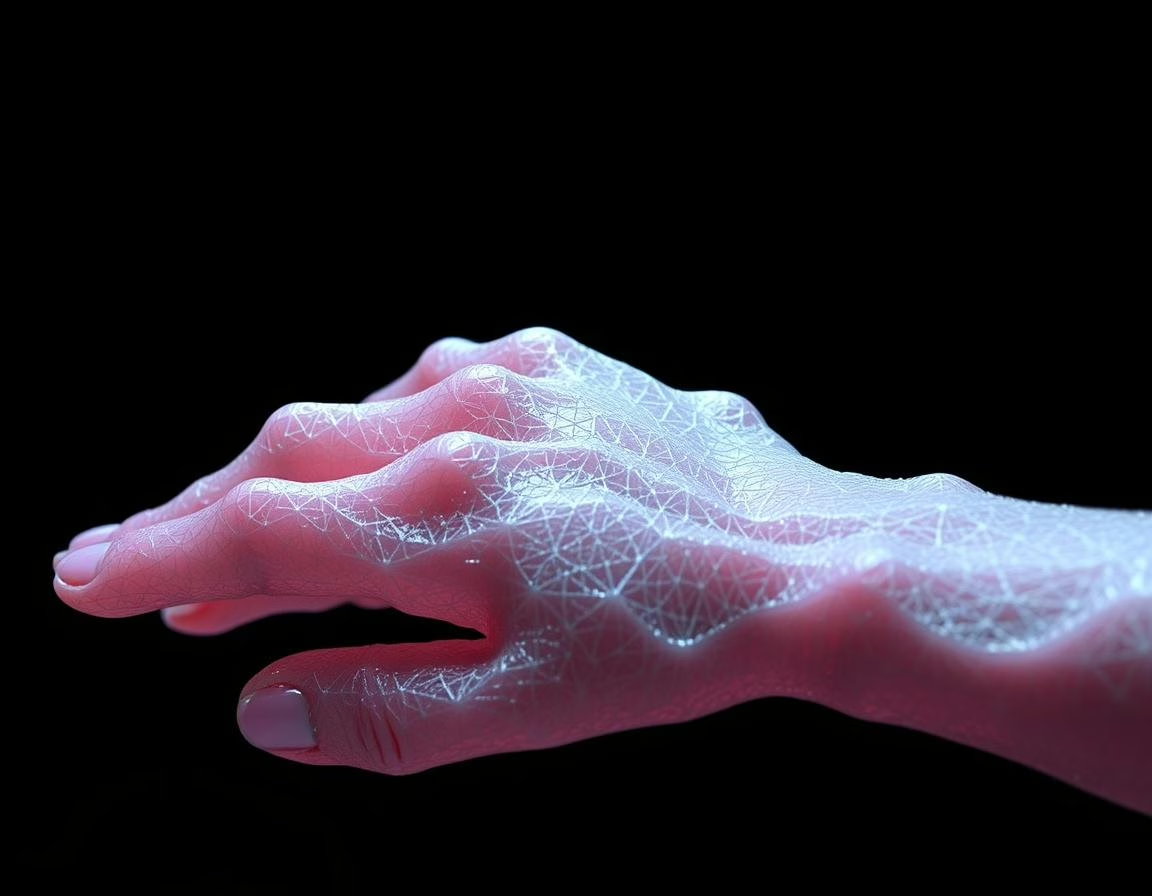
Recent groundbreaking work by Swedish researchers has brought us closer to the possibility of regenerating living skin. They have developed two innovative 3D bioprinting techniques that allow for the creation of thick, vascularized skin. One technique focuses on densely packing cells within the skin, while the other method involves the precise formation of blood vessels within the tissue. These approaches, detailed in studies published in Advanced Healthcare Materials, offer promising avenues towards the regeneration of functional skin tissue.
The complexity of the dermis has posed a significant challenge in laboratory-based regeneration efforts. Johan Junker, an associate professor at Linköping University and a specialist in plastic surgery, and his team tackled this challenge by designing a unique bio-ink named “μInk.” This bio-ink consists of fibroblasts cultured on gelatin grains, producing essential dermal components like collagen and elastin. Through 3D printing, they were able to construct a skin structure rich in cells, paving the way for potential skin regeneration.
In transplantation experiments involving mice, the researchers observed the growth of living cells within tissue fragments created from the bio-ink. These cells secreted collagen and reconstructed dermal components, while new blood vessels formed within the graft, indicating successful long-term tissue integration. The presence of blood vessels is crucial for ensuring adequate oxygen and nutrient supply to all cells within the tissue structure, preventing cell death in the center of the tissue.
The development of the REFRESH technology further enhances the construction of blood vessels within artificial tissues. This innovative approach involves the printing and arrangement of hydrogel threads, which possess remarkable strength and shape-memory properties. By leveraging these threads as a network for blood vessel formation within the artificial tissue, the researchers aim to optimize oxygen and nutrient delivery to all regions of the tissue, enhancing its viability and functionality.
The ability to manipulate hydrogel threads into intricate structures such as knots and braids opens up possibilities for creating complex 3D networks of blood vessels. Future endeavors will focus on automating these processes to efficiently extend blood vessel networks within artificial organs, revolutionizing tissue engineering and regenerative medicine. Despite the exciting advancements, challenges such as inflammation and infection control in wound environments need careful consideration and validation before translating these techniques to clinical applications.
The integration of these cutting-edge technologies holds immense potential for addressing longstanding issues in regenerative medicine. By bridging the gap between laboratory research and clinical implementation, these innovations could pave the way for transformative solutions in skin regeneration and tissue engineering. The journey towards harnessing the full capabilities of 3D-printed artificial skin is filled with promise and possibilities, offering hope for a future where skin regeneration can truly mimic the complexity and functionality of natural living tissue.
Takeaways:
– 3D bioprinting techniques offer new prospects for regenerating thick, vascularized skin tissue.
– Bio-ink formulations, such as μInk, enable the precise construction of skin structures rich in cells for potential transplantation.
– REFRESH technology facilitates the flexible assembly of hydrogel threads to create intricate blood vessel networks within artificial tissues.
– Automation of blood vessel network construction could revolutionize tissue engineering and regenerative medicine, enhancing tissue viability and functionality.



