
Spending time in natural environments can profoundly influence our mental state and cognitive function. Recent neuroimaging studies reveal that these benefits are not just anecdotal; they are rooted in measurable brain activity changes.
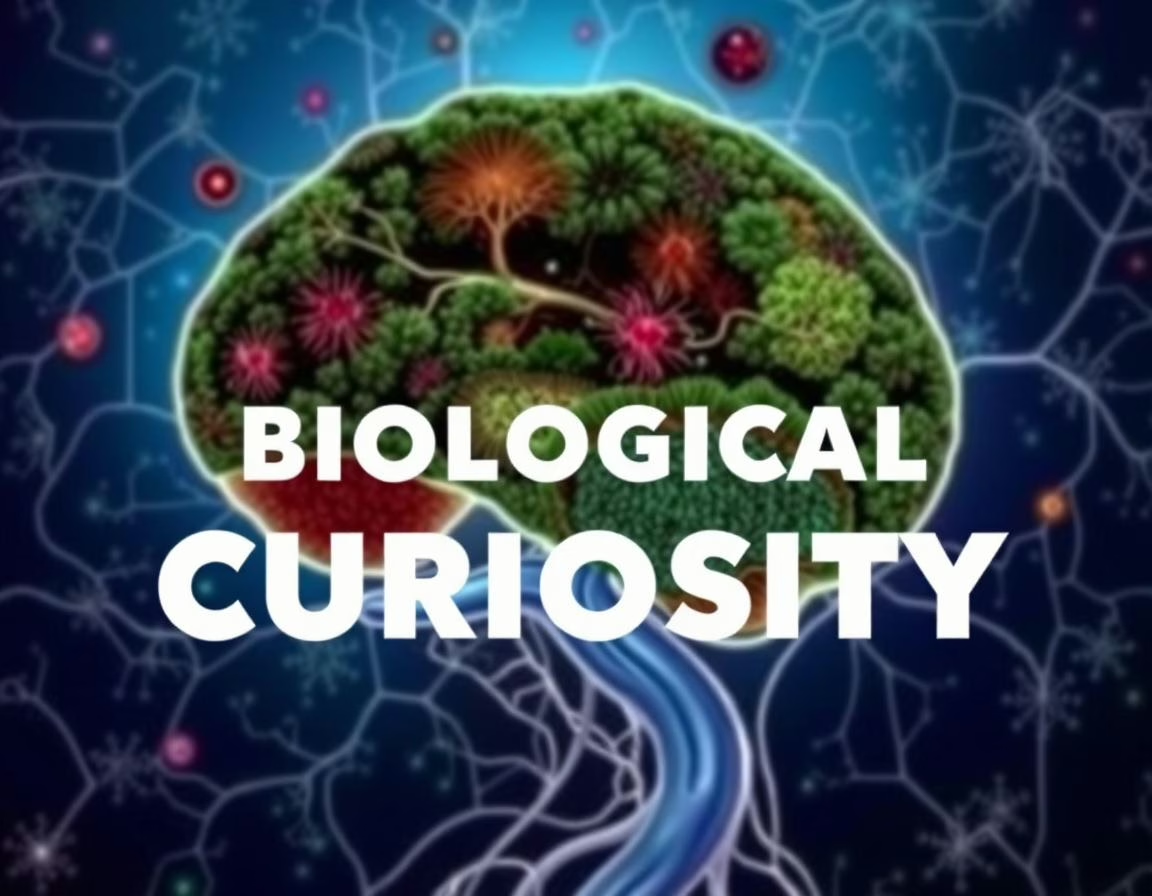
A systematic review encompassing 108 neuroimaging studies sheds light on these interactions between nature and our brains. Conducted by researchers from McGill University and Adolfo Ibáñez University in Chile, this extensive analysis utilized various techniques, including EEG, fMRI, MRI, and near-infrared spectroscopy. The findings offer a comprehensive understanding of how nature impacts attention, emotional regulation, and stress levels.
The Initial Impact of Nature
The brain’s response to natural environments often begins with a shift in perception. Unlike the chaotic visual stimuli of urban settings, nature presents repeating patterns, commonly known as fractals. This simplicity allows our brains to process information more efficiently.
As individuals immerse themselves in these calming settings, physiological changes occur. Heart rates and breath rates decline, while the amygdala—the brain’s threat detection center—exhibits reduced activity. This shift indicates a move towards a more tranquil mental state.
Attention Restoration Theory
Attention Restoration Theory (ART) illustrates how natural environments can replenish mental resources. When we engage with nature, our cognitive focus transitions from a concentrated state to one that is more relaxed and effortless. This shift enables us to restore our mental energy, enhancing our overall well-being.
Research continues to validate the emotional and cognitive benefits of nature. Both direct experiences and virtual representations of nature have been linked to brain activity patterns similar to those observed during meditation. These findings suggest that even brief encounters with nature can calm the mind and promote integrated brain function.
Quick Benefits of Natural Exposure
Studies indicate that even short interactions with natural settings can yield positive changes in brain activity. Using EEG technology, researchers documented significant shifts in brain patterns after just three minutes in nature. While immediate effects are measurable, prolonged exposure tends to yield more substantial and lasting benefits.
The “Induced Brain-Aware State” arises from these interactions, where immersive experiences in nature lead to deeper, more enduring changes in brain activity. Researchers note that real-life interactions with nature surpass virtual experiences, emphasizing the unique multisensory richness of being outdoors.
Blue vs. Green Spaces
Research comparing blue spaces—such as lakes and oceans—to green spaces like forests reveals intriguing insights. Some studies suggest that blue spaces may facilitate quicker stress recovery than green spaces, though both types provide substantial benefits. This distinction highlights the importance of the specific natural environment in determining its psychological effects.
Meditation-Like Effects of Nature
The calming effects of nature mirror those experienced during meditation. EEG studies have demonstrated increased alpha and theta waves, which indicate relaxation and inward focus. Conversely, beta wave activity, associated with stress and cognitive overload, decreases. These patterns suggest that nature acts as a “spontaneous regulator,” promoting calmness without requiring formal training.
Long-Term Structural Changes
While brief visits to natural environments can yield immediate benefits, extended exposure has more profound effects on brain structure. Large-scale MRI studies have shown that individuals living near green spaces tend to exhibit increased gray and white matter volume and greater cortical thickness. These structural changes correlate with improved cognitive capabilities and attention regulation.
Moreover, cumulative exposure to natural environments may help individuals build resilience against stress over time. The brain and body adapt, enhancing overall mental health.
Individual Variability in Responses
Responses to natural environments vary among individuals. Those who feel a stronger connection to nature often show more significant neural changes and improved mood. Additionally, background plays a role; individuals raised in urban areas typically respond less robustly to natural settings compared to those from rural backgrounds.
Duration of exposure is also critical. While even short visits to nature provide benefits, longer exposures—15 minutes or more—can lead to more substantial physiological changes.
The Need for Further Research
Despite the consistency of findings across many studies, variations in methodologies and participant demographics complicate direct comparisons. Most studies focus on healthy adults, leaving questions about the applicability of results to clinical populations.
Researchers emphasize the need for longitudinal and multimodal studies that combine brain imaging with real-world assessments of environmental impacts. The growing body of evidence supports established psychological theories, such as Stress Recovery Theory and the Biophilia Hypothesis, which propose an inherent human connection to nature.
Societal Implications
The implications of these findings extend beyond individual health. People who feel more connected to their natural environment tend to engage in pro-environmental behaviors. This interconnectedness suggests that caring for nature and caring for ourselves are mutually reinforcing concepts.
In conclusion, spending time in nature not only refreshes our minds but also reshapes our brains. The modern world, with its urban sprawl and technological distractions, often distances us from these enriching experiences. By recognizing the profound effects of nature on our mental and emotional well-being, we can foster environments that promote both individual health and environmental stewardship.
- Nature reduces stress and enhances emotional well-being.
- Brief exposure to natural environments can yield immediate cognitive benefits.
- Long-term interaction with nature contributes to structural brain changes.
- Individual responses to nature vary based on background and connection.
- Increased connection to nature correlates with pro-environmental behaviors.
Read more → www.aol.com