
Pluripotent stem cells hold vast potential for regenerative medicine, offering the ability to differentiate into various cell types. One crucial aspect in harnessing their power lies in controlling their aggregation, a process essential for mimicking tissue development and organization. The manipulation of pluripotent stem cell aggregation through chemical cues presents a fascinating avenue for researchers to explore. This article delves into the intricate mechanisms behind chemically controlled aggregation of pluripotent stem cells, shedding light on the principles, tools, and implications in this cutting-edge field of study.
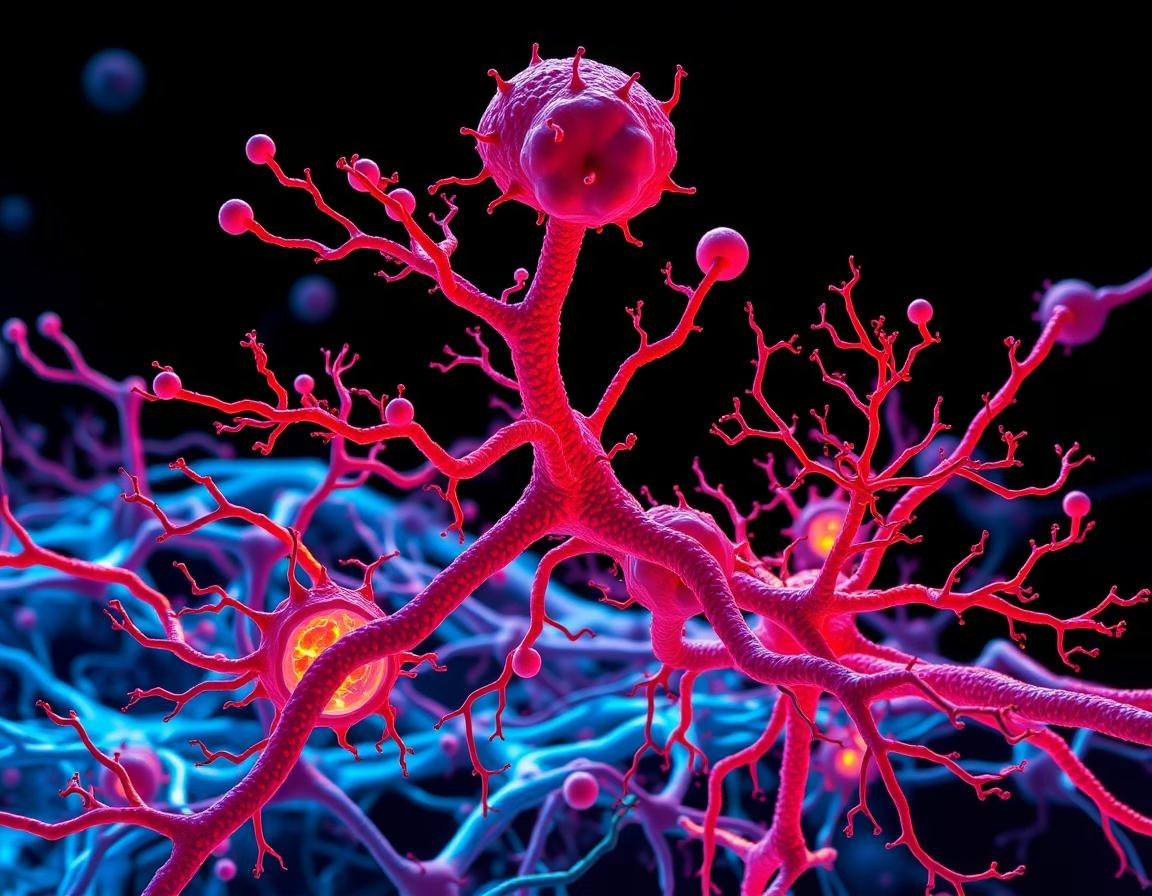
Pluripotent stem cells, with their remarkable capacity for self-renewal and differentiation, serve as the cornerstone of regenerative medicine and developmental biology. The controlled aggregation of these cells is pivotal in generating complex tissues and organoids that closely resemble their in vivo counterparts. By modulating the interactions between individual stem cells, researchers can orchestrate the formation of intricate structures, offering unprecedented insights into developmental processes and disease modeling.
Deciphering the Signaling Pathways Governing Stem Cell Aggregation
At the core of chemically controlled aggregation of pluripotent stem cells are intricate signaling pathways that dictate cell-cell interactions. Through the precise manipulation of key signaling molecules, such as Wnt, TGF-β, and Notch pathways, researchers can influence the adhesion, migration, and patterning of stem cells within aggregates. This fine-tuned orchestration of signaling cascades enables the formation of organized structures reminiscent of native tissues, unlocking new possibilities for tissue engineering and regenerative therapies.
Leveraging Microfluidic Platforms for Precise Control
Microfluidic technology plays a pivotal role in providing researchers with the tools needed to exert precise control over the aggregation of pluripotent stem cells. These microscale devices enable the spatial and temporal delivery of chemical cues to individual cells, allowing for the creation of gradients that guide cell behavior. By integrating microfluidic platforms with advanced imaging techniques, scientists can monitor and analyze the aggregation process in real-time, unraveling the dynamics of cell interactions with unprecedented detail.
Unraveling the Epigenetic Landscape of Aggregated Stem Cells
In addition to signaling pathways, the epigenetic landscape of aggregated stem cells plays a critical role in shaping their behavior and differentiation potential. Recent studies have highlighted the dynamic changes in chromatin structure and gene expression profiles within stem cell aggregates. By employing cutting-edge techniques such as single-cell RNA sequencing and ATAC-seq, researchers can dissect the epigenetic modifications that underlie the transition from pluripotency to lineage commitment within aggregated cell populations.
Harnessing CRISPR/Cas9 for Precision Genome Editing
The advent of CRISPR/Cas9 technology has revolutionized the field of genome editing, offering unprecedented precision and efficiency in modifying genetic sequences. By harnessing this powerful tool, researchers can introduce precise genetic alterations in pluripotent stem cells, elucidating the role of specific genes in the aggregation process. CRISPR/Cas9-mediated genome editing allows for the generation of isogenic cell lines with targeted mutations, enabling researchers to dissect the functional significance of key genes involved in stem cell aggregation.
Integrating Multi-Omics Approaches for Comprehensive Analysis
To gain a holistic understanding of the complex interplay between genetic, epigenetic, and signaling factors influencing stem cell aggregation, researchers are increasingly turning to multi-omics approaches. By integrating data from genomics, transcriptomics, proteomics, and metabolomics analyses, scientists can construct comprehensive molecular profiles of aggregated stem cell populations. This multi-faceted approach not only reveals the intricate regulatory networks governing cell behavior but also uncovers novel biomarkers and therapeutic targets for regenerative medicine applications.
In conclusion, the chemically controlled aggregation of pluripotent stem cells represents a fascinating frontier in regenerative medicine and developmental biology. By unraveling the signaling pathways, leveraging microfluidic platforms, dissecting the epigenetic landscape, harnessing genome editing technologies, and integrating multi-omics approaches, researchers can unveil the underlying principles governing stem cell behavior and differentiation within aggregates. This multidisciplinary approach not only enhances our understanding of tissue development and organization but also holds immense promise for advancing personalized medicine and regenerative therapies.
Key Takeaways:
- Precise manipulation of signaling pathways is essential for orchestrating pluripotent stem cell aggregation.
- Microfluidic platforms offer precise control over chemical cues in stem cell aggregates.
- Epigenetic modifications play a crucial role in shaping the behavior and differentiation potential of aggregated stem cells.
- CRISPR/Cas9 technology enables precise genome editing to elucidate the role of specific genes in stem cell aggregation.
- Integrating multi-omics approaches provides a comprehensive analysis of the molecular mechanisms underlying stem cell aggregation.



