
The IBM 650 RAMAC marked a significant advancement in data processing technology during its time. As one of the first magnetic drum data processing machines, it played a crucial role in both scientific and business applications. This innovative machine enabled real-time data processing, allowing transactions to be handled as they occurred, rather than in batches. This capability transformed how organizations interacted with data, paving the way for modern computing systems.
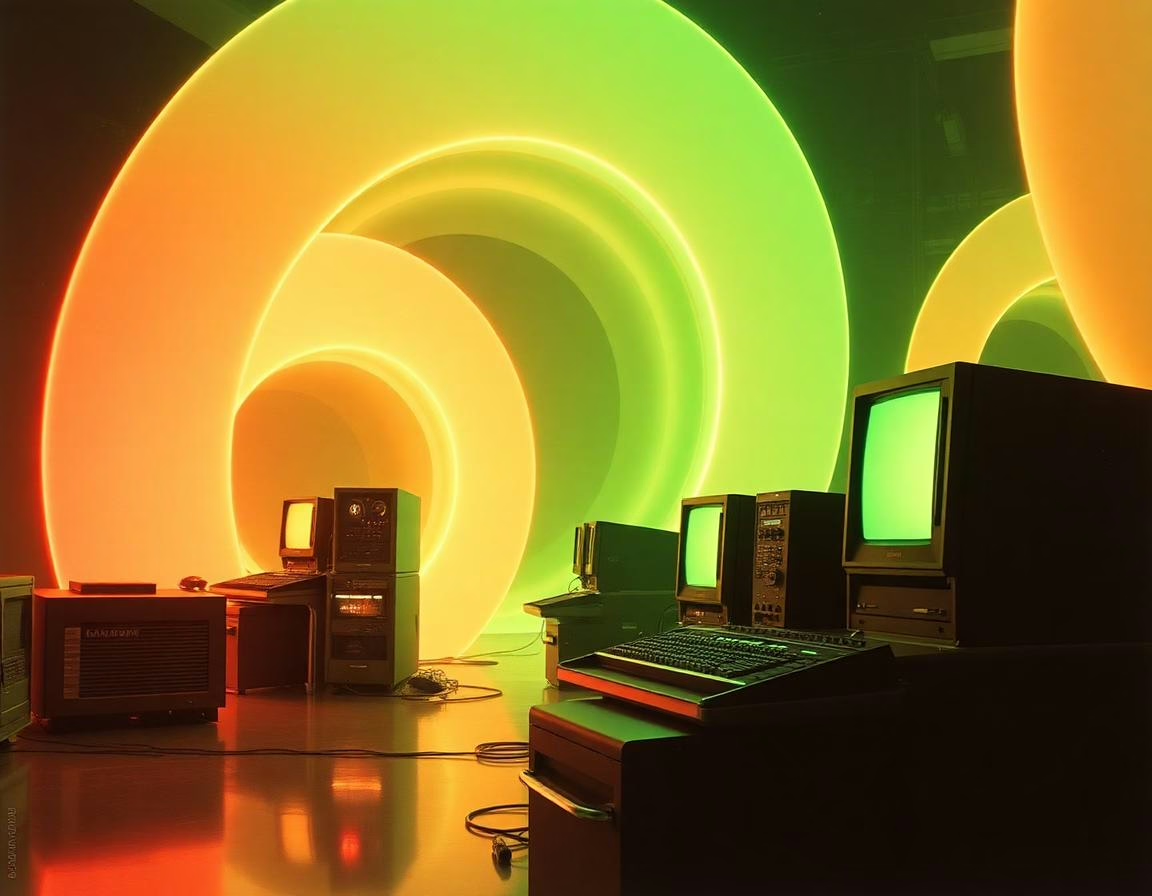
Overview of the IBM 650 RAMAC
The IBM 650 featured a random access memory unit known as the DE 355, which allowed data to be retrieved quickly and directly. This design proved advantageous for high-volume environments where efficiency was paramount. The RAMAC 650’s ability to adjust multiple related records simultaneously during transaction processing reflected a groundbreaking shift towards dynamic data management.
Applications in Military Engineering
Across various military engineering divisions, the IBM 650 found extensive applications. For instance, the U.S. Army Engineer District utilized the machine for earthwork computations, stability analyses, and flood routing. This technology enabled engineers to conduct complex calculations efficiently, enhancing project accuracy and reducing the time required for critical assessments.
The U.S. Army Engineer Research and Development Laboratory also benefited from the RAMAC 650. It facilitated research and development efforts for military projects, while a smaller portion of its capacity was dedicated to labor distribution data processing. This combination of functionalities illustrated the versatility of the IBM 650 in meeting diverse operational needs.
Waterways Experiment Station and Flood Management
The U.S. Army Engineer Waterways Experiment Station leveraged the RAMAC 650 for a variety of engineering and scientific applications. This joint facility provided essential electronic data processing services to multiple Corps of Engineers offices. The machine was instrumental in water surface profile computations and flood management tasks, enabling engineers to simulate water flow and forecast conditions across significant river basins.
Monthly forecasts generated by the RAMAC 650 supported water resource management and flood control efforts, ensuring that stakeholders could prepare for and respond to environmental changes effectively. The ability to compute forecasts and prepare reports streamlined communication and decision-making processes across various divisions.
Scientific Research and Ordnance Applications
The machine’s capabilities extended beyond engineering into scientific research and ordnance applications. Facilities like the U.S. Army Ordnance Division relied on the RAMAC 650 for tasks ranging from inventory control to advanced ballistic calculations. Its ability to process large datasets facilitated crucial research initiatives, including projectile dynamics and stability studies.
At the Anniston Ordnance Depot, the RAMAC 650 managed complex inventory and financial accounting tasks. Its integration into daily operations significantly enhanced accuracy in material management, contributing to the efficient distribution of ordnance supplies.
Financial and Supply Chain Management
In addition to its engineering applications, the IBM 650 played a vital role in financial and supply chain management for the military. Integrated systems across various Army depots processed stock accounting, fiscal reporting, and customer billing. This automation allowed for more precise tracking of inventory and financial transactions, contributing to overall operational efficiency.
The system’s ability to compile stock fund accounting reports ensured that inventory balances and transactions were meticulously recorded. This level of detail was critical for maintaining accountability and transparency within the military supply chain.
Innovations in Data Processing
The RAMAC 650 exemplified a transformative period in data processing technology. By introducing real-time data handling, it revolutionized how organizations approached information management. The machine’s architecture and operational capabilities set the foundation for future advancements in computing technology, influencing subsequent generations of data processing systems.
Conclusion
In summary, the IBM 650 RAMAC was more than just a data processing machine; it was a catalyst for change in multiple fields, particularly within military engineering and scientific research. Its innovative design and real-time processing capabilities disrupted traditional data handling methods, leading to enhanced efficiencies and improved decision-making across various applications. The legacy of the RAMAC 650 continues to resonate in today’s advanced computing landscape, reminding us of the pioneering spirit that drives technological progress.
- The IBM 650 RAMAC introduced real-time data processing, transforming data management practices.
- Its applications spanned military engineering, scientific research, and financial management.
- The machine’s architecture laid the groundwork for future data processing innovations.
- Enhanced efficiency and accuracy were key benefits realized through its implementation.
- The legacy of the IBM 650 RAMAC continues to influence modern computing technologies.
Read more → www.ed-thelen.org



