
The advent of gene editing technology brings forth a transformative potential in the realm of human reproduction. As advancements in CRISPR/Cas9 gene editing pave the way for disease treatment, a critical question arises: Can these technologies be applied before birth? The prospect of creating “designer babies” by modifying genes at the embryonic stage is no longer confined to science fiction narratives like “GATTACA.” This article delves into the latest research surrounding pre-birth gene editing and the ethical considerations it entails.
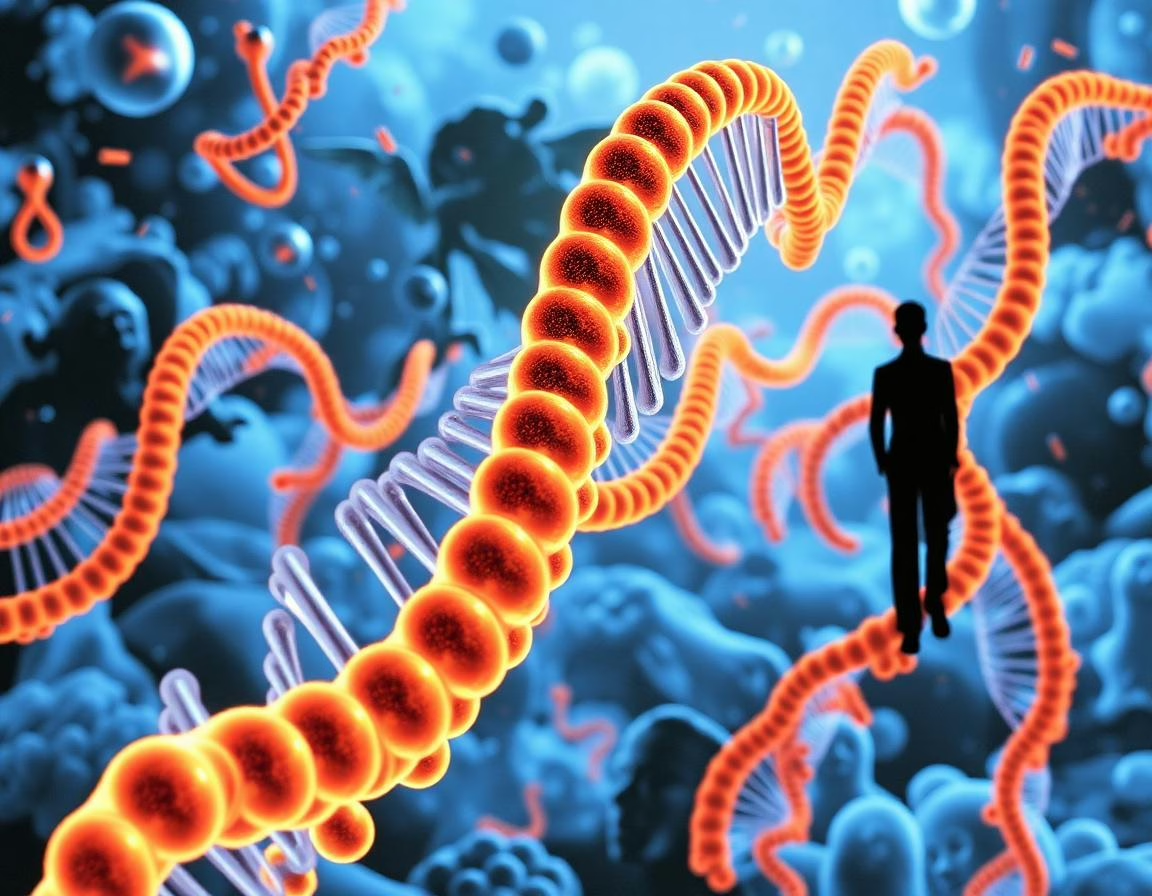
Advancements in Gene Editing Technology
On September 30, 2025, a groundbreaking study published in ‘Nature Communications’ showcased a significant leap in gene editing capabilities. Researchers from Oregon Health & Science University and CHA University in Korea successfully created a fertilizable oocyte by transplanting a skin cell nucleus into the cytoplasm of an oocyte. This innovative process, termed “mitomeiosis,” involves halving the chromosome count and facilitating fertilization, effectively transforming a somatic cell into a germ cell.
Professor Kang Eun-ju, a key contributor to this research, explained that the core of this breakthrough lies in reprogramming the nucleus of a skin cell to behave like an oocyte. By bypassing traditional methods that require complex differentiation processes, this technique accelerates the creation of oocyte-like cells, potentially allowing infertile individuals, same-sex couples, and single parents to have biological children.
Potential Implications for Reproductive Rights
The implications of mitomeiosis extend beyond mere infertility solutions. If perfected, this technology could redefine reproduction itself, granting individuals who currently lack access to oocytes the ability to conceive. While this innovation holds promise, experts caution that significant hurdles remain. Professor Kang estimated that it would take at least a decade for mitomeiosis to be applied clinically, with an even longer timeframe for commercialization.
The challenges are manifold, including the risks of chromosomal abnormalities and the need for precise control over the reprogramming process. During the initial experiments, nearly half of the synthetic embryos exhibited issues with chromosome segregation, raising concerns about the safety and viability of such technologies in real-world applications.
Contemporary Issues in Fetal Gene Analysis
While mitomeiosis is still in the experimental phase, a parallel technology has already been commercialized: fetal genetic analysis. Companies now offer services that predict an embryo’s potential abilities, including IQ and susceptibility to diseases. This trend, although met with ethical scrutiny, reflects a growing interest in the genetic profiling of embryos.
Medical ethicists express concern that this practice resembles a modern form of “sex selection,” where the abilities of a child are predetermined by parental choice. The implications of widespread genetic prediction could lead to a decrease in genetic diversity and an increase in social stratification based on perceived genetic “superiority.”
Regulatory Landscape and Ethical Considerations
As gene editing technologies advance, various countries are grappling with regulatory frameworks. The controversial case of He Jiankui, who created the first gene-edited babies in China, highlighted the ethical dilemmas surrounding embryonic gene editing. Although China allows research on gene-edited embryos for a limited period, the global community remains divided on how to approach these technologies.
In response to the rapid developments in gene editing, countries are beginning to reevaluate their stances. For instance, Japan recently permitted research on creating human embryos from stem cells, while South Korea is enhancing guidelines for the clinical application of CRISPR technology. The growing consensus is that the elimination of certain diseases before birth is a desirable goal, yet there is a pressing need for ethical discussions around the use of gene editing for enhancement purposes.
The Thin Line Between Treatment and Enhancement
The distinction between gene editing for disease prevention and enhancement raises complex ethical questions. Leading bioethicists argue that all treatment can be viewed as a form of enhancement, complicating the discourse on what constitutes ethical intervention. The challenge lies in establishing a set of universally accepted standards to guide the responsible use of gene editing technologies.
Professor Kang advocates for a shared international framework that promotes transparency and safety in gene editing practices. Such a framework would encompass various aspects, including research registration, safety assessments, and social consensus processes, ensuring ethical considerations are prioritized.
Addressing Class Divides and Accessibility Concerns
The potential for gene editing to exacerbate social inequalities cannot be ignored. If only the wealthy can access these technologies, a new genetic class society may emerge, mirroring the dystopian realities depicted in films like “GATTACA.” Experts warn that this divide could lead to a future where genetic enhancement becomes a luxury available only to the elite, further entrenching existing social disparities.
To mitigate these risks, scholars propose making gene editing technologies accessible to all. Historical precedents show that public education and literacy initiatives have successfully bridged social divides. Ensuring equitable access to gene editing could prevent the creation of a genetic underclass and promote a more just society.
The Path Forward: A Call for Dialogue
As we navigate the future of gene editing, the importance of open dialogue and transparency cannot be overstated. Experts emphasize that the development of gene editing technologies should not occur in isolation within scientific communities. Instead, it must involve public discourse that considers the values and priorities of society as a whole.
The timeline for achieving widespread acceptance and application of gene editing remains uncertain. Some predict it may take a century for a consensus to emerge around the ethical use of these technologies. Nevertheless, the potential for gene editing to enhance human existence is vast, underscoring the need for thoughtful consideration of its implications.
In conclusion, gene editing technology holds remarkable promise for transforming human reproduction and healthcare. However, the ethical, social, and regulatory challenges it presents require careful deliberation. By fostering inclusive discussions and ensuring equitable access, we can harness the benefits of gene editing while mitigating its risks, paving the way for a future where technology serves humanity as a whole.
- Takeaways:
- Gene editing technologies like mitomeiosis could revolutionize reproduction, allowing previously infertile individuals the chance to conceive biologically.
- The commercialization of fetal genetic analysis raises ethical concerns about potential social stratification based on genetic traits.
- Regulatory frameworks are evolving globally, reflecting the urgent need for ethical standards in gene editing practices.
- A clear distinction between treatment and enhancement in gene editing is crucial for responsible application.
- Ensuring equitable access to gene editing technologies is essential to prevent the emergence of a genetic class society.
Read more → www.dongascience.com



