
The world of architecture has always been a realm where creativity and functionality must harmoniously coexist. From the Renaissance period to the present day, architects have continuously strived to push the boundaries of design while ensuring that their creations are durable and sustainable. In this quest for innovation, the choice of building materials plays a crucial role.
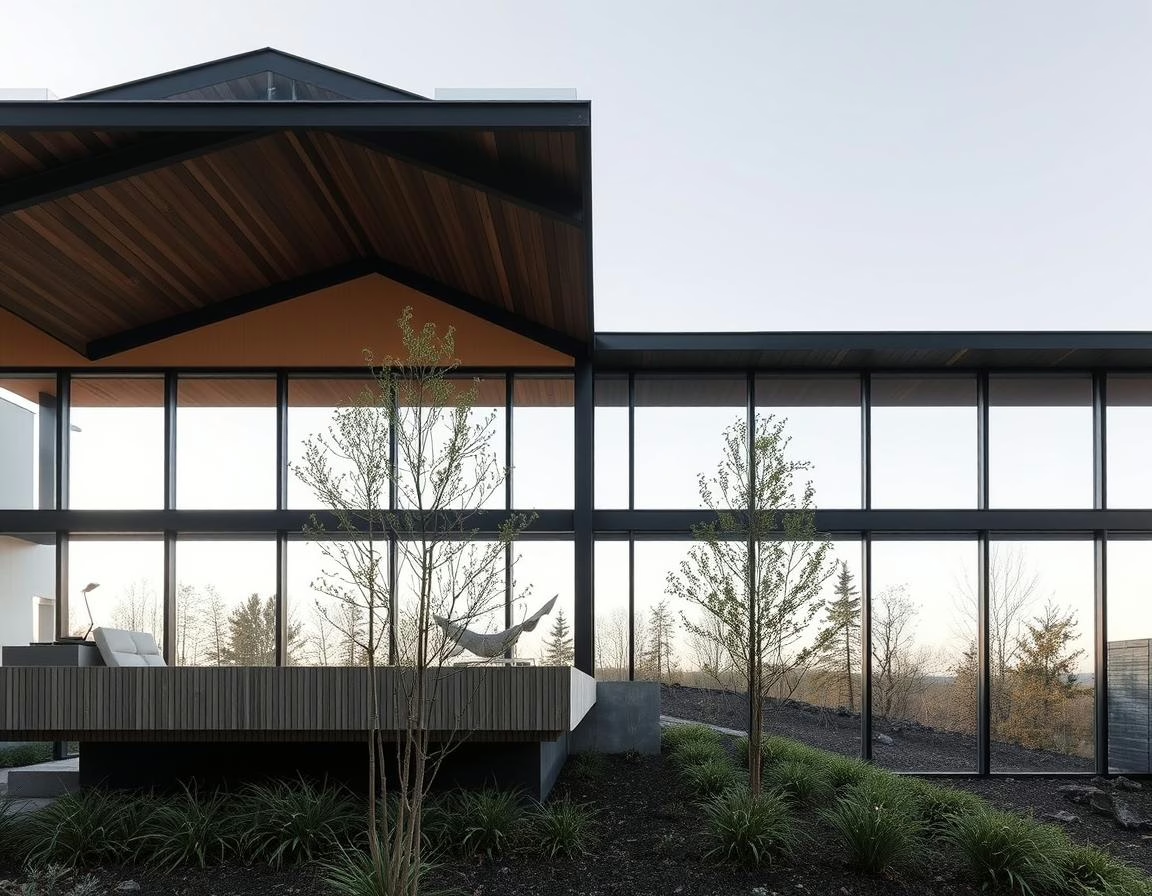
In the 15th Century, the Renaissance brought about a renewed focus on creating visually stunning buildings that could withstand the test of time. Fast forward to the modern era, and architects are still driven by the same passion for crafting structures that are both aesthetically pleasing and structurally sound.
With the construction industry poised for growth due to improving economic conditions, architects are increasingly turning to new-age building materials to fuel their creativity. These materials offer unique characteristics that enable architects to explore new design possibilities and meet the evolving demands of their clients.
Unleashing Creativity with High Tensile Strength Materials
One of the key features that architects seek in building materials is high tensile strength. Materials with high tensile strength can withstand significant environmental pressures without the need for bulky support structures. PTFE and ETFE are two such materials that have gained popularity in lightweight architecture for their exceptional tensile strength and wear resistance.
ETFE, in particular, has found widespread use in outdoor applications such as architectural membranes, allowing architects to create innovative and visually striking designs. By leveraging high-tensile fabric solutions, architects can bring their most daring architectural visions to life, free from the constraints imposed by traditional building materials.
Embracing Sustainability for Long-Term Viability
In addition to strength and durability, sustainability has become a paramount consideration in modern architecture. Sustainable building materials not only reduce the environmental impact of construction projects but also contribute to long-term compliance with regulations and standards.
ETFE stands out as a sustainable choice due to its lower carbon footprint compared to traditional materials. Its resistance to degradation from sunlight and weather elements translates to reduced maintenance costs over the lifespan of a building. Furthermore, the recyclability of ETFE ensures that at the end of its useful life, the material can be repurposed, aligning with the principles of a circular economy.
Materials like tensile membranes not only enhance the aesthetic appeal of buildings but also contribute to energy efficiency by maximizing natural light penetration. By utilizing such sustainable options, architects can mitigate future compliance risks related to environmental regulations and operational costs.
Pioneering the Future with Engineered Living Materials
Looking ahead, the concept of “living” buildings represents a groundbreaking advancement in architectural innovation. Engineered living materials (ELMs) harness the power of biological agents like fungal mycelia and bacteria to create self-healing and adaptive building structures.
Imagine a future where buildings can repair their own cracks and absorb carbon dioxide from the atmosphere. While the realization of living buildings may still be years away, the potential for such transformative solutions underscores the urgent need for sustainable and creative architectural approaches.
The evolving landscape of architecture presents a myriad of opportunities for architects to experiment with new design paradigms and materials. From parametric design driven by computational algorithms to repurposing waste materials for construction, the industry is ripe for exploration and innovation.
Key Takeaways:
- New-age building materials empower architects to push the boundaries of design and functionality.
- High tensile strength materials like PTFE and ETFE enable architects to realize complex architectural forms with structural integrity.
- Sustainable building materials such as ETFE offer long-term compliance benefits and environmental advantages.
- Engineered living materials represent a futuristic approach to architecture, promising self-healing and adaptive building structures.
- The integration of innovative materials and design concepts is essential for addressing the challenges posed by climate change and urban development.
As architects continue to embrace new-age building materials and technologies, the future of architecture shines bright with endless possibilities for creative expression and sustainable innovation.
Read more on ccr-mag.com



