
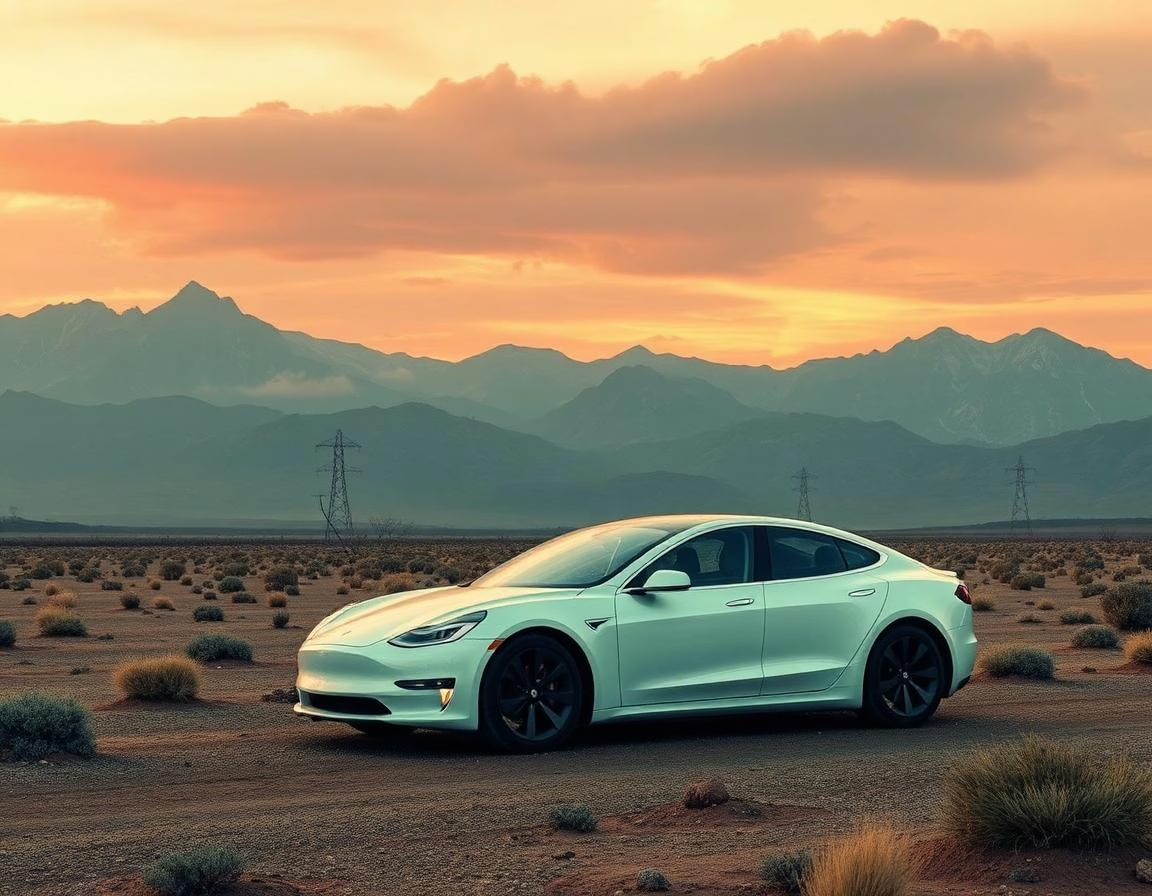
Tesla, the American electric vehicle (EV) pioneer, has encountered a notable sales decline as it begins 2026. The company has recorded a decrease in sales for four consecutive months, with January revealing significant numbers that indicate a rocky start to the year.
Sales Figures and Trends
In January 2026, Tesla sold approximately 40,100 vehicles, comprised of 11,227 cars and 28,873 trucks. This figure marks a 17% decline from the 48,500 units sold in January 2025. These estimates, provided by Motor Intelligence, underscore a concerning trend of declining demand for Tesla vehicles in the U.S. as the company faces increasing competition and market challenges.
Discontinuation of Iconic Models
To combat the declining sales, Tesla announced in late January that it would discontinue the Model S and Model X after years of production. The Model S has been a staple for 13 years, while the Model X has been on the market for 11 years. CEO Elon Musk cited the shift towards autonomous technology as a primary reason for this decision. The retirement of these iconic models marks the end of an era for Tesla, which has long relied on their popularity to drive its brand identity.
Impact of Tax Incentives
The landscape for EV purchases has changed dramatically since the introduction of the Inflation Reduction Act of 2022, which provided significant tax credits for new and used EV buyers. However, the benefits of these incentives have diminished following the implementation of new legislation under the previous administration, which eliminated many of these financial advantages. As the tax incentives faded, consumer interest in purchasing EVs, including those offered by Tesla, has diminished significantly.
Declining Market Presence
Further statistics reveal a downward trend in Tesla’s overall market presence. In 2025, the company sold 568,454 units, a sharp decline from 625,712 in 2024. This 10% drop raises concerns about the company’s ability to maintain its position in a rapidly evolving automotive market. As consumers reassess their options, Tesla must navigate these challenges to recover its lost sales momentum.
Brand Value and Market Position
Beyond declining sales figures, Tesla’s brand value has also taken a hit. Reports indicate a 36% decrease in brand value during 2025, equating to a staggering loss of $15.4 billion. This decline is attributed to a combination of factors, including falling sales and Musk’s controversial political affiliations, which may have alienated some consumer segments. As of January 2026, Tesla’s stock value has fallen below several key competitors, including Toyota and Volkswagen, further complicating its market position.
Looking Ahead: Challenges and Opportunities
Tesla’s trajectory in 2026 appears challenging. The discontinuation of popular models, coupled with a significant decline in brand value and sales, presents a formidable landscape for the company. However, the automotive market is dynamic, and opportunities for recovery exist. As the industry moves toward electrification and autonomy, Tesla must innovate and adapt to regain consumer confidence and market share.
Key Takeaways
- Tesla’s sales have declined for four consecutive months, with January 2026 showing a 17% drop from the previous year.
-
The company will retire the Model S and Model X, two flagship models, in response to shifting market demands.
-
The elimination of tax incentives has negatively impacted consumer interest in EV purchases, including Tesla’s offerings.
-
Tesla’s brand value has decreased by 36%, representing a significant financial loss and affecting its competitive position.
-
As the market evolves, Tesla faces the challenge of adapting to new consumer expectations while maintaining its leadership in the EV sector.
In conclusion, Tesla’s start to 2026 highlights the complexities of the evolving automotive landscape. With declining sales and shifting consumer preferences, the company must navigate these challenges strategically. The future is uncertain, but innovation and adaptability could pave the way for a successful recovery.
Read more → www.aol.com



