
In a recent update by pv magazine, Solcast, a DNV company, reported a significant surge in solar energy production across Europe in August 2025. This surge marked one of the most productive months for European photovoltaic (PV) systems this decade, particularly in the western regions of the continent.
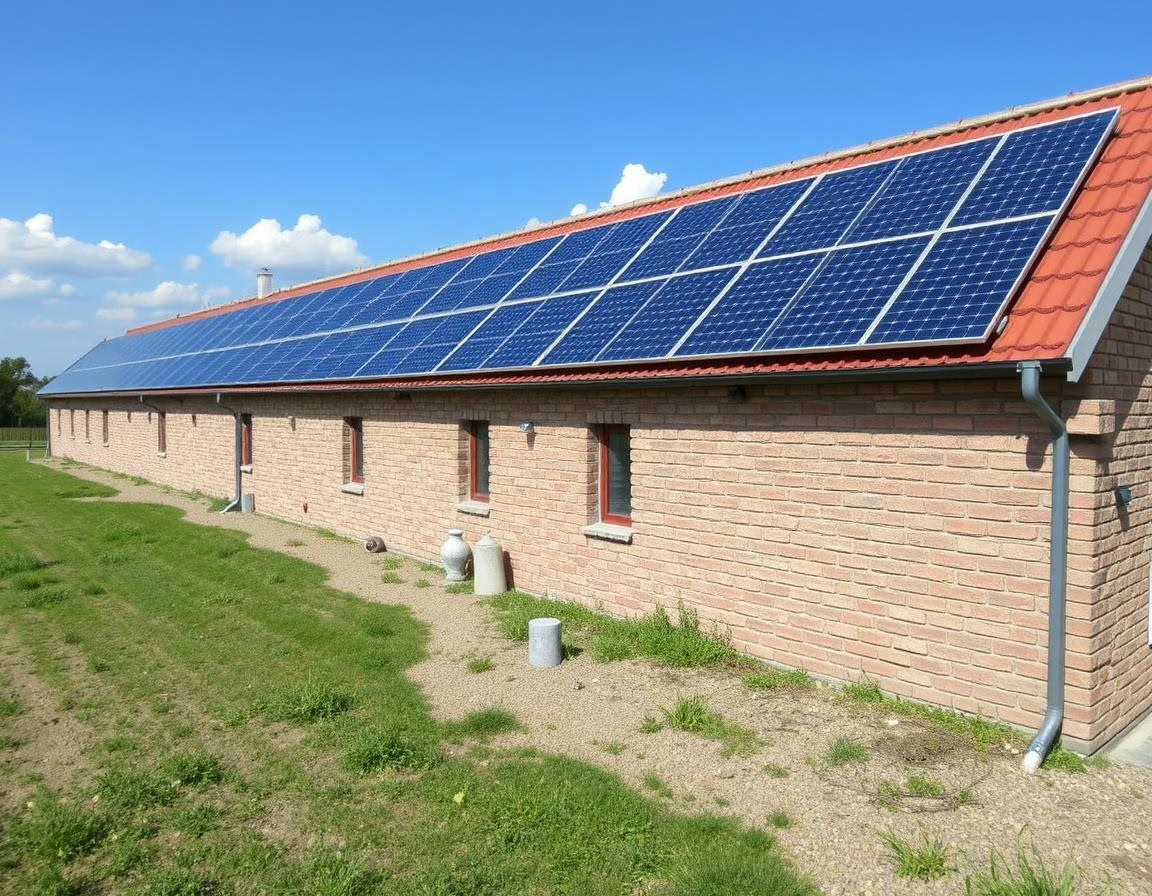
Throughout August, most of Europe experienced exceptional PV production, attributed to high-pressure weather systems that brought dry, stable conditions and consistently above-average levels of irradiance. However, areas adjacent to the Mediterranean faced challenges due to increased storm activity and the remnants of Hurricane Erin, which impacted solar output negatively. Analysis utilizing the Solcast API revealed that August 2025 stood out as a highly productive month for European PV, especially in the western half of the continent.
The dominance of high-pressure systems over Western Europe during the month, notably the Azores High over the north Atlantic extending its influence, suppressed cloud formation and ensured prolonged periods of sunshine. Data from Solcast indicated that irradiance levels across much of the region were 10-15% above the typical August levels, leading to a substantial increase in estimated PV production. Some regions, such as the east of Scotland and southern Sweden, even reached 20% above the norm, translating to approximately 4.5 kWh/m2 per day at these higher latitudes.
Countries like Belgium experienced a 14% rise in output compared to the long-term August average per unit of installed capacity, while the Netherlands and Germany saw gains of 11% and 8%, respectively. Great Britain also performed well, with estimated production exceeding its usual August levels by 7%. France, on the other hand, remained closer to average, with a 3% increase over normal levels.
Despite the specific weather conditions in August, many European countries observed that this year ranked as the second-strongest August for PV output per unit of installed capacity since 2014, trailing only behind 2022. As the solar capacity across the continent continues to grow, the total production for August set a new record high. The prevalence of settled weather was linked to persistent high-pressure systems that deterred Atlantic storm activity and minimized cloud cover over central and northern Europe.
Conversely, solar conditions in the Mediterranean basin were less favorable. Countries like Portugal, Spain, Italy, and Greece experienced irradiance levels near or slightly below their long-term August averages. For instance, Italy’s PV production was estimated to be 1% below the historical norm, reflecting subdued performance in other parts of the Iberian Peninsula as well. The region grappled with low-pressure systems and summer thunderstorm outbreaks that led to reduced irradiance and increased day-to-day variability.
Several thunderstorm events in Spain and Italy even brought significant hailstones, posing direct risks to PV infrastructure. Towards the end of the month, the remnants of Hurricane Erin, having crossed the Atlantic, unleashed severe weather across northern Italy and surrounding Mediterranean areas. The associated cloud cover and rainfall further hindered irradiance, limiting the production potential in the final days of August.
Solcast generates these insights by monitoring clouds and aerosols globally at a resolution of 1-2 km using satellite data and proprietary AI/ML algorithms. This data aids in creating irradiance models, allowing precise calculations with minimal bias and offering cloud-tracking forecasts. Over 350 companies managing more than 300 GW of solar assets worldwide rely on this data for effective operational decisions.
While the views expressed in this article are those of the author and may not necessarily align with pv magazine’s stance, the data and analysis provide valuable insights into the solar energy landscape in Europe. This content is protected by copyright and should not be reused without prior authorization. For cooperation inquiries or content reuse requests, please reach out to editors@pv-magazine.com.
In conclusion, the solar surge witnessed across Europe in August 2025 underscored the continent’s growing reliance on solar energy as a key renewable resource. The contrasting conditions between Western Europe and the Mediterranean region highlighted the significant impact of weather patterns on PV production. As solar capacity continues to expand and technological advancements improve efficiency, the potential for solar energy generation in Europe remains promising.
Takeaways:
– August 2025 marked a record high for PV production in Europe, driven by favorable weather patterns in Western regions.
– High-pressure systems boosted irradiance levels, resulting in notable production increases in countries like Belgium, the Netherlands, and Germany.
– Despite challenges in the Mediterranean basin, including storm activity and reduced irradiance levels, solar energy production in Europe continues to show resilience and growth.
– Solcast’s data and analysis play a crucial role in monitoring and optimizing solar asset performance, benefiting numerous companies globally.
Read more on pv-magazine.com



