
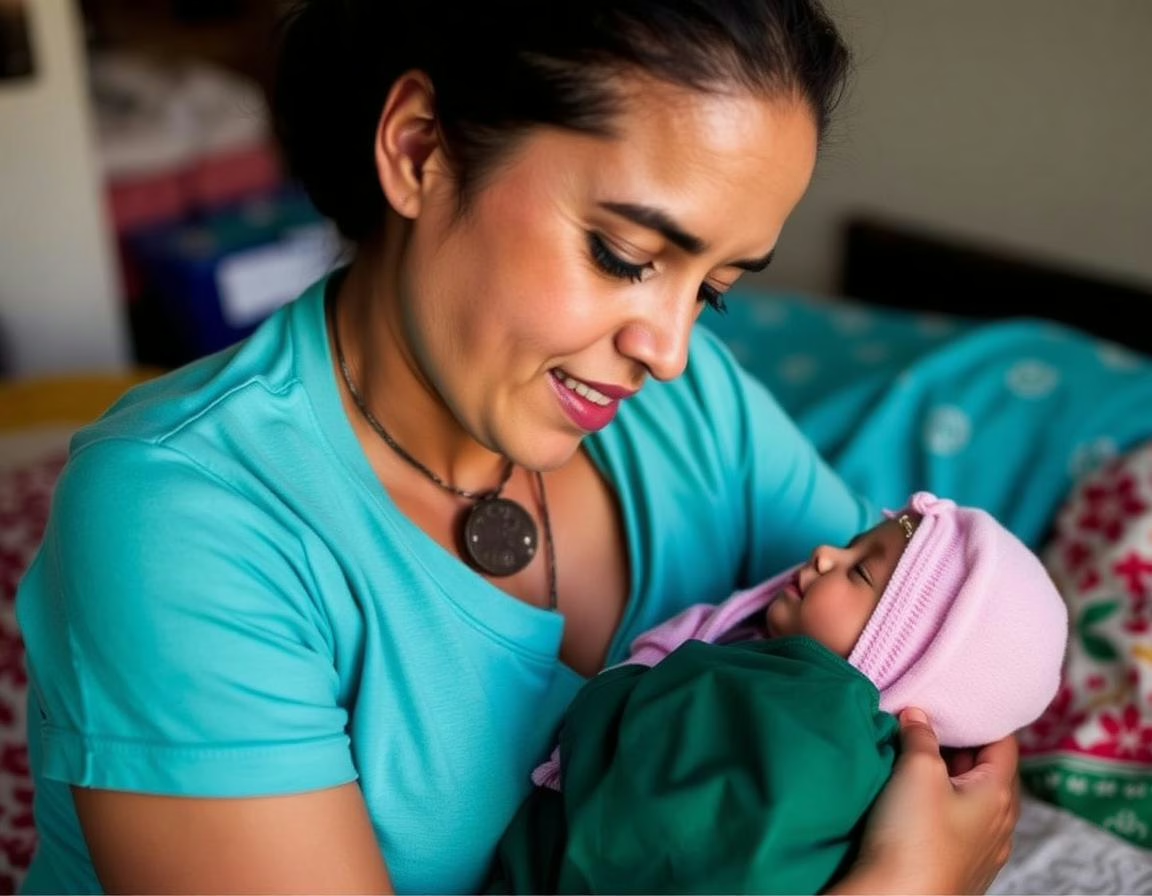
As Singapore grapples with declining fertility rates, an intriguing trend is emerging: an increasing number of babies are being born to mothers in their 40s. This shift indicates a complex interplay of societal and medical factors influencing family planning in the city-state.
Trends in Birth Rates
Recent statistics reveal a significant rise in the birth rate among women aged 40 to 44. In 2025, the birth rate for this age group reached 9.6 babies per 1,000 women, a notable increase from 8.9 in 2015 and 6.2 in 2005. Similarly, women aged 45 to 49 have also seen a slight uptick, with a birth rate of 0.5 per 1,000 women, up from 0.4 in 2015 and 0.2 in 2005.
Conversely, younger women in Singapore are experiencing a decline in birth rates. For those aged 25 to 29, the rate plummeted to 38.3 per 1,000 women in 2025, down from 68.7 in 2015. The trend continues for women aged 30 to 34, whose birth rate fell to 70 per 1,000 women in 2025 from 98.5 a decade earlier. This data, released in early 2025, underscores a demographic shift in how Singaporean families are evolving.
Delayed Parenthood
Experts attribute this phenomenon to changing societal norms. Professor Jean Yeung, an authority on social sciences at the A*STAR Institute, notes that many women are prioritizing education and career advancement, leading to later marriages and motherhood. The median age for women having their first child has risen from 29.3 years in 2004 to 31.9 years in 2024. This delay is particularly evident among couples deciding to start families later in life.
Dr. Tan Poh Lin from the Institute of Policy Studies emphasizes that women in their early 30s are crucial to the nation’s birth rates, and their declining numbers significantly impact overall fertility. The total fertility rate in Singapore has dropped alarmingly from 1.26 in 2005 to a record low of 0.87 in 2025.
Changing Attitudes Towards Family Planning
Dr. Kalpana Vignehsa, another researcher at the IPS, highlights a shift in mindset among married couples regarding parenthood. For many, the decision to have children is now informed by career stability and practical considerations. The desire to strike a balance between work and family life often leads couples to delay starting a family, even if they marry young.
Simran Toor, vice-president of Fertility Support SG, points out that many women entering motherhood in their late 30s or early 40s only become aware of their fertility challenges after attempting to conceive for a year or two post-marriage. This reality often comes as a surprise to those who had previously assumed they would easily start a family.
Advances in Assisted Reproductive Technology
The landscape of assisted reproductive technology (ART) has also evolved, contributing to the rise in births among older women. In 2020, the Singapore government lifted the age limit for in-vitro fertilization (IVF) treatments, which previously capped eligibility at 45 years. This policy change allows women to pursue IVF without an age restriction, resulting in a surge of interest from women over 40 seeking fertility treatments.
Dr. Liu Shuling from the KKIVF Centre reports that nearly one in six patients seeking treatment is now over 40, compared to one in 12 before the age limit was lifted. The government has also extended co-funding for ART treatments to women aged 40 and above, provided they had attempted fertility treatments before turning 40.
Challenges and Realities of IVF
Despite these advances, fertility specialists caution that IVF is not a guaranteed solution for older women facing infertility. Dr. Suresh Nair from Seed of Life notes that while many women feel reassured by the availability of IVF, the chances of successful conception decrease significantly with age. Additionally, male fertility can also decline, which is an often-overlooked factor in discussions about fertility challenges.
Statistics show that since the policy change in 2020, around 20 women aged 45 and older have undergone IVF annually, but none have successfully given birth using their own eggs collected after age 45. Dr. Liu emphasizes that while there are exceptions, the success rates for IVF in women over 45 remain exceedingly low.
The Importance of Awareness and Support
As the trend of older motherhood continues to rise, experts urge for increased awareness and support surrounding fertility issues. Professor Yeung advocates for enhanced consultation services, subsidies, and specialized leave for couples undergoing fertility treatments. Raising awareness can empower couples to make informed decisions about family planning, especially when they encounter difficulties conceiving.
Conclusion
The changing dynamics of family planning in Singapore reflect a broader societal shift toward delayed parenthood and evolving attitudes about fertility. While the rise in births among older mothers signifies a response to these changes, it also highlights the importance of continued support and awareness in navigating the complexities of modern parenthood. As the nation adjusts to these trends, fostering a supportive environment for families remains essential.
- Key Takeaways:
- Birth rates among mothers in their 40s are rising in Singapore.
- Younger women are increasingly delaying motherhood, impacting overall fertility rates.
- Changes in IVF policies have facilitated access for older women.
- Awareness and support for fertility issues are crucial for couples considering parenthood later in life.
- Societal norms around marriage and family are evolving, influencing family planning decisions.
Read more → www.straitstimes.com



