
The UK is embarking on a groundbreaking journey towards decarbonizing its ports by unveiling innovative floating power hubs that aim to revolutionize the maritime industry’s energy landscape. Spearheaded by ELIRE Infra and its consortium, backed by a substantial £1 million grant from the UK government, this ambitious initiative seeks to introduce sustainable energy solutions through the deployment of modular biorefinery hubs powered by green hydrogen technology. By addressing the pressing need for reducing emissions in ports and aligning with the country’s ambitious 2050 net-zero target, these floating power hubs have the potential to usher in a new era of clean energy infrastructure, particularly in the realm of hydrogen.
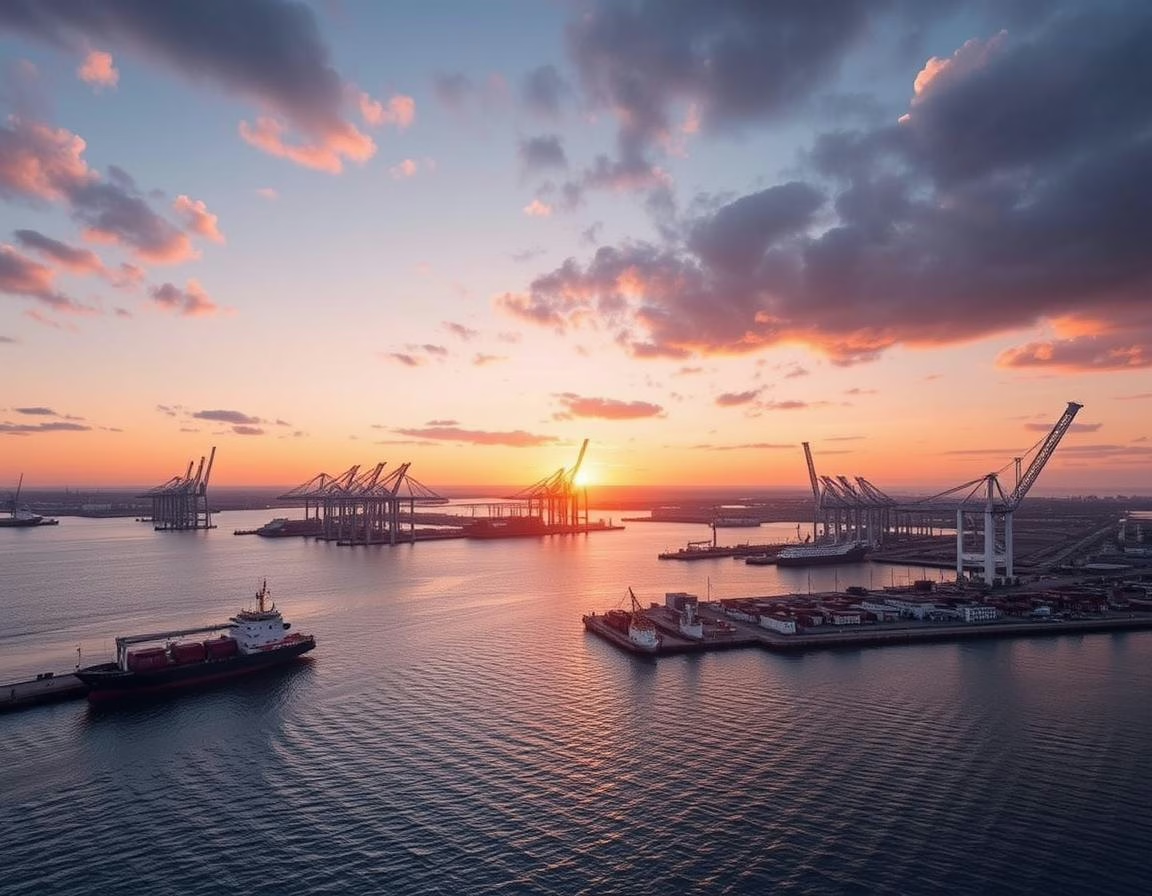
The traditional reliance on diesel generators and shore power at ports has long been a significant source of CO₂ emissions, adversely impacting local air quality. With the imperative to transition towards cleaner energy sources becoming increasingly urgent, initiatives such as the Clean Maritime Demonstration Competition, led by Innovate UK and UK SHORE, play a pivotal role in promoting and showcasing innovative technologies that can swiftly cut emissions within the maritime sector. The introduction of floating hydrogen power hubs represents a paradigm shift in port energy management, offering a versatile and sustainable alternative to conventional power generation methods.
These cutting-edge floating power hubs embody a modular, off-grid microgrid design that integrates various green energy technologies. By combining hydrogen fuel cells, solar panels, biofuel microturbines, and advanced nanoporous hydrogen storage modules, each hub operates as a self-sufficient energy node capable of generating clean electricity. Moreover, the incorporation of sophisticated control systems developed by industry leaders such as Schneider Electric and Ricardo UK ensures seamless power flow management, while rigorous testing and validation conducted by the University of Strathclyde guarantee the stability and reliability of these platforms, even under challenging maritime conditions.
The feasibility phase of this transformative project, initiated in March 2025 with trials in Greenwich, marks a critical milestone in the journey towards realizing full-scale deployment. With meticulous planning and coordination by Sealand Projects and Triton Anchor Europe, the consortium aims to deliver comprehensive system designs, regulatory frameworks aligned with evolving safety standards, and robust structural assessments by March 2026. If successful, the first operational floating power hub could be operational off the UK coast by 2028, setting a precedent for sustainable energy infrastructure development in ports nationwide.
Beyond serving as a localized solution for UK ports, these floating power hubs represent a blueprint with global ambitions, offering a scalable and replicable model for decarbonizing maritime facilities worldwide. In addition to significant carbon reduction potential and improved air quality in port communities, the deployment of these hubs is poised to create new employment opportunities in engineering, fabrication, and operations, bolstering the UK’s position as a leader in clean energy innovation. Despite facing challenges such as regulatory complexities, investor confidence, and intense competition in the clean maritime sector, the potential benefits of transitioning to hydrogen-based power generation far outweigh the hurdles, propelling the UK towards a sustainable and emission-free maritime future.
ELIRE Infra, the driving force behind this transformative initiative, brings a wealth of expertise in clean infrastructure development, technology integration, and marine deployment, underpinned by its parent company ELIRE Group’s strong aerospace background and substantial investment capacity. By championing the adoption of floating power hubs powered by green hydrogen, ELIRE Infra is not only pioneering a new era of sustainable energy at sea but also positioning UK ports as beacons of zero-emission innovation on a global scale. Through collaborative efforts and unwavering commitment to environmental stewardship, ELIRE and its partners are forging a path towards a cleaner, greener future for maritime operations, setting a precedent for sustainable energy transformation in the industry.
Takeaways:
– The UK is leading the way in decarbonizing ports through innovative floating power hubs powered by green hydrogen technology.
– These modular biorefinery hubs offer a sustainable alternative to traditional diesel generators, reducing emissions and enhancing energy efficiency.
– The feasibility phase of this pioneering project aims to deliver comprehensive system designs, regulatory frameworks, and structural assessments by 2026.
– Floating power hubs not only promise significant carbon reductions and improved air quality but also create new job opportunities and drive clean energy innovation.
– ELIRE Infra’s expertise and strategic partnerships position it as a key player in advancing sustainable energy solutions in the maritime sector.
Tags: regulatory
Read more on hydrogenfuelnews.com



