
In an era where technology is rapidly transforming various industries, the Naval Surface Warfare Center, Port Hueneme Division (NSWC PHD) is pioneering a groundbreaking approach to maintenance operations within the Navy fleet. The deployment of over 20 Augmented Reality Maintenance Kits in August marks a significant milestone in the integration of cutting-edge augmented reality (AR) technology into naval practices. Led by the ARMS team, this initiative aims to equip every deployed ship with ARMS capability, revolutionizing maintenance processes through enhanced efficiency, accuracy, and safety.
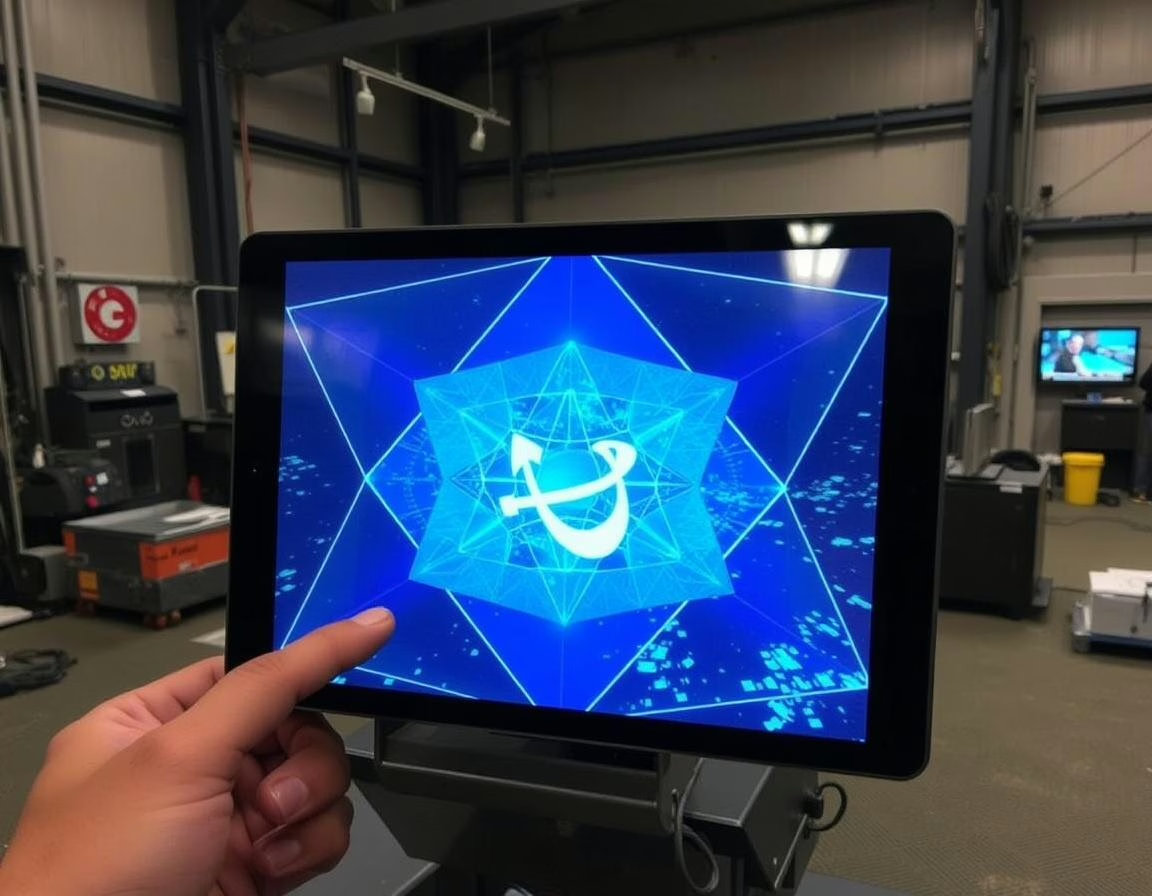
Augmented Reality Maintenance Systems leverage AR technology to superimpose vital digital information onto a technician’s view of physical equipment, providing real-time guidance, remote expert assistance, and streamlined workflows. By utilizing headsets or mobile devices, technicians can access step-by-step instructions, diagrams, sensor data, and even engage in live communication with onshore subject matter experts. This transformative technology not only empowers personnel with critical information but also facilitates comprehensive training and maintenance operations, ultimately optimizing fleet readiness and operational effectiveness.
The strategic focus of the ARMS project lead, Matt Cole, highlights the commitment to ensuring that every deploying ship possesses ARMS capability before setting sail. By targeting high-priority deployments such as carrier strike groups and forward-deployed naval forces, the ARMS team is actively working towards widespread implementation across key naval fleets. The recent distribution of ARMS kits to FDNF ships in the 6th and 7th Fleets, as well as installations in strategic locations like Rota, Spain, and Yokosuka, Japan, underscores the project’s momentum towards full-scale deployment.
Chris Black, the lead for rapid prototyping experimentation and demonstration at NSWC PHD, emphasizes the versatility of ARMS deployment by extending kits to diverse naval assets such as the Iwo Jima Amphibious Ready Group. This widespread adoption of ARMS technology signifies a shift towards modernizing maintenance practices across various naval platforms, ensuring operational readiness and efficiency across the fleet. Furthermore, the deployment of ARMS kits to critical missile defense sites in Poland and Romania underscores the adaptability and strategic value of this innovative maintenance solution.
The seamless integration of ARMS technology not only enhances maintenance procedures but also fosters a culture of continuous improvement and operational excellence within the Navy fleet. By enabling shipboard maintainers to connect with onshore experts in real-time, ARMS promotes collaborative problem-solving, knowledge sharing, and skill development among naval personnel. The proactive approach of securing funding from key naval commands like Commander, Naval Air Force, U.S. Pacific Fleet (CNAP) and Commander, Naval Surface Force, U.S. Pacific Fleet (SURFPAC) demonstrates the strategic value placed on ARMS technology as a pivotal asset in enhancing fleet capabilities.
Looking ahead, the ARMS team remains steadfast in their commitment to achieving full deployment across all deploying or deployed ships by the first quarter of the next fiscal year. This ambitious timeline reflects the team’s dedication to providing sailors with advanced training opportunities and operational support well in advance of deployment cycles. By prioritizing early installations and comprehensive training programs, the ARMS team aims to maximize the impact of this transformative technology on fleet readiness and operational efficiency.
The successful delivery of over 20 ARMS kits to the Navy fleet signifies a pivotal moment in the evolution of maintenance practices within the maritime domain. As the NSWC PHD continues to spearhead innovation in collaboration with key naval commands and fleet assets, the integration of ARMS technology stands poised to revolutionize maintenance operations, enhance fleet readiness, and elevate operational capabilities across the Navy fleet. This strategic investment in cutting-edge technology underscores the Navy’s unwavering commitment to leveraging innovation to ensure mission success and operational superiority in an ever-evolving security landscape.
Takeaways:
– Augmented Reality Maintenance Systems are revolutionizing naval maintenance operations by enhancing efficiency, accuracy, and safety.
– The strategic deployment of ARMS technology across key naval fleets underscores the Navy’s commitment to operational excellence and readiness.
– Collaborative partnerships with key naval commands and rapid integration of ARMS kits highlight the agility and adaptability of this innovative maintenance solution.
– The proactive approach to securing funding and prioritizing early installations reflects a forward-thinking strategy to maximize the impact of ARMS technology on fleet operations.
– The ARMS team’s dedication to achieving full deployment across all deploying or deployed ships demonstrates a commitment to empowering naval personnel with advanced training and operational support.
– The integration of ARMS technology signifies a transformative shift towards modernizing maintenance practices, fostering a culture of continuous improvement and operational excellence within the Navy fleet.



