
Alkelux, an Italy-based biotech startup, has made a significant breakthrough by developing a sustainable antimicrobial additive extracted from licorice waste. This innovative additive can be integrated into packaging materials to enhance the shelf life of perishable foods like strawberries and blueberries. The company’s mission to combat food waste in Italy, where it cost the economy over €9 billion in 2023, underscores the urgency and relevance of their solution on a global scale.
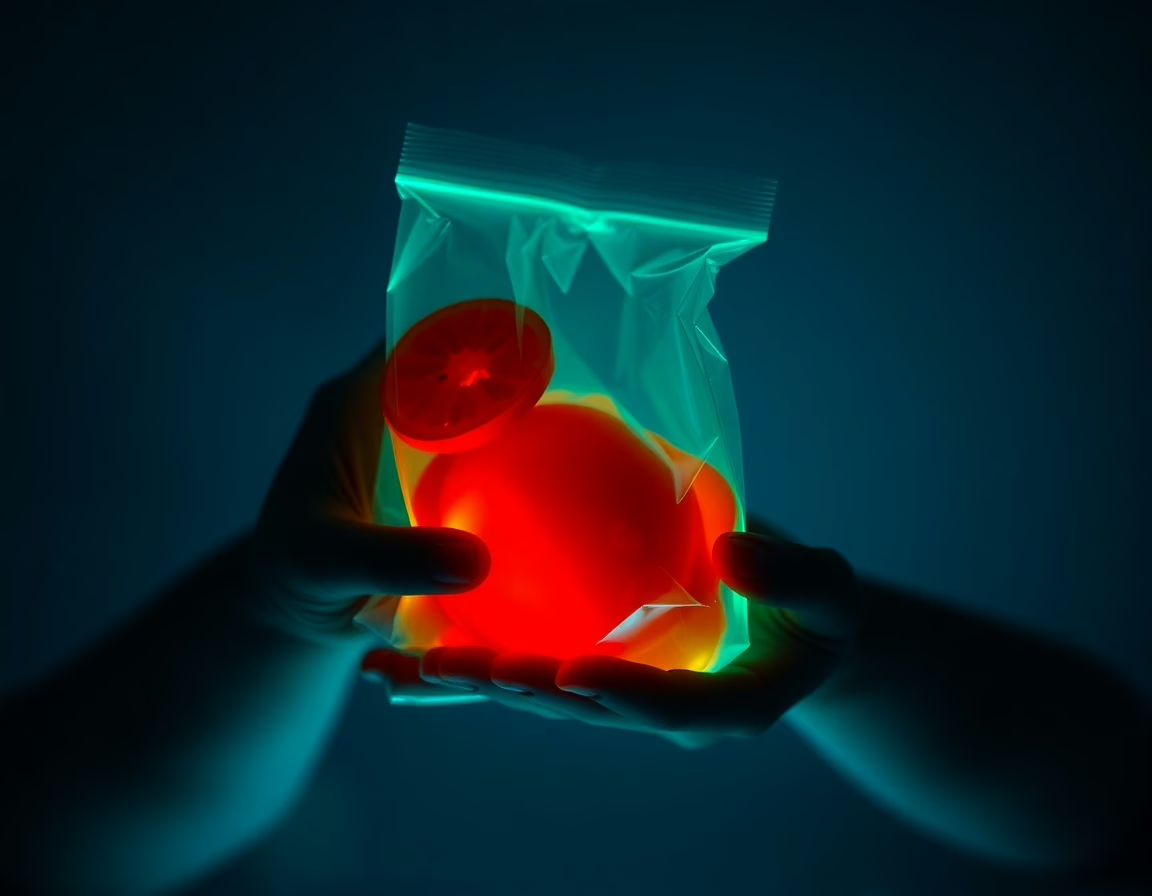
The eco-friendly packaging material, derived from licorice processing waste, is in powdered form and easily incorporable into existing plastic films or compostable materials. Notably, it is metal-free, water-soluble, and does not require modifications to industrial production lines, making it a seamless and cost-effective solution for food manufacturers looking to adopt this technology. The material’s photoactivity is a standout feature, as exposure to light enhances its antimicrobial properties, providing superior protection against harmful pathogens that can spoil fresh produce.
By extending the shelf life of fruits and vegetables, Alkelux’s innovation not only helps consumers save money on groceries but also contributes to environmental sustainability. The biodegradable nature of the packaging, coupled with its reliance on 100% natural materials, aligns with the principles of a circular economy, promoting the reuse of resources and minimizing waste. Initial tests on strawberries have already demonstrated a significant improvement in shelf life compared to traditional plastic packaging, hinting at the transformative potential of this technology.
Looking ahead, Alkelux is expanding its trials to include cardboard packaging and plans to introduce the technology to market by 2026, with a focus on South American countries. As the demand for eco-friendly and plastic-free packaging solutions continues to rise among food producers and packaging companies, Alkelux’s innovation stands poised to revolutionize the food sector by offering a sustainable alternative that addresses both environmental concerns and commercial interests. While it may not entirely replace plastic, its ability to reduce waste and mitigate pollution from plastic manufacturing marks a crucial step towards a more sustainable future.
Paul Jenkins, managing director of ThePackHub, aptly describes Alkelux’s liquorice-based nanomaterial as a groundbreaking advancement that marries scientific innovation with sustainability in a tangible manner. The capacity to extend the shelf life of fresh produce without resorting to synthetic preservatives represents a significant leap forward, tackling environmental and economic challenges simultaneously. The potential impact of this technology extends beyond individual consumer choices, influencing broader industry practices and shaping the narrative around sustainable packaging solutions.
In conclusion, Alkelux’s remarkable achievement underscores the power of biotech innovation in addressing pressing global challenges such as food waste and environmental sustainability. By leveraging natural resources and cutting-edge technology, the startup has unlocked a promising avenue for reducing waste, enhancing food preservation, and promoting a circular economy mindset within the food packaging industry. As Alkelux continues to advance its technology and expand its market reach, the potential for positive change in the way we approach food packaging and sustainability remains immense.
Key Takeaways:
– Alkelux’s sustainable antimicrobial additive derived from licorice waste offers a groundbreaking solution to extend the shelf life of perishable foods.
– The eco-friendly packaging material is biodegradable, photoactive, and easily integrable into existing packaging processes, making it a cost-effective and efficient choice for food manufacturers.
– Initial tests have shown promising results, with the potential to significantly improve the shelf life of fruits and vegetables compared to traditional plastic packaging.
– Alkelux’s innovation not only benefits consumers by reducing grocery expenses but also contributes to environmental sustainability by promoting the reuse of natural resources and minimizing waste.
– The startup’s plans to bring the technology to market by 2026, starting with South American countries, signal a positive shift towards eco-friendly packaging solutions in the food sector.
– Alkelux’s success underscores the transformative potential of biotech in revolutionizing traditional industries and addressing critical global challenges such as food waste and environmental pollution.
Tags: biotech
Read more on yahoo.com



