
Early detection of endometriosis can transform the lives of millions, yet many women face a staggering delay in receiving a proper diagnosis. With innovative non-invasive diagnostics on the horizon, the hope is to significantly reduce the nine-year average wait time for diagnosis.
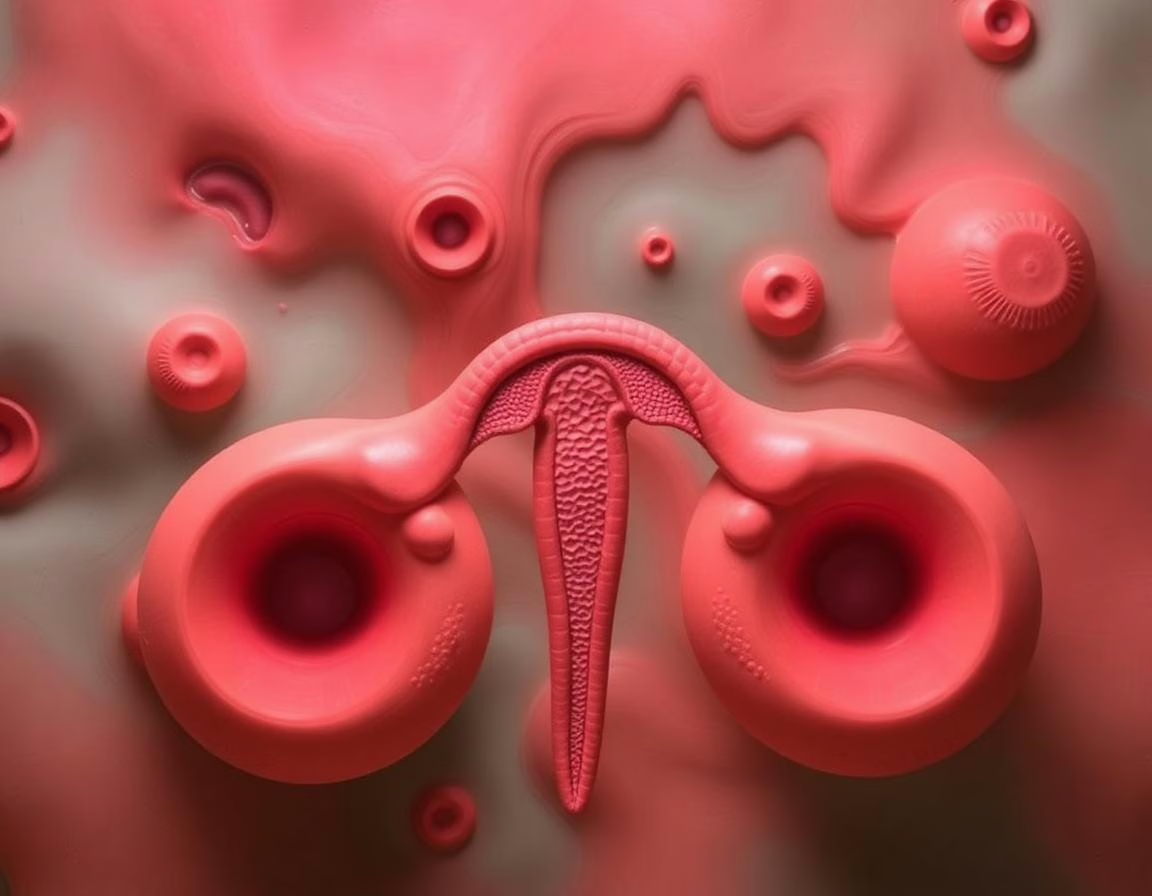
Understanding Endometriosis
Endometriosis is a chronic condition affecting about 10% of women of reproductive age globally. Characterized by the growth of endometrial-like tissue outside the uterus, this disease can lead to significant pain and fertility issues if not diagnosed and treated early. Unfortunately, the journey to diagnosis is often fraught with delays, misconceptions, and misdiagnoses, complicating timely intervention.
The Challenge of Diagnosis Delays
The average wait time for an endometriosis diagnosis has alarmingly risen to over nine years in the UK, as reported by Endometriosis UK. This long delay is attributed to various factors, including a lack of awareness among patients and healthcare professionals, resulting in the normalization of symptoms. Pain associated with endometriosis is often subjective and difficult to quantify, leading to further complications in understanding the condition.
Patients frequently seek help from specialists, only to be misdiagnosed with unrelated conditions. For instance, gastrointestinal issues stemming from endometriosis may prompt referrals to gastroenterologists instead of gynecologists. This misdirection extends the time before an accurate diagnosis is made.
Laparoscopy and the Quest for Alternatives
Currently, laparoscopy remains the gold standard for diagnosing endometriosis. However, this invasive procedure is often reserved for cases where symptoms have escalated significantly, leaving many women without a timely diagnosis. To address this gap, researchers are exploring non-invasive diagnostic methods that could provide earlier and more accessible options.
Innovative Non-Invasive Diagnostic Approaches
Several innovative tests are nearing completion that could change the landscape of endometriosis diagnostics. Serac Healthcare is focusing on an imaging agent called 99mTc-maraciclatide, which could detect early-stage endometriosis. Early studies suggest this tracer can identify superficial peritoneal lesions that are challenging to detect using traditional imaging techniques.
On another front, Ziwig has developed the Endotest, a saliva-based diagnostic that leverages a signature of 109 microRNAs. With impressive accuracy and specificity rates, this test has already received CE marking for use in Europe, offering hope for accessibility at a lower cost in the future.
Similarly, Proteomics International’s PromarkerEndo, a blood-based test utilizing a panel of protein biomarkers, has demonstrated strong sensitivity and specificity. Meanwhile, HerAnova is employing a multi-omics strategy with its HerResolve blood assay, which combines AI with various biomarkers to yield a comprehensive diagnostic picture.
Overcoming Barriers to Implementation
Despite the promise of these non-invasive diagnostics, several challenges must be overcome for widespread adoption. Securing adequate funding and demonstrating clear clinical utility are critical for gaining acceptance within medical guidelines and achieving reimbursement from payers. The recent updates to ACOG guidelines have raised the bar for new diagnostics, emphasizing the need for rigorous validation and integration into standard care practices.
The Future of Endometriosis Treatment
While advances in diagnostics are encouraging, treatment options for endometriosis remain limited. Current clinical trials often rely on laparoscopic evaluations to assess the effectiveness of new therapies, which can skew results toward more severe cases. Pain, often used as a treatment endpoint, lacks objectivity and may not reflect active disease status accurately.
The development of validated non-invasive diagnostics could pave the way for more targeted therapeutics, facilitating personalized treatment approaches. Researchers are beginning to identify specific biomarkers that may predict treatment responsiveness, further enhancing the potential for individualized patient care.
The Path Forward
As the landscape of endometriosis diagnostics evolves, a precision-medicine approach may be necessary to address the complexities of the disease. Different subpopulations of women may exhibit distinct disease mechanisms, and tailoring treatments to these variations will be crucial in improving outcomes.
Conclusion
The future of endometriosis diagnosis is at a pivotal moment. As non-invasive tests gain traction, the potential to minimize diagnosis delays and enhance patient care becomes increasingly within reach. This progress not only holds promise for millions of women but also marks a significant step toward greater awareness and better health outcomes in women’s health.
- Non-invasive diagnostic tests are emerging to reduce the diagnosis delay for endometriosis.
- Innovative approaches include saliva and blood-based tests with high accuracy rates.
- Overcoming funding and guideline barriers is essential for widespread adoption of new diagnostics.
- A precision-medicine approach may lead to more effective and personalized treatment strategies.
- Early detection of endometriosis can significantly improve quality of life and treatment success.
Read more → www.pharmaceutical-technology.com



