
In the realm of regenerative medicine and tissue engineering, the quest for efficient cell transplantation methods is ongoing. A groundbreaking study has emerged, shedding light on a novel approach that combines injectable hydrogels with controlled release of growth factors to enhance therapeutic efficacy in cell transplantation.
Unveiling the Study
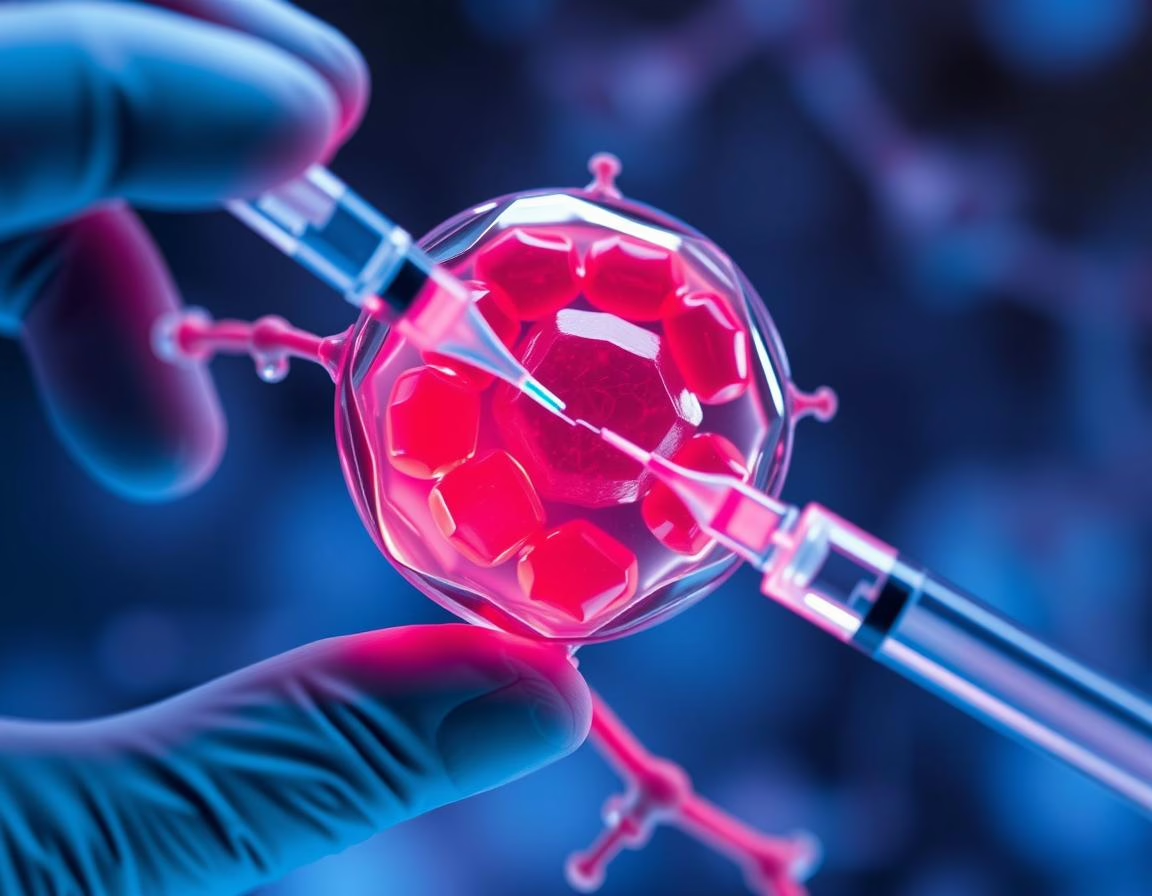
At the core of this study is the fusion of gelatin hydrogel microspheres loaded with growth factors with bioabsorbable injectable hydrogels for the transplantation of adipose-derived stem cells (ASCs). This innovative technique involves incorporating basic fibroblast growth factor and platelet growth factor mixture (GM/GF) into the injectable hydrogels (iGel) to create a synergistic environment for cell transplantation.
Key Findings
- Rats injected with ASCs suspended in solutions containing GM/GF displayed significantly higher cell retention compared to control groups.
- The expression of Myo-D, a myoblast marker, was observed at the transplanted cell sites in groups where growth factors were added.
- The prolonged release of growth factors from the hydrogels enhanced the survival and functionality of transplanted cells, leading to improved therapeutic outcomes.
The Science Behind the Innovation
The study leveraged the unique properties of bioabsorbable injectable hydrogels, composed of gelatin, alginate, and ferric ion interactions, to provide a conducive environment for cell transplantation. These hydrogels not only retained transplanted cells but also supported their proliferation and differentiation without hindering their survival.
Harnessing the Power of Growth Factors
Growth factors play a pivotal role in promoting cell proliferation, differentiation, and cytokine secretion, crucial for successful cell transplantation. By impregnating gelatin microspheres with basic fibroblast growth factor and platelet growth factor mixture, the study ensured a sustained and controlled release of these essential growth factors at the transplantation site.
Implications of the Study
- Enhancing the retention and survival of transplanted cells
- Promoting tissue regeneration and improved therapeutic efficacy in cell transplantation
- Providing a minimally invasive and efficient method for cell delivery and tissue repair
Conclusion and Future Directions
The integration of injectable hydrogels with controlled growth factor release represents a significant advancement in the field of cell transplantation. This pioneering technique holds immense promise for regenerative medicine, offering a tailored approach to tissue repair and regeneration.
Takeaways:
– Injectable hydrogels combined with growth factor control release enhance cell transplantation efficiency.
– Controlled release of growth factors promotes cell survival, proliferation, and differentiation.
– The study paves the way for improved therapeutic outcomes in regenerative medicine.
– Integrating innovative technologies can revolutionize tissue engineering and regenerative therapies.
Tags: tissue engineering, regenerative medicine, drug delivery, secretion
Read more on pmc.ncbi.nlm.nih.gov



