
The bacteriological testing market, valued at USD 25.83 billion in 2025, is forecasted to reach USD 37.26 billion by 2030 at a CAGR of 7.6%. This growth is driven by the increasing demand for reliable testing solutions in industries like food & beverage, water, pharmaceuticals, cosmetics, and healthcare. Technological advancements have led to a shift from traditional culture-based methods to rapid techniques such as PCR, immunoassays, and next-generation sequencing, offering quicker and more accurate results. These testing methods are crucial for quality assurance and risk management, supported by stringent regulations, growing consumer awareness, and technological innovations.
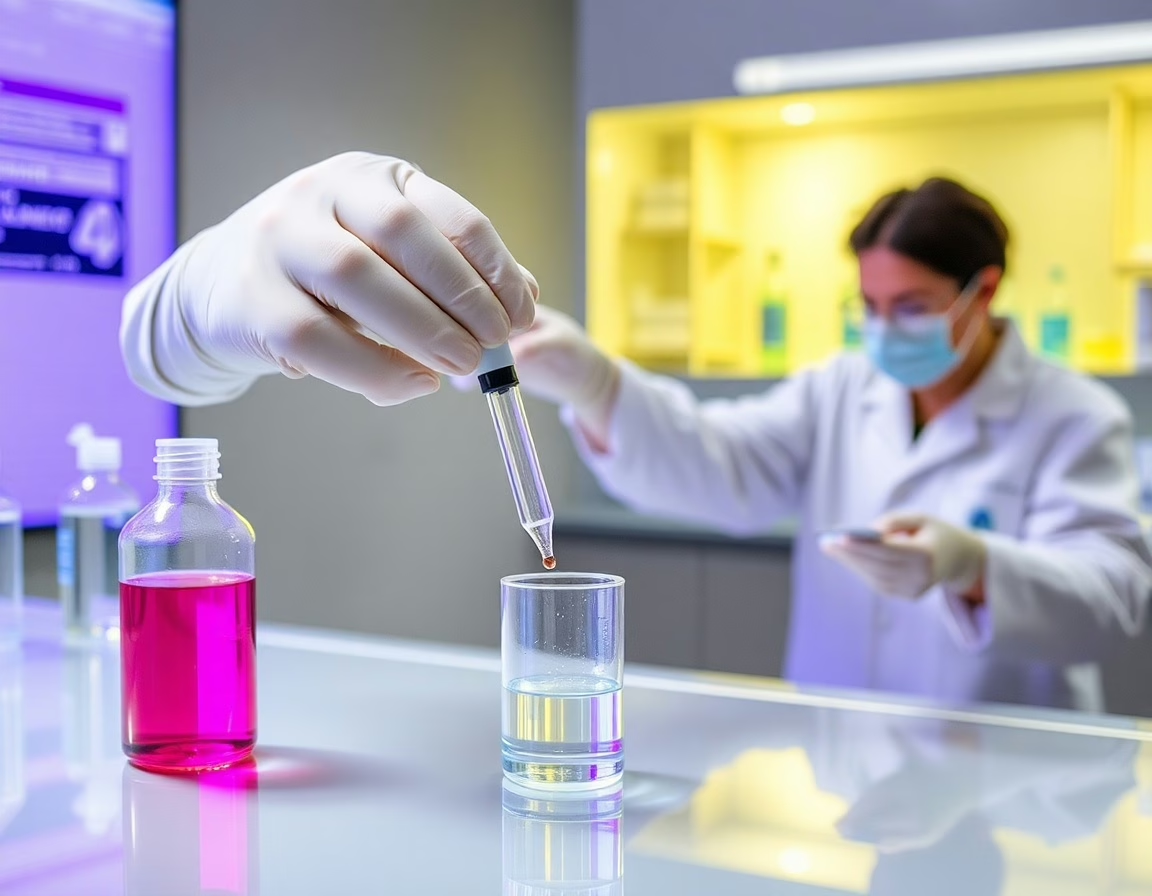
The pharmaceutical sector is expected to witness the highest growth in the bacteriological testing market due to the expanding biologics, vaccines, and sterile injectables segments. Stringent microbiological quality standards are paramount in this industry, necessitating precise bacteriological monitoring during drug development and production. Regulatory bodies like the US FDA and EMA are tightening guidelines for microbial testing, particularly in pharmaceutical facilities, to ensure compliance through routine sterility and endotoxin testing. The post-pandemic increase in global vaccine production and the emergence of personalized medicine are also contributing to the demand for high-precision bacteriological testing methods in the pharmaceutical sector.
Rapid testing technologies, including PCR, immunoassays, biosensors, and next-generation sequencing, are projected to experience significant growth during the forecast period. These rapid techniques provide results within hours, offering a substantial advantage over traditional culture-based methods that take days to deliver results. The speed of these rapid testing methods is particularly crucial in industries like food manufacturing and pharmaceuticals, where timely detection of contamination can prevent costly recalls and ensure patient safety. Automation and digitalization, along with AI-based analytics integration, are further propelling the adoption of rapid testing methods, making them not only faster but also more scalable and accurate.
Asia Pacific is poised to be the fastest-growing region in the bacteriological testing market, driven by increasing food safety awareness, regulatory reforms, and industrialization. The region’s growing population and rising consumption of processed foods are leading to a higher demand for stringent microbial quality checks. Countries like India and China are investing in microbiological testing infrastructure to meet international export standards, especially in pharmaceutical manufacturing. Governments across the region are also enhancing water quality regulations and modernizing laboratory facilities to combat waterborne diseases. The adoption of rapid testing technologies and automation is further fueling the growth of the bacteriological testing market in Asia Pacific.
Key players in the bacteriological testing market include SGS, Eurofins, Intertek, TÜV SÜD, ALS Limited, 3M, Thermo Fisher Scientific, Merck KGaA, Agilent Technologies, Bio-Rad Laboratories, and Romer Labs. These companies provide a range of services and equipment essential for bacteriological testing across various industries. As the market continues to evolve, these players are at the forefront of innovation and technological advancements to meet the increasing demand for reliable and efficient testing solutions.
In conclusion, the bacteriological testing market presents significant opportunities for growth, driven by the increasing need for reliable testing solutions in various industries. The shift towards rapid testing technologies, especially in the pharmaceutical sector, is reshaping the market landscape and propelling its expansion. With Asia Pacific emerging as a key growth region, fueled by regulatory reforms and technological advancements, the future of the bacteriological testing market looks promising. As key players continue to innovate and adapt to market trends, the industry is poised for continued growth and development.
Key Takeaways:
– The bacteriological testing market is projected to reach USD 37.26 billion by 2030, driven by the demand for reliable testing solutions across industries.
– The pharmaceutical sector is expected to witness the highest growth, emphasizing the need for precise bacteriological monitoring in drug development and production.
– Rapid testing technologies, offering quicker and more accurate results, are poised for significant growth, especially in industries like food manufacturing and pharmaceuticals.
– Asia Pacific is set to be the fastest-growing region in the bacteriological testing market, fueled by regulatory reforms and increasing demand for stringent microbial quality checks.
Tags: automation, biosensors, regulatory, vaccine production, pharmaceutical manufacturing
Read more on prnewswire.co.uk



