
The emergence of wine and charcuterie bars in unexpected locales can be transformative, and in October, Chicago’s Park Manor neighborhood welcomed one such establishment, Park Manor 75. Founded by Jacare Thomas and Charlette Stanton-Thomas, this venue transcends the conventional definition of a wine bar. It serves as a vital third space for the community, fostering connection, conversation, and the celebration of Black social life.
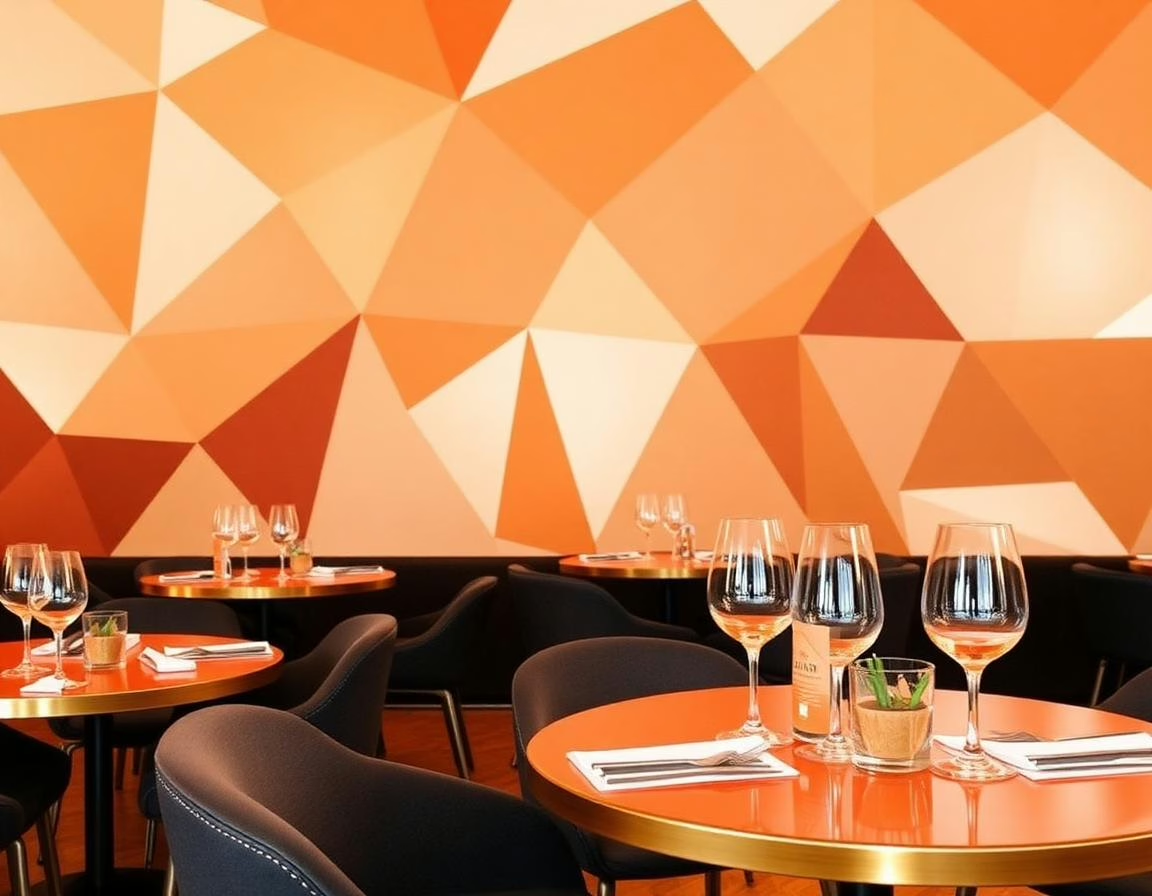
A Community Hub
Park Manor 75 is designed to be a welcoming environment, free from distractions such as televisions. Instead, it offers open seating and low music, encouraging patrons to engage with one another. The unique wine menu exclusively features selections from Black winemakers or wines sourced through Chicago-based Black négociants. This focus not only supports local talent but also reclaims a narrative often overlooked in the wine industry.
Inclusivity lies at the heart of Park Manor 75. While it prioritizes the visibility of Black culture in the wine sector, it embraces patrons from all walks of life. Thomas emphasizes that this wine bar is a corrective measure against the historically Eurocentric wine culture that has marginalized Black experiences. In a city where nearly one-third of the population identifies as Black, the need for a distinctive Black wine culture is more apparent than ever.
The Challenge of Representation
The statistics are stark: less than 1% of American winemakers are Black, and many remain virtually unknown outside celebrity-endorsed labels. Thomas points out that even high-quality wines produced by Black artisans often struggle to find representation in distributor portfolios. Park Manor 75 aims to change this narrative by elevating Black brands and creating a reference point for quality wines.
Just a few miles away, Bronzeville Winery exemplifies a similar vision. Launched in 2022 by Cecilia Cuff and Eric Williams, this establishment prioritizes producers from minority, women, and LGBTQ+ backgrounds. Cuff describes Bronzeville Winery as a canvas for cultural storytelling through wine, reflecting the community’s diverse experiences.
Cultural Storytelling Through Wine
Cuff’s journey into the wine industry was fueled by her belief in the power of hospitality to heal communities. After years in hotel design, she returned to her roots to create a sanctuary for the South Side. Bronzeville Winery is designed for exploration and comfort, providing a space where patrons can engage with wine in a culturally relevant manner.
The Wine Collective at Bronzeville Winery has rapidly gained popularity, reflecting the community’s eagerness to intertwine wine tasting with local history and civic engagement. Events featuring local historians and community leaders emphasize this commitment, fostering a deeper connection between the wine experience and the neighborhood’s legacy.
Bridging Gaps in Wine Education
However, redefining wine culture also involves addressing the language and accessibility surrounding it. Kiana Keys, a Chicago-based wine educator and writer, highlights the challenges that Black individuals face in wine education. Keys, who founded Unpolished Grape, experienced the rigorous demands of formal wine training while navigating cultural translation.
Keys notes that many wine education programs lean heavily on European traditions, creating barriers for those from different backgrounds. The need for dual fluency—both in technical wine language and community vernacular—can be daunting. Keys aims to bridge these worlds during tastings, using relatable language to make wine more approachable and enjoyable for her audience.
Structural Change in the Industry
The reimagining of wine culture is not solely about aesthetics or language; it involves systemic change. Marsha Wright, corporate wine director for DineAmic Hospitality, exemplifies this shift. Transitioning from a career in accounting to the wine industry, she has faced biases as a Black woman in a predominantly white field. Wright leverages her position to challenge misconceptions and showcase the depth of knowledge that Black professionals bring to the industry.
Despite persistent stereotypes regarding Black consumers’ preferences and purchasing power, data reveals a different reality. The collective buying power of Black Americans has surged significantly, reaching approximately $2.1 trillion. This economic influence is reshaping the wine market, creating an undeniable demand for diverse representation and quality products.
The Future of Black Wine Culture
The vibrancy of Black wine culture in Chicago is increasingly undeniable. With growing numbers of Black sommeliers, educators, and restaurateurs, the city is becoming a hub for this cultural renaissance. The ongoing efforts of venues like Park Manor 75 and Bronzeville Winery not only enrich the local landscape but also signal a broader movement within the wine industry.
As Chicago continues to nurture its Black wine culture, the focus shifts from questioning its existence to exploring how it will evolve. The city stands at the forefront of a transformative moment, shaping a narrative that celebrates diversity and inclusion within the world of wine.
Key Takeaways
- Park Manor 75 and Bronzeville Winery are redefining wine culture by emphasizing Black representation in Chicago’s wine scene.
-
These establishments serve as community hubs, fostering dialogue and connection through wine.
-
The challenges of language and education in wine are being addressed by innovators like Kiana Keys, who strive to make wine more accessible.
-
The growing economic power of Black consumers is reshaping the wine market, challenging outdated stereotypes.
-
Chicago’s Black wine culture is thriving, marking a significant shift in the landscape of the beverage industry.
The journey towards a more inclusive wine culture is ongoing, but the strides made by these visionaries in Chicago are paving the way for a future where all voices are celebrated at the table.
Read more → www.chicagotribune.com



