
In the realm of biologics manufacturing, the facilities at Bio Campus I stand as a testament to advanced production capabilities. With a range of plants dedicated to various scales of production, these facilities are poised to meet diverse market demands efficiently.
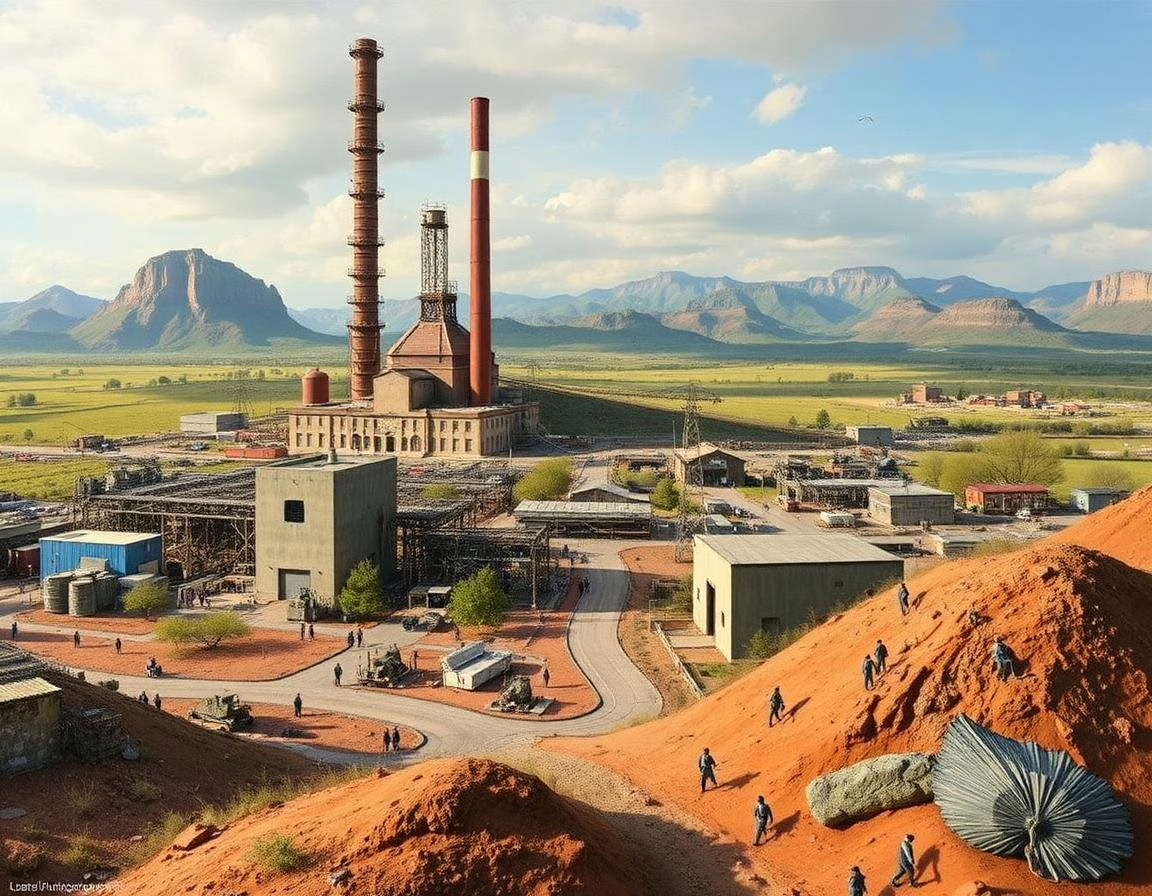
Plant Capacities
Plant 1
Plant 1, with a capacity of 30,000 liters, serves as the foundational unit within the Bio Campus I complex. This facility is designed for smaller-scale production, making it ideal for initial runs or specialized batches.
Plant 2
In contrast, Plant 2 boasts a significantly larger production capacity of 154,000 liters. This facility is well-equipped to handle mid-level production requirements, allowing for a more extensive output that can cater to a broader range of biologics.
Plant 3
Plant 3 further expands the production capabilities within Bio Campus I, offering a capacity of 180,000 liters. Its design focuses on versatility, enabling the facility to pivot between different products as needed while maintaining efficiency.
Plant 4
At the top end of the scale, Plant 4 emerges as the largest facility with a production capacity of 240,000 liters. This plant is engineered for high-volume outputs, making it a critical asset for meeting large-scale demands in the biologics market.
Versatile Production Scales
The strategic placement of these plants within Bio Campus I allows for a seamless operation across multiple scales of production. Each facility is designed to cater to specific production volumes, ensuring that the needs of both small and large-scale projects can be met without compromising quality.
Development and Quality Control
The production facilities are complemented by robust Development, MSAT (Manufacturing Science and Technology), and Quality Control (QC) laboratories. These departments work in tandem with the manufacturing plants to ensure that all products meet stringent quality standards throughout the production process.
The Role of Innovation
Innovation drives the efficiency of operations within these facilities. By leveraging cutting-edge technologies and practices, Bio Campus I enhances its production capabilities, allowing for quicker turnarounds and improved product quality. This commitment to innovation positions the facility as a leader in the biologics sector.
Conclusion
The production landscape at Bio Campus I illustrates a well-structured approach to biologics manufacturing. With facilities tailored to various production capacities, a focus on quality control, and a commitment to innovation, this complex is equipped to meet the evolving demands of the industry. The diverse capabilities ensure that Bio Campus I remains a pivotal player in the global biologics market.
- Key Takeaways:
- Bio Campus I contains four plants with varying capacities from 30,000 to 240,000 liters.
- Each plant is designed for specific production scales, enhancing operational efficiency.
- Development and QC laboratories support stringent quality standards.
- Emphasis on innovation drives the facility’s competitive edge in biologics manufacturing.
Read more → samsungbiologics.com



