
Neurological disorders have become a significant global health concern, leading to high mortality rates and disability worldwide. With the aging population contributing to the increased burden of neurological diseases, there is a pressing need for more efficient treatment methods. Current approaches involving surgical procedures and nerve transplants have limitations, driving the exploration of alternative technologies such as stem cell therapy for neurodegenerative conditions. Stem cell therapy offers a renewable cell source for treating neurological disorders, but its efficacy relies on the presence of a scaffold to support cell growth and functionality.
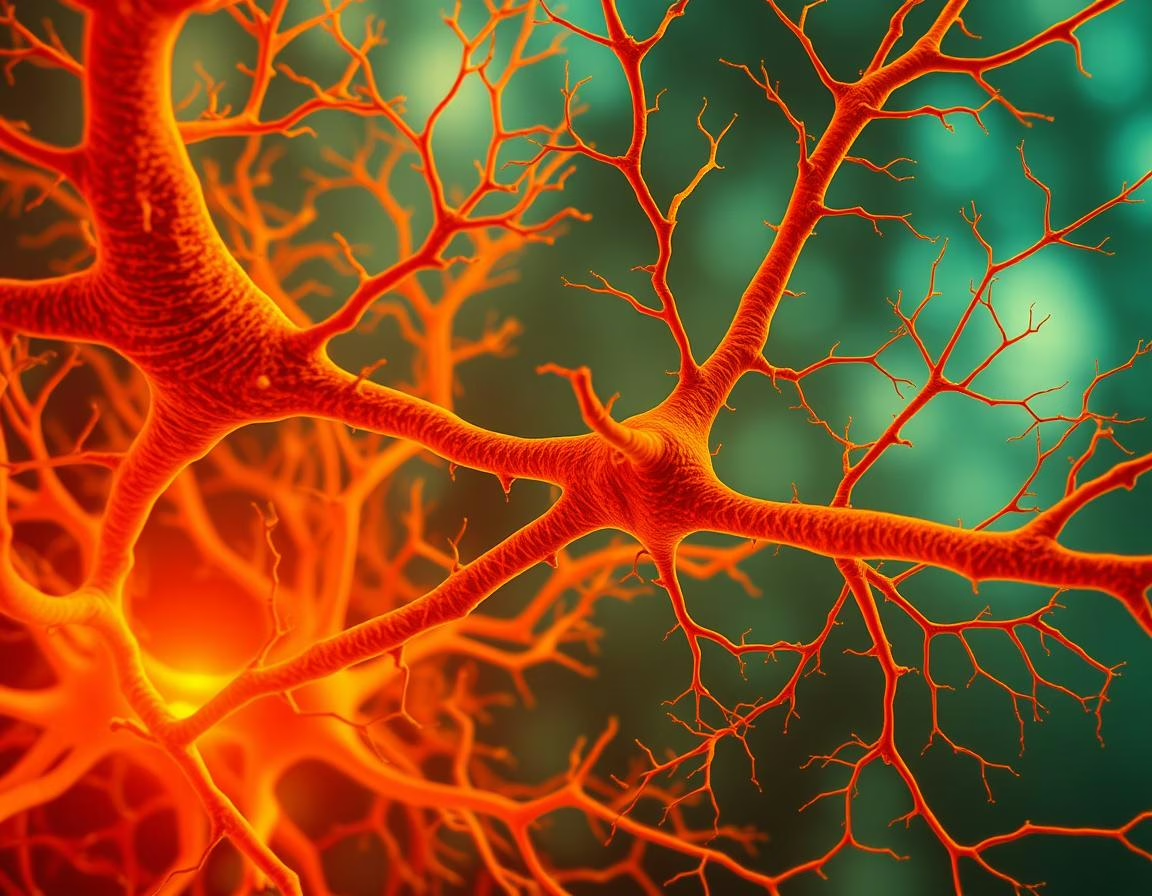
In the realm of neural tissue engineering (NTE), biomimetic nanofibrous scaffolds have emerged as a promising avenue for promoting nerve regeneration and repairing the injured nervous system. These scaffolds, fabricated using techniques like electrospinning and microfluidics, offer a platform for sustained growth factor delivery and cell support. The ability to mimic the extracellular matrix (ECM) of native tissues, coupled with superior biocompatibility, makes nanofibrous scaffolds a compelling option to reduce cell death and enhance tissue regeneration.
The key characteristics of hydrogels used in scaffold fabrication for NTE include biocompatibility, biodegradability, wettability, mechanical stability, and growth factor delivery capabilities. These properties play a crucial role in promoting cell adhesion, proliferation, and differentiation within the scaffold. Additionally, the electrical conductivity of hydrogels can enhance neural signaling and outgrowth, contributing to improved nerve regeneration outcomes.
Axonal alignment within neural cells is a critical process that dictates cellular functionality and connectivity. Understanding the mechanisms behind axonal alignment, including the rearrangement of microtubules and cytoskeletal dynamics, is essential for designing functional neural scaffolds. By mimicking the topological cues of the ECM, scaffolds can guide axonal growth and promote efficient neuronal signaling.
Various methods of scaffold fabrication have been developed to promote axonal alignment and cellular orientation. Electrospinning, a widely used technique, allows for the precise control of scaffold properties such as fiber alignment and morphology. Novel modifications to the electrospinning process, including the use of graphene oxide coatings and rotating collectors, have been shown to enhance cellular attachment and directionality within the scaffold.
Innovative approaches such as two pole air gap spinning and wooden disc electrospinning offer unique advantages in producing highly aligned fibrous scaffolds for NTE. By leveraging these advanced fabrication techniques, researchers can create scaffolds that closely mimic the native tissue environment and promote optimal axonal growth and regeneration. The combination of biocompatible materials, precise fiber alignment, and growth factor delivery systems holds great promise for advancing neural tissue engineering and improving outcomes for patients with neurological disorders.
Takeaways:
1. Biomimetic nanofibrous scaffolds hold great potential for promoting nerve regeneration and repairing the injured nervous system.
2. The key characteristics of hydrogels used in scaffold fabrication include biocompatibility, biodegradability, wettability, mechanical stability, and growth factor delivery capabilities.
3. Axonal alignment within neural cells is crucial for cellular functionality and connectivity, guiding the design of functional neural scaffolds.
4. Novel methods of scaffold fabrication, such as electrospinning modifications and innovative spinning techniques, offer opportunities to enhance axonal alignment and cellular orientation in neural tissue engineering.
Tags: bioprinting, cell therapy, drug delivery, cell culture, tissue engineering
Read more on pmc.ncbi.nlm.nih.gov



