
In a significant milestone for Qatar’s private healthcare landscape, the nation’s first navigated spine surgery was successfully conducted by Dr. Sirajeddin Belkhair, a Senior Consultant Neurosurgeon at DOC Medical Center, at View Hospital. This innovative procedure merges advanced computer-assisted navigation with virtual reality surgical planning, heralding a new age of precision and safety in spinal surgeries for patients in Qatar and the surrounding Gulf Cooperation Council (GCC) region.
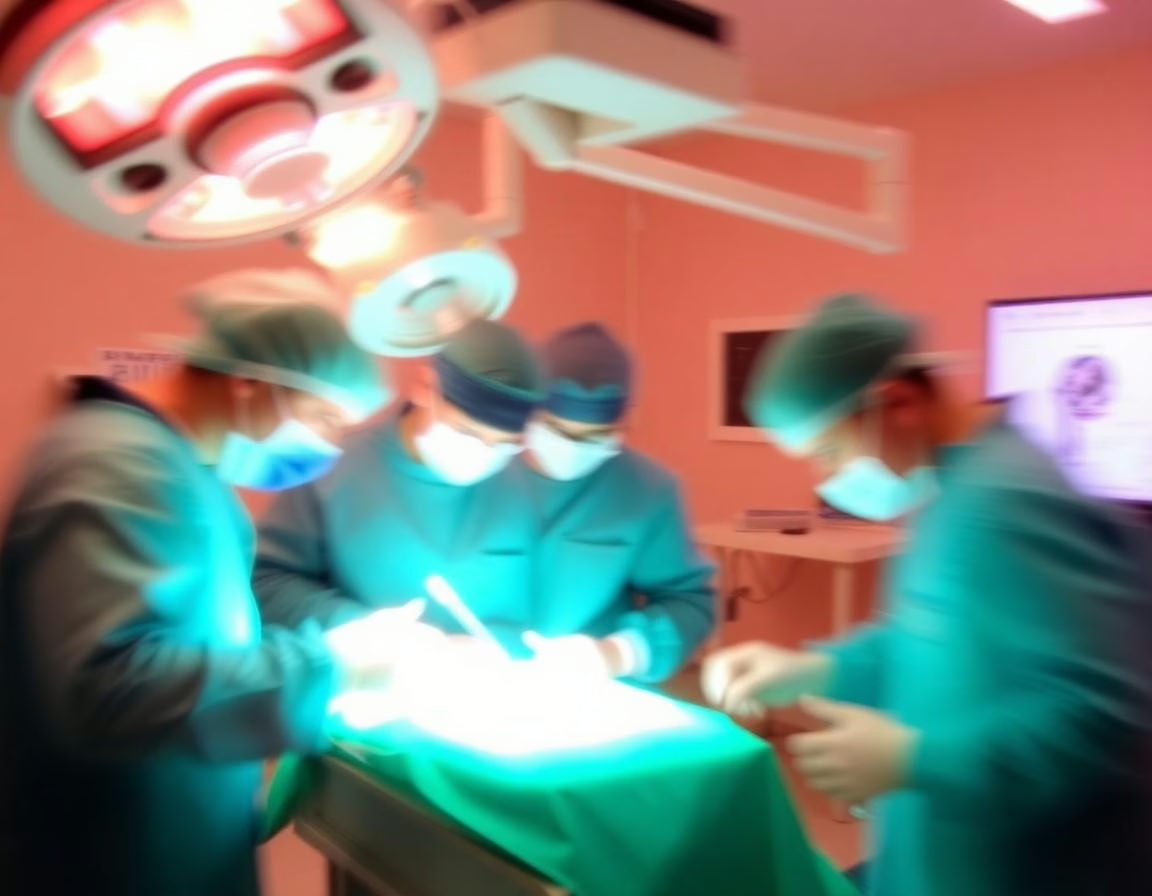
Precision in Surgical Intervention
The spine presents a unique challenge for surgeons. A slight misplacement, even by a millimeter, can lead to severe consequences, including nerve damage or paralysis. For years, spine surgeons relied heavily on their skills, experience, and imaging techniques like fluoroscopy to navigate this delicate terrain. However, advancements in technology now allow for an unprecedented level of precision.
Imagine if surgeons could visualize the intricate anatomy of the spine in three dimensions before even entering the operating room. Dr. Belkhair’s recent achievement marks the first time such a fully navigated spine surgery has been performed in Qatar, employing real-time guidance and pre-surgical virtual reality planning.
Revolutionizing Surgical Planning
Utilizing virtual reality technology, Dr. Belkhair was able to create a detailed, three-dimensional model of the patient’s spine from CT scans. By wearing specialized glasses, he could manipulate this model, allowing him to meticulously plan screw placements and trajectories in a manner that was previously unimaginable. “The planning became the roadmap,” he stated, emphasizing the importance of both the planning and navigation during surgery.
Research supports the advantages of navigated spine surgery, highlighting significant improvements in screw placement accuracy, decreased blood loss, shorter hospital stays, and fewer complications. With optimal screw placement rates exceeding 95%, this technique not only enhances surgical outcomes but also ensures greater safety for patients.
Impact on Qatar and the GCC
The successful navigated spine surgery at View Hospital signifies a pivotal moment for Qatar’s healthcare sector. Patients no longer need to seek advanced spine care abroad, as the necessary expertise and technology are now available locally at DOC Medical Center. This advancement is especially crucial for the GCC, where complex spinal conditions are prevalent among thousands of patients annually.
Access to navigated surgery means that vulnerable populations, such as elderly patients with osteoporosis, can receive carefully placed screws that provide the necessary support without compromising their fragile bone structure. This approach minimizes the risk of failed surgeries and subsequent revisions, transforming the lives of many individuals.
Human Skill Enhanced by Technology
Dr. Belkhair’s extensive training and experience underpin this innovation. After receiving his medical education in Canada, he has significantly contributed to the field of neurosurgery, including performing Qatar’s first awake brain surgery. His legacy of pioneering work continues to evolve at DOC Medical Center, where he prioritizes patient care alongside technological advancement.
Despite the sophisticated tools at his disposal, Dr. Belkhair emphasizes that the essence of surgery lies in the relationship between doctor and patient. He understands the magnitude of trust patients place in their surgeons when it comes to their mobility and quality of life. “Navigation technology allows me to honor that trust,” he expresses, highlighting the human element behind the technology.
Exploring the Benefits of Virtual Reality
The integration of virtual reality in surgical planning introduces a new dimension to spine surgery. Studies indicate that VR enhances the surgeon’s spatial understanding, reduces operative time, and improves team communication. For spine surgeries, where three-dimensional spatial relationships are critical, VR provides advantages that traditional imaging cannot match.
Dr. Belkhair’s dual approach of virtual reality planning coupled with real-time navigation creates a streamlined workflow, allowing for precise execution and immediate verification. “The glasses showed me the patient’s spine as if I could hold it in my hands,” he reflects, underscoring the transformative power of this technology in achieving surgical precision.
Tangible Benefits for Patients
The advantages of navigated surgery at DOC Medical Center are clear for patients contemplating spine procedures:
- Greater Accuracy: Over 95% optimal screw positioning compared to 80-85% with traditional methods.
-
Reduced Radiation Exposure: Minimizing the need for repeated X-rays during surgery.
-
Fewer Complications: Lower rates of nerve and blood vessel injuries, as well as implant malposition.
-
Shorter Recovery Times: Smaller incisions lead to less pain and faster returns to everyday activities.
-
Improved Long-Term Outcomes: Precisely placed implants are less likely to fail, ensuring better durability.
For patients with complex conditions or previous failed surgeries, these navigated approaches can determine whether they are candidates for surgery or not, effectively expanding treatment possibilities.
Building Patient Confidence
Choosing to undergo spine surgery can be daunting. Patients often face fears of potential complications and loss of independence. Dr. Belkhair addresses these concerns head-on by demonstrating the technology involved. “I can show patients their own CT scans in three dimensions,” he explains, which helps alleviate anxiety and fosters trust.
This transparency not only builds confidence but also correlates with better postoperative outcomes. “Machines assist. Humans heal,” he wisely states, emphasizing that technology enhances the doctor-patient relationship rather than replacing it.
The Future of Neuroscience in Qatar
Qatar’s vision for healthcare extends beyond the present, aiming for regional leadership in medical innovation and education. The National Health Strategy 2024-2030 highlights the importance of precision medicine and digital health integration, areas where DOC Medical Center is already excelling.
Under Dr. Belkhair’s leadership in neurosciences, DOC Medical Center has invested in advanced navigation systems and trained multidisciplinary teams to ensure that patients receive superior care. The center’s commitment to combining cutting-edge technology with compassionate care positions it as a leader in neurosurgery not just in Qatar but across the Gulf.
Conclusion
The advent of navigated spine surgery in Qatar is a remarkable achievement that promises to enhance the quality of patient care significantly. With advanced technology facilitating precise surgical interventions, patients can now receive world-class treatment within their own country. As this innovative approach evolves, it stands to transform the landscape of spinal surgery for countless individuals in the region. The future is bright for both patients and medical professionals alike.
Read more → thepeninsulaqatar.com



