
Extreme environments have always fascinated scientists due to their ability to host life forms that can survive and thrive in conditions that were once deemed uninhabitable. Chile, with its diverse range of extreme habitats such as the Atacama Desert, Altiplano, Patagonia, and Antarctica, provides a unique ecosystem for extremophiles to flourish. These extremophiles, from thermophiles to psychrophiles, exhibit remarkable molecular and physiological adaptations that make them not only fascinating for scientific study but also potential assets for bioremediation processes. This article dives deep into the extremophiles of Chile, shedding light on their unique characteristics and their applications in the field of bioremediation.
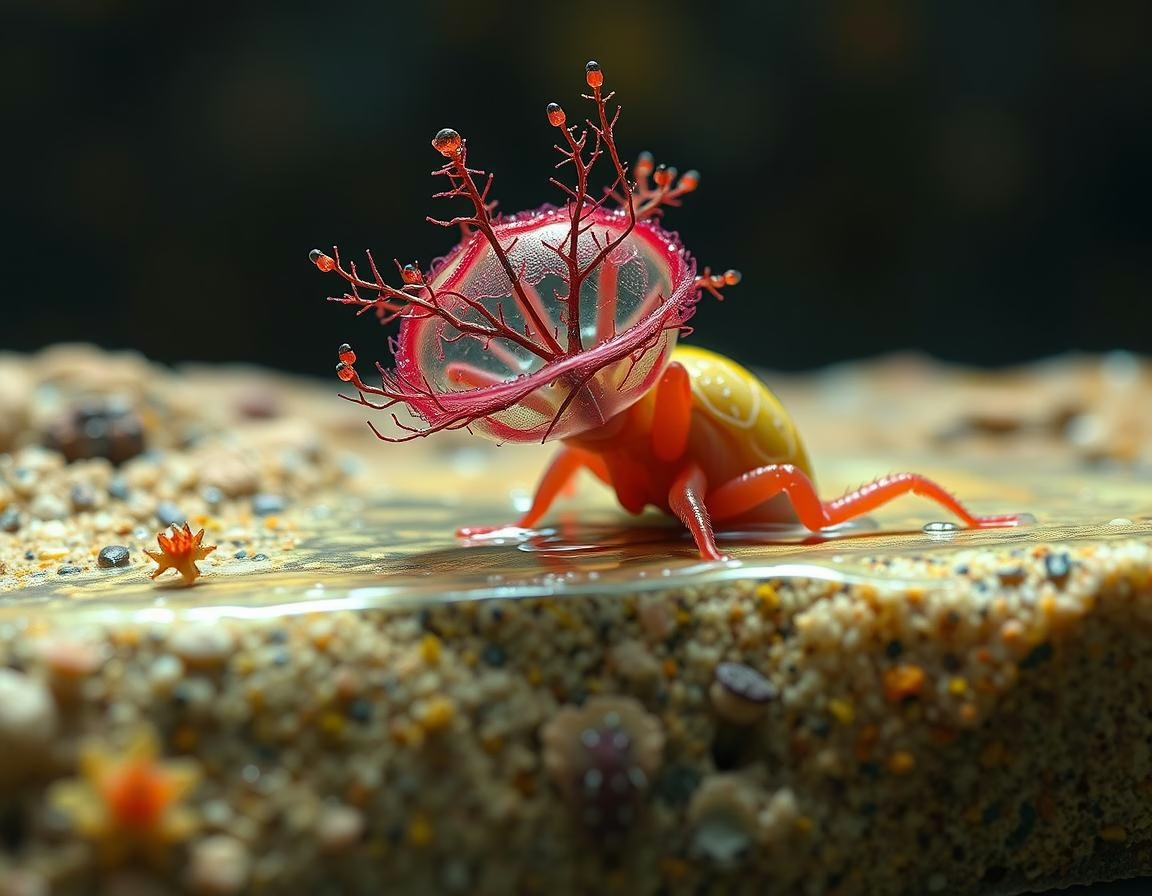
The Atacama Desert, known for its Mars-like conditions, offers a glimpse into the resilience of extremophiles in the face of extreme aridity, high UV radiation, and temperature fluctuations. The microbial communities found in the desert’s diverse habitats, from saline wetlands to geothermal sites, showcase the adaptability of life forms to thrive in hostile environments. Similarly, the Andean Altiplano, with its geysers, hot springs, and saline basins, provides a fertile ground for extremophiles like Methanofollis tationis to exhibit their unique capabilities, such as producing novel biomolecules like tatiopterin with potential industrial applications.
Chile’s diverse range of extreme environments, including acidic salars, cold fjords in Patagonia, and geothermal sites in Antarctica, present a treasure trove of extremophiles with diverse metabolic pathways and resistance mechanisms. The extremophiles in these regions have evolved to withstand high concentrations of heavy metals, extreme pH levels, and low temperatures, making them ideal candidates for bioremediation efforts. The microbial communities in these extreme biotopes harbor enzymes like extremozymes, which exhibit high thermostability and catalytic efficiency, making them valuable tools for industrial processes.
The potential of extremophiles in bioremediation is immense, especially in regions impacted by mining activities and industrial pollution. Extremophiles like (hyper)thermophiles have shown promise in detoxifying heavy metal-contaminated waters and degrading persistent organic pollutants. Their unique metabolic pathways, chaperones, and DNA repair systems equip them with the tools necessary to thrive in harsh environments and remediate pollutants effectively. Moreover, extremophiles offer a sustainable solution to the restoration of polluted sites, contributing to the preservation of natural ecosystems and the promotion of sustainable development practices.
As we delve deeper into the molecular mechanisms of extremophiles, we uncover a world of adaptive strategies that have evolved over millennia to cope with extreme environmental conditions. The role of heat shock proteins, membrane stabilization mechanisms, and the production of compatible solutes highlight the ingenious ways in which extremophiles have adapted to their environments. By understanding these molecular mechanisms, we can harness the biotechnological potential of extremophiles for a wide range of applications, from bioremediation to the production of biofuels from lignocellulosic materials.
The future of bioremediation lies in the untapped potential of extremophiles, particularly in regions like Chile where extreme environments prevail. By exploring the genetic diversity and metabolic pathways of extremophiles, we can unlock novel enzymes and biomolecules that hold the key to addressing environmental pollution and promoting sustainable practices. Collaborative research efforts focused on extremophiles from diverse biotopes in Chile can pave the way for innovative biotechnological solutions that not only remediate pollutants but also drive advancements in industrial processes and biofuel production. Extremophiles are not just survivors in harsh environments; they are nature’s biotechnological marvels with the potential to shape a greener, cleaner future for our planet.
Takeaways:
– Extremophiles in Chile exhibit unique molecular and physiological adaptations for survival in extreme environments.
– The bioremediation potential of extremophiles, especially (hyper)thermophiles, holds promise for cleaning up polluted sites.
– Understanding the molecular mechanisms of extremophiles can lead to the discovery of novel enzymes and biomolecules for industrial applications.
– Collaborative research efforts focused on extremophiles from diverse biotopes in Chile can drive innovation in bioremediation and biofuel production.
– Extremophiles are not only resilient survivors but also valuable resources for sustainable development and environmental conservation.
Tags: protein folding, synthetic biology, yeast, scale up, downstream, chaperones, biofuels, fungi
Read more on pmc.ncbi.nlm.nih.gov



