
Ferritin, a well-known iron storage protein, has emerged as a versatile nanocarrier and a promising platform for vaccine development, particularly against challenging viruses like SARS-CoV-2. This review delves into the structural and functional properties of ferritin, highlighting its self-assembly mechanisms and unique features that make it an ideal candidate for vaccine delivery. The ability to modify the interior cavity and exterior surface of ferritin for cargo encapsulation and display of antigens has opened new avenues for vaccine development against a spectrum of diseases.
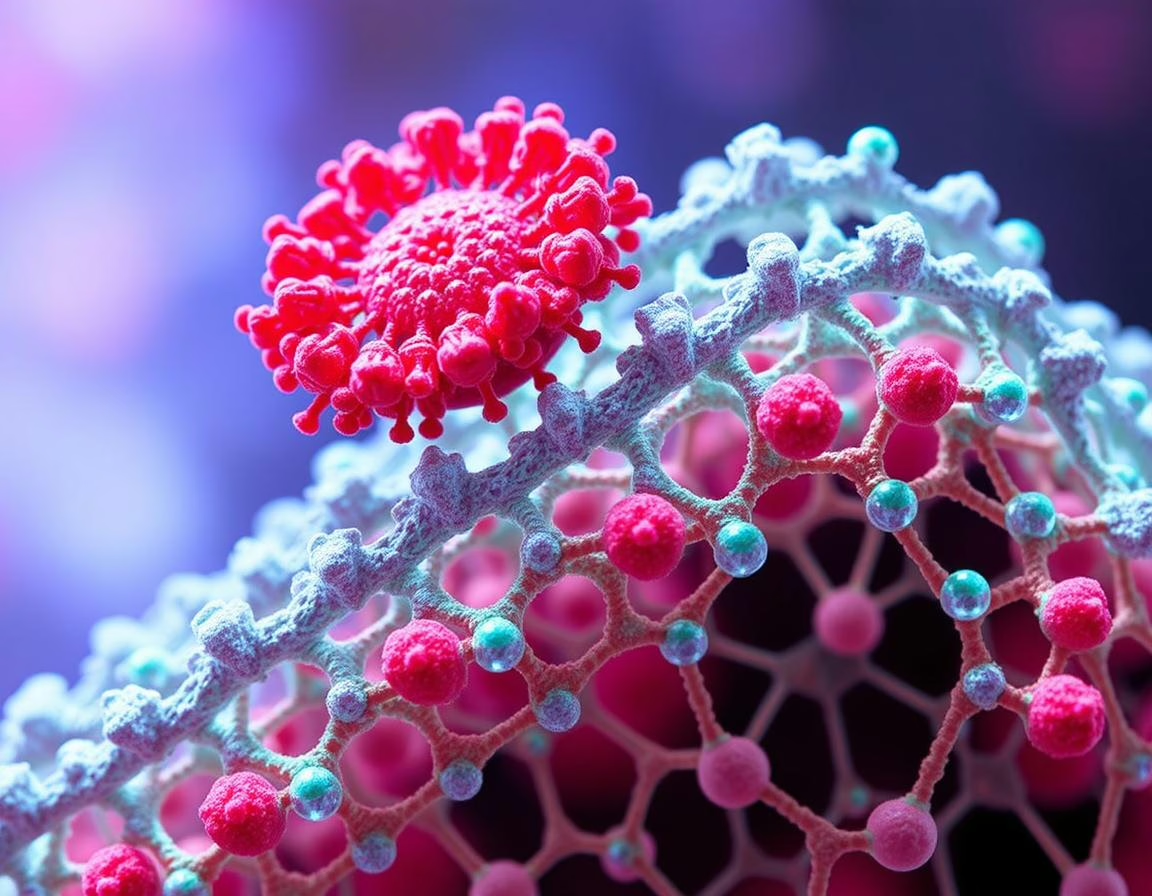
The global impact of the COVID-19 pandemic has underscored the urgent need for safe and effective vaccines. With over 600 million confirmed cases worldwide and the emergence of concerning variants, there is a critical demand for vaccines that offer high immunogenicity, safety, and cross-protection. Ferritin nanoparticles-based vaccines have shown strong immune responses in pre-clinical studies against various pathogens, leading to multiple phase I clinical trials and demonstrating their potential as effective vaccine candidates.
Ferritin’s remarkable stability, biocompatibility, and self-assembly properties make it an attractive platform for biomedical applications, especially in vaccine development. By leveraging ferritin as a nanocarrier, researchers have explored mosaic vaccine strategies that deliver a cocktail of antigens, eliciting broad immune protection against different viral variants. The ability to engineer ferritin nanoparticles to display specific antigens holds promise for enhancing vaccine efficacy and addressing the challenges posed by rapidly evolving viruses.
The structural and functional properties of ferritin, including its hyperthermostability and reversible assembly processes, have been instrumental in the design of advanced vaccine delivery systems. Through innovative approaches such as genetic engineering and interface modifications, researchers have successfully encapsulated a range of active molecules within ferritin nanocages, enhancing their potential as efficient vaccine carriers. These strategies offer milder and more efficient cargo encapsulation methods, minimizing protein damage and improving cargo loading efficiency.
Preparation and purification of ferritin nanoparticles involve sophisticated techniques to ensure the integrity and quality of the protein. From production in bacterial or eukaryotic cells to purification through chromatographic approaches, researchers have optimized methods to isolate ferritin nanoparticles with high yield and purity. Structural studies have shed light on ferritin’s self-assembly mechanisms, providing insights into its potential for encapsulating cargo molecules and designing targeted delivery systems.
Interface modifications and encapsulation strategies have enabled precise control over cargo loading and release within ferritin nanocages. By exploiting pH-dependent disassembly and reassembly processes, researchers have developed innovative approaches to encapsulate bioactive molecules within ferritin, improving loading efficiency and cargo stability. Metal-based assembly strategies and surface functionalization techniques have further expanded the applications of ferritin as a versatile nanocarrier for diagnostic and therapeutic agents.
In conclusion, ferritin nanocages represent a cutting-edge platform for advanced vaccine development, offering a combination of stability, biocompatibility, and customizable features for cargo encapsulation. With ongoing research focusing on enhancing vaccine efficacy, cross-protection, and delivery systems, ferritin-based vaccines hold tremendous potential in combating infectious diseases and addressing global health challenges. Leveraging the unique properties of ferritin as efficient nanocarriers paves the way for next-generation vaccines with enhanced immunogenicity and versatility.
- Ferritin nanoparticles offer a stable and biocompatible platform for vaccine development.
- Interface modifications and encapsulation strategies enable precise cargo loading and release within ferritin nanocages.
- Advanced vaccine delivery systems leverage the unique features of ferritin for enhanced efficacy and cross-protection.
- Ongoing research aims to optimize ferritin-based vaccines for broader immune responses and targeted delivery.
- Ferritin nanocages hold promise for combating infectious diseases and addressing global health challenges.
Tags: filtration, drug delivery, nanobiotechnology, plasmid design, chromatography, clinical trials, formulation, mass spectrometry, secretion, vaccine production
Read more on pmc.ncbi.nlm.nih.gov



