
In the realm of drug delivery, exosomes have emerged as naturally-equipped nanocarriers with immense potential. These small extracellular vesicles, derived from cellular membranes and enriched with adhesive proteins, exhibit unique capabilities for intercellular communication and targeted delivery of therapeutic agents. By modifying their surface proteins or incorporating specific biological activities, exosomes can be tailored for precise drug delivery to target cells. This review delves into the development, validation, and applications of exosome-based drug delivery systems, highlighting their versatility in treating a wide array of disorders, from cancer to infectious and neurodegenerative diseases. By combining the advantages of synthetic nanocarriers and cell-mediated delivery systems, exosomes offer a promising avenue for overcoming the limitations associated with traditional drug delivery methods.
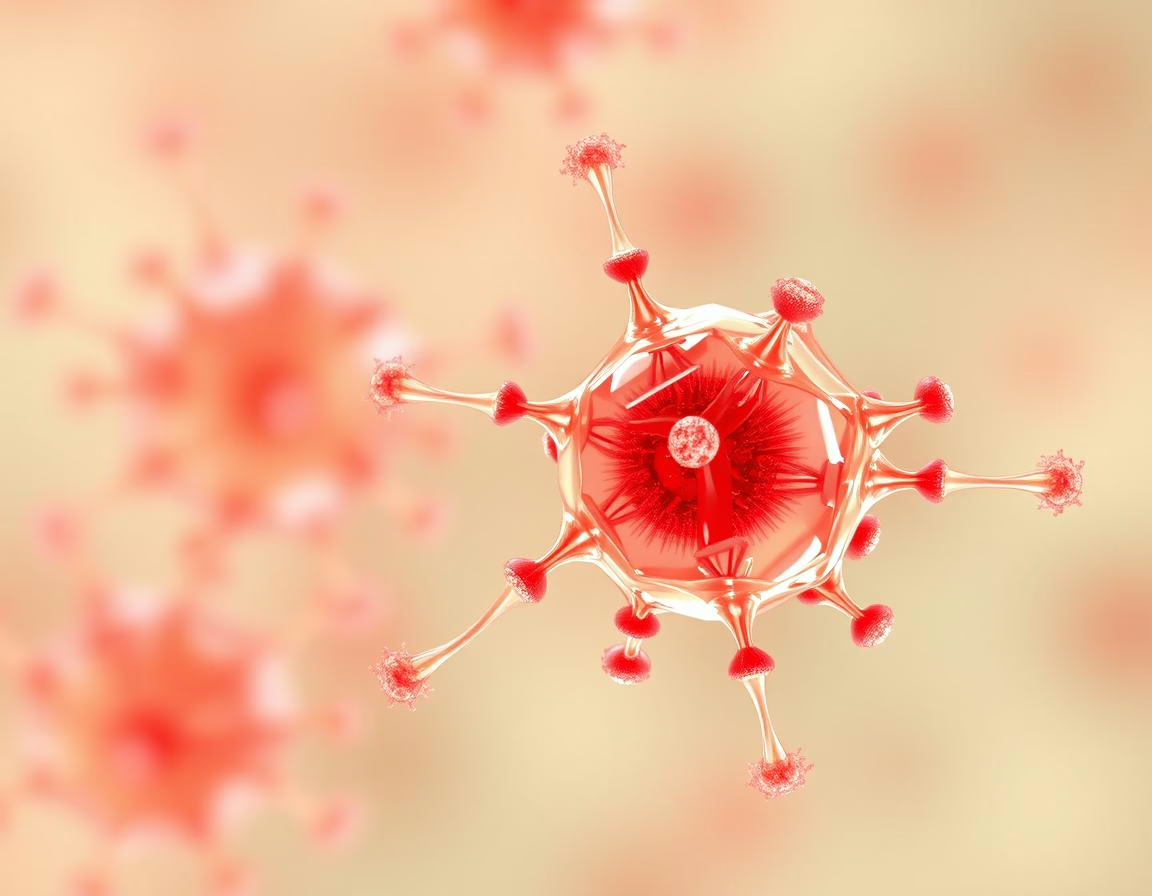
Amidst the myriad advancements in drug delivery technologies, nanotechnology stands out as a beacon of hope for enhancing targeted and controlled drug release. Despite the progress in developing drug nanoformulations, issues such as opsonization of synthetic nanoparticles in the bloodstream leading to toxicity and rapid clearance remain significant challenges. Coating these nanoparticles with polyethylene glycol (PEG) has been a common strategy to prolong circulation time; however, this approach may compromise the interaction of nanoparticles with target cells, thereby reducing drug biodistribution in diseased tissues. Moreover, the development of an immune response to PEG can hasten the clearance of PEGylated nanocarriers, posing a hurdle for prolonged drug treatments. These challenges underscore the importance of exploring alternative drug delivery systems like exosomes, which offer inherent advantages in evading clearance mechanisms and enhancing drug transport to target tissues.
Exosomes, as nanosized vesicles secreted by various cells, possess unique properties that make them valuable tools for both diagnostics and therapeutics. These vesicles exhibit a remarkable ability to interact with recipient cells, facilitating the delivery of cargo such as proteins, mRNAs, and microRNAs to modulate cellular functions. Notably, exosomes derived from immune-privileged sources hold promise in reducing drug clearance rates compared to PEGylated nanoformulations. This “invisibility cloak” effect of exosomes can enhance the transport of therapeutic agents while mitigating clearance by the mononuclear phagocyte system. Leveraging exosomes from antigen-primed cells further augments their potential in vaccination strategies, combining the advantages of synthetic nanocarriers with the efficacy of cell-mediated drug delivery systems.
Unraveling the Biogenesis, Isolation, and Characterization of Exosomes
The biogenesis, characterization, and functional roles of exosomes have captivated researchers over the past few decades, shedding light on their diverse applications in drug delivery. Exosomes, typically ranging from 40 to 100 nm in size, are actively secreted by a myriad of cell types, including immune cells and mesenchymal stem cells. These vesicles are believed to originate from the endosomal pathway, distinguishing them from larger microvesicles that bud directly from the plasma membrane. While the precise classification of extracellular vesicles remains a topic of ongoing research, exosomes are characterized by specific surface markers and lipid compositions that set them apart from other vesicular entities. Various techniques such as ultracentrifugation, immunoaffinity chromatography, size exclusion chromatography, and polymer precipitation have been developed for isolating exosomes, each with its advantages and limitations in terms of purity and yield.
Differential ultracentrifugation, often considered the gold standard for exosome isolation, involves successive centrifugation steps to pellet exosomes from cellular debris and contaminants. This method, while effective, may co-pellet other vesicles and protein aggregates, necessitating additional purification steps. Immunoaffinity chromatography offers a more specific approach by targeting exosomal surface markers, albeit with lower yields due to the dependency on antibody recognition. Size exclusion chromatography, based on the differential size of components in a solution, enables the separation of exosomes from contaminants, preserving their integrity and biological activity. Polymer precipitation, utilizing polyethylene glycol (PEG) solutions, provides a convenient yet co-precipitation-prone method for exosome isolation. The emerging microfluidic technologies show promise for efficient and rapid exosome isolation, particularly in diagnostic applications where purity and sensitivity are paramount.
Harnessing the Natural Functions and Therapeutic Potential of Exosomes
Exosomes play a multifaceted role in intercellular communication, acting as carriers of proteins, mRNAs, microRNAs, and genetic material that regulate diverse cellular processes. These extracellular vesicles have shown promise in cancer immunotherapy by presenting tumor antigens to immune cells, eliciting robust anti-tumor responses. While tumor-derived exosomes can exhibit immunosuppressive properties and promote oncogenesis, exosomes from activated antigen-presenting cells like dendritic cells hold potential for stimulating immune responses against tumors. Furthermore, exosomes released by T cells have demonstrated anti-tumor effects by modulating tumor stroma, inhibiting metastasis, and facilitating cross-talk with endothelial cells.
Beyond cancer immunotherapy, exosomes have been investigated for their protective and regenerative effects in various disease models. Mesenchymal stem cell-derived exosomes have shown cardio-protective effects against ischemic injury, pulmonary hypertension, and myocardial infarction, highlighting their regenerative potential in cardiovascular diseases. Endothelial cell-derived exosomes have been implicated in combating atherosclerosis by modulating gene expression in smooth muscle cells, thereby reducing atherosclerotic lesions. In neuroprotective applications, exosomes from mesenchymal stem cells have demonstrated therapeutic effects in stroke models by promoting neurite growth and altering gene expression in neurons. These findings underscore the broad therapeutic utility of exosomes in diverse disease contexts.
Loading Strategies for Exosome-Mediated Drug Delivery
To capitalize on the therapeutic potential of exosomes, various loading strategies have been proposed to incorporate therapeutic cargo into these nanocarriers effectively. Ex vitro loading of naïve exosomes with lipophilic small molecules has been achieved through passive incubation methods, offering a straightforward approach for drug incorporation. Electroporation, a technique involving the application of electric pulses, has been utilized to load exosomes with RNA molecules such as siRNA and miRNA, enabling targeted gene regulation in recipient cells. Additionally, methods like sonication, extrusion, and permeabilization have been explored to enhance the loading efficiency of bulky proteins like catalase into exosomes, paving the way for improved drug delivery formulations.
Parental cell loading strategies present another avenue for loading therapeutic cargo into exosomes, wherein cells are preloaded with drugs or genetic material that is subsequently encapsulated into exosomes. By transfecting or infecting parental cells with DNA encoding therapeutic compounds, exosomes can serve as vehicles for delivering a payload derived from the parent cells. These approaches offer distinct advantages and challenges, requiring careful consideration of the type of cargo, disease site, and desired therapeutic outcome. By optimizing loading strategies and cargo selection, exosomes can be tailored for precise and effective drug delivery applications across a spectrum of diseases.
In conclusion, the utilization of exosomes as naturally-equipped nanocarriers holds immense promise for revolutionizing drug delivery paradigms. From their biogenesis and isolation to their diverse biological functions and therapeutic potential, exosomes offer a versatile platform for targeted and efficient drug delivery. By exploring innovative loading strategies and harnessing the inherent properties of exosomes, researchers can unlock new frontiers in precision medicine and personalized therapeutics. The journey towards leveraging exosomes as advanced drug delivery systems is marked by challenges, yet the transformative impact they can have on healthcare outcomes underscores the importance of continued exploration and innovation in this burgeoning field.
Key Takeaways:
- Exosomes represent a unique class of nanocarriers with inherent advantages for drug delivery, combining the benefits of synthetic nanoparticles and cell-mediated delivery systems.
- The biogenesis, isolation, and characterization of exosomes are critical for understanding their functional roles and therapeutic potential in various disease contexts.
- Leveraging exosomes as carriers for therapeutic cargo requires innovative loading strategies, ranging from passive incubation to electroporation and parental cell loading.
- Exosomes exhibit diverse biological functions, including immunomodulation, regenerative effects, and targeted drug delivery, making them promising candidates for precision medicine applications.
- Continued research and development in exosome-based drug delivery systems offer exciting opportunities for enhancing therapeutic efficacy and addressing unmet medical needs.
- The future of drug delivery lies in the natural prowess of exosomes as nanocarriers, paving the way for personalized and targeted therapies in a wide range of diseases.
Tags: formulation, chromatography, immunotherapy, clinical trials, cell culture, drug delivery, secretion, filtration, tissue engineering, quality control
Read more on pmc.ncbi.nlm.nih.gov



