
The award-nominated documentary “Left Behind” is taking significant strides to enhance literacy advocacy, coinciding with National Reading Month. The film, which has already garnered attention at SXSW EDU 2026 and received a nomination for Outstanding Documentary Feature at the NAACP Image Awards, is now offering a newly updated discussion guide and extending its free virtual screening initiative. Due to overwhelming interest, the screening period has been prolonged by an additional week.
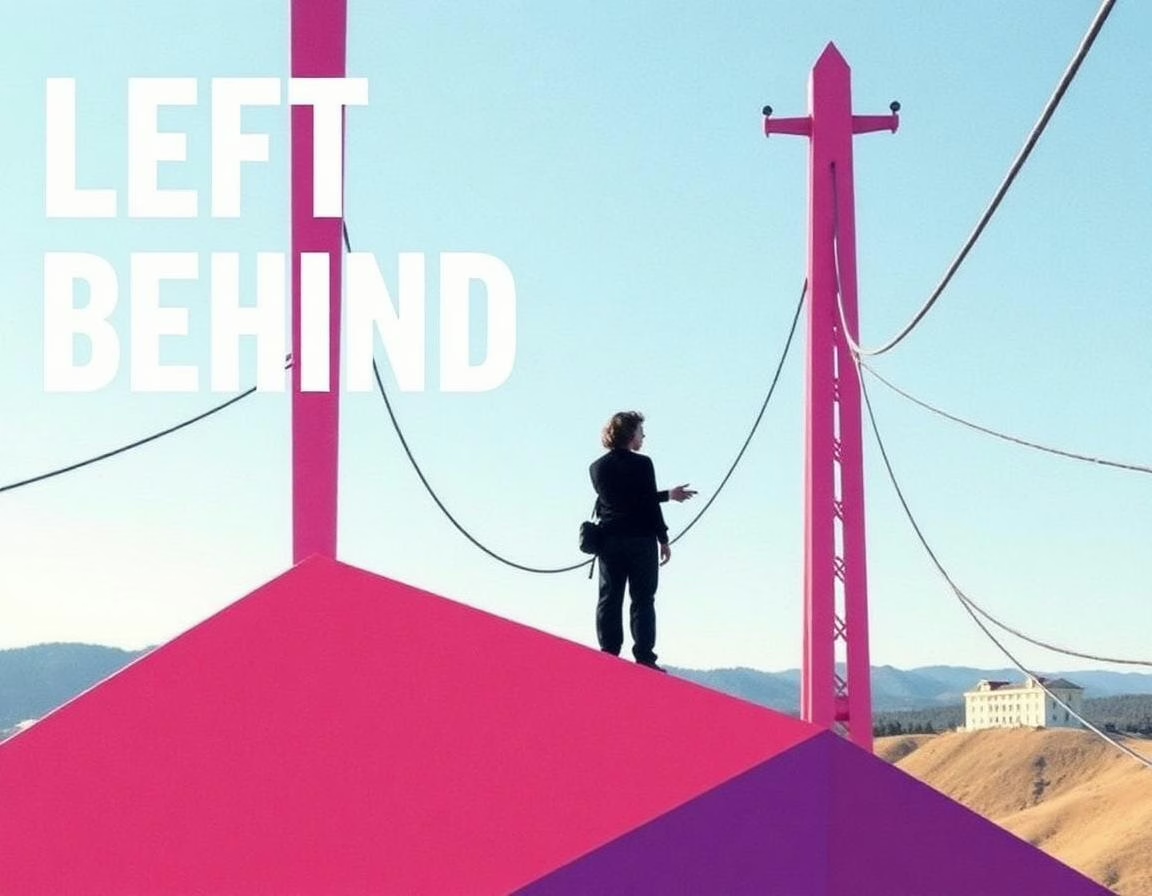
Extended Virtual Screening Initiative
Starting March 13 and running through April 6, audiences worldwide can access “Left Behind” for free via a virtual screening hosted on Kinema. Sponsored by Learning Ally, this initiative aims to engage educators, families, and community leaders in crucial discussions about literacy access and dyslexia awareness. The film invites viewers to confront the pressing issues surrounding educational equity and the barriers many students face, particularly those with reading differences.
Launch of the Discussion Guide
Alongside the virtual screenings, the launch of the “Left Behind Discussion Guide” serves as a vital resource. Available on the film’s website and Kinema, this guide is tailored for educators, parents, and community organizations. It provides practical tools and conversation prompts designed to foster meaningful discussions about dyslexia, literacy equity, and the systemic challenges that hinder students from receiving the educational support they need.
A Deep Dive into Dyslexia Advocacy
Directed by Emmy Award-winning filmmaker Anna Toomey, “Left Behind” chronicles the journeys of five mothers striving to establish New York City’s first public school dedicated to children with dyslexia. Their efforts shed light on the systemic inequities disproportionately affecting students of color and those from low-income backgrounds. Toomey emphasizes the urgency of this narrative, noting the staggering statistics that reveal 20% of the population is dyslexic, with nearly half of incarcerated individuals similarly affected. This compelling backdrop fuels the film’s exploration of the educational landscape.
Commitment from Learning Ally
Learning Ally’s involvement with “Left Behind” echoes its long-standing mission to support students with reading differences. Founded by Ann T. Macdonald, the organization champions the belief that education is a fundamental right. Howard Bell III, CEO of Learning Ally, expresses the organization’s commitment to raising awareness through storytelling, highlighting the potential for real change when parents and educators collaborate toward a shared objective.
Broader Impact on National Conversations
Through strategic partnerships and educational resources like the discussion guide, “Left Behind” extends its influence beyond conventional film audiences. It aims to ignite a nationwide dialogue on literacy access and dyslexia awareness, emphasizing the imperative to equip all students with the necessary tools for success. This documentary not only raises awareness but also inspires action, calling for systemic change in educational policies and practices.
Key Takeaways
- “Left Behind” offers a free virtual screening, extended through April 6, to promote discussions around literacy and dyslexia.
- The newly released Discussion Guide serves as a resource for educators and community leaders to facilitate conversations about literacy equity.
-
The film follows five mothers advocating for a public school dedicated to dyslexic children, highlighting systemic inequities in education.
-
Learning Ally partners with the film to further its mission of supporting students with reading differences.
-
The documentary aims to foster a national dialogue on the need for accessible literacy resources and educational support for all students.
In conclusion, “Left Behind” stands as a poignant reminder of the challenges faced by students with dyslexia and the systemic barriers that persist in education. By expanding its advocacy efforts through virtual screenings and discussion resources, the film not only raises awareness but also mobilizes communities toward meaningful change. This initiative encourages a collective commitment to ensuring that every child has access to the educational opportunities they deserve.
Read more → www.usatoday.com



