
Recent findings from Professor Sanjiv Luther’s research team at the University of Lausanne have illuminated the critical role of a specific fibroblast subtype in the orchestration of immune cells within lymph nodes. This breakthrough enhances our comprehension of the immune system’s responsiveness to infections and cancer, showcasing the intricate dynamics at play in our body’s defense mechanisms.
Understanding Lymph Nodes
Lymph nodes, small structures resembling peas, serve as vital checkpoints in our immune system. They meticulously monitor the lymphatic fluid, which circulates throughout the body, acting as a protective barrier against potential threats such as infections and malignancies. Each lymph node is organized into distinct regions, each tailored to accommodate different types of immune cells, facilitating an effective response to various challenges.
Despite the known importance of this spatial organization, the precise mechanisms that govern the placement of specific immune cell types within lymph nodes have remained largely enigmatic. The study from Lausanne, published recently in the journal Immunity, sheds light on this previously unclear aspect of immune cell organization.
The Role of Immune Surveillance
Lymph nodes are strategically located throughout the body, including the neck, armpits, groin, and deeper within the abdomen and chest. When immune surveillance detects signs of infection or cancer, it triggers a cascade of events that activate immune cells within these nodes. Among these are cytotoxic T lymphocytes, which undergo rapid proliferation and differentiation into effector “killer” cells. These cells are essential for targeting and eliminating infected or cancerous cells.
The effective positioning of these T lymphocytes is crucial for their functionality; they typically congregate in the central areas of the lymph nodes, where they interact with specialized cells known as type 1 dendritic cells. These dendritic cells play a pivotal role in presenting danger signals to T lymphocytes, setting the stage for an efficient immune response.
Fibroblasts: The Organizational Architects
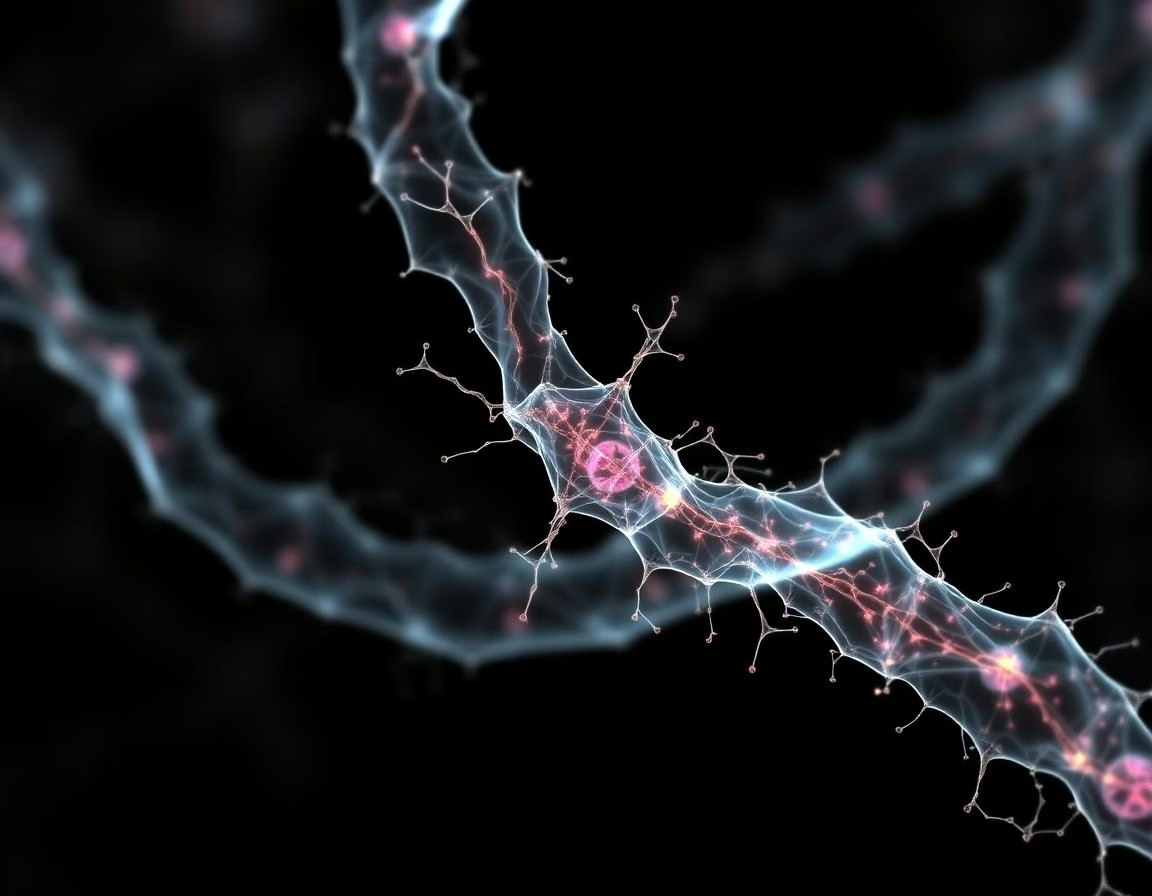
For years, Professor Luther’s laboratory has delved into the interactions between structural cells—specifically fibroblasts—and immune cells within lymph nodes. This latest study identifies a distinct subset of fibroblasts, known as MAdCAM1⁺ fibroblasts, which are instrumental in organizing the central compartment of lymph nodes in both mice and humans. These fibroblasts produce high levels of the signaling molecule Ccl19, which acts as a beacon for cytotoxic T lymphocytes, guiding them to interact with dendritic cells.
The research team also discovered how these fibroblasts are regulated. A specific signaling pathway involving Notch2 and RBPj is essential for maintaining the identity and function of this fibroblast subset. Additionally, the molecule Jagged-1, primarily produced by type 1 dendritic cells, initiates this regulatory process. Continuous maintenance of this molecular cascade is vital for ensuring the correct organization and functionality of immune cells throughout life.
Implications for Immunological Memory
The study revealed that in mice lacking Notch2 expression in fibroblasts, the development of memory T cells—a critical component for long-term immunity—was significantly impaired. This suggests that the precise orchestration of fibroblasts within lymph nodes is essential for the formation of a robust immune memory, which is crucial for responding effectively to previously encountered pathogens or tumors.
Conservation Across Species
While the primary focus of this research was on lymph nodes, the same regulatory mechanism involving Ccl19 and Notch2 signaling was observed in other lymphoid organs, such as the spleen and Peyer’s patches, which are vital for intestinal immunity. Notably, similar cellular structures and interactions were identified in the central regions of human lymph nodes, indicating that this fibroblast-dependent mechanism is conserved across species.
Future Perspectives
This research significantly advances our understanding of immune system organization and the initiation of effective T cell responses against infections and cancers. The insights gained could lead to improvements in vaccine development and deeper insights into why certain immune responses falter against specific pathogens or tumors.
Key Takeaways
- Specific fibroblast subtypes, particularly MAdCAM1⁺, are crucial for organizing immune cells in lymph nodes.
- The signaling molecule Ccl19 produced by fibroblasts is essential for attracting cytotoxic T lymphocytes.
-
Continuous regulation via Notch2 and RBPj is necessary for fibroblast functionality and immune cell organization.
-
Similar mechanisms are observed in other lymphoid organs, suggesting a conserved process across species.
In conclusion, the discovery of the pivotal role that fibroblasts play in the immune landscape not only enriches our current understanding but also opens new avenues for therapeutic interventions in immunology. As we unravel these complex interactions, we move closer to harnessing the immune system’s full potential in combating diseases.
Read more → www.news-medical.net



