
Regenerative medicine is a multidisciplinary field focusing on creating biological substitutes to restore tissue function. Various biomaterials, synthetic or natural, are utilized for tissue engineering applications. Three-dimensional (3D) printing has revolutionized the field by enabling the fabrication of structures with precise microarchitecture. This study delves into the development of soft inks composed of thermoresponsive alginate-graft-pNIPAM and methyl cellulose for 3D printing in biomedical applications, particularly in bone tissue engineering.
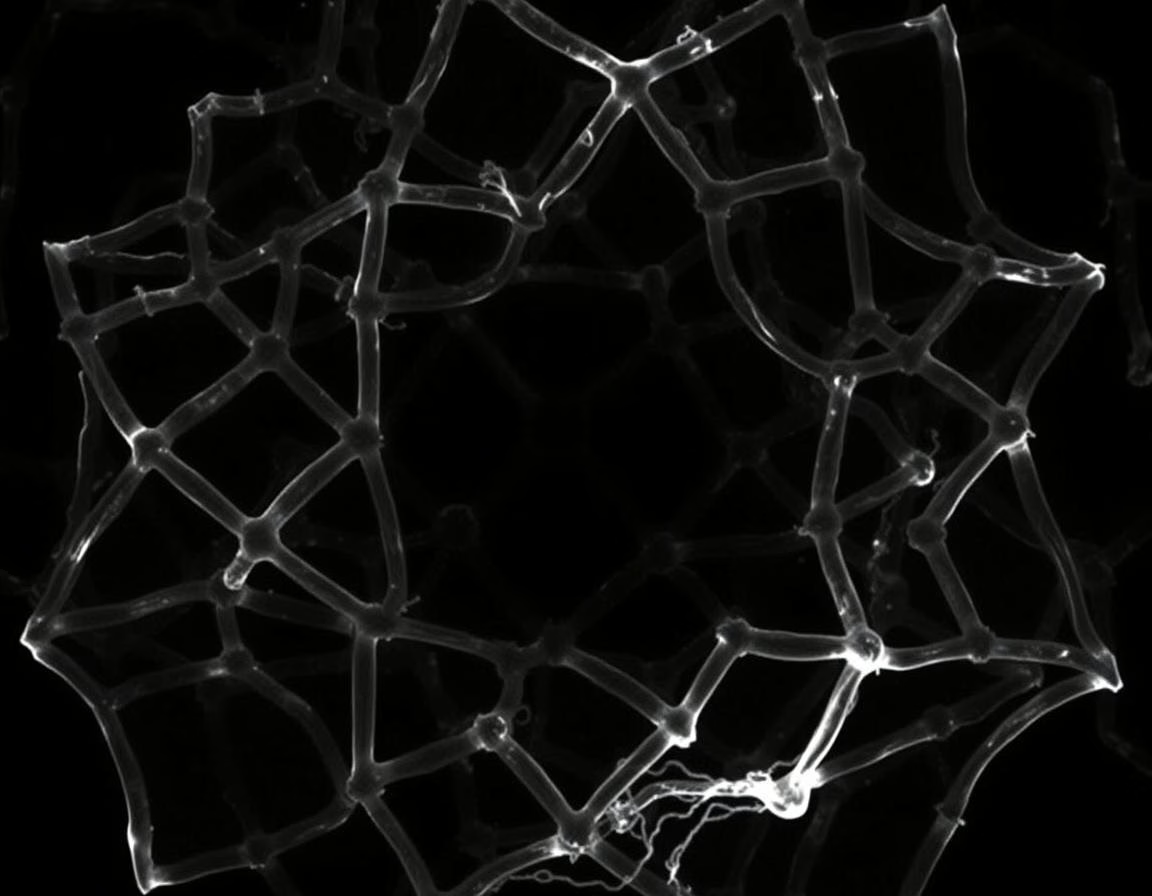
The novel sodium alginate-based copolymer grafted with thermoresponsive poly(N-isopropylacrylamide) (PNIPAM) chains, in combination with methylcellulose (MC), exhibited enhanced mechanical properties suitable for 3D printing. The resulting gel network, formed via ionic interactions and hydrophobic associations, demonstrated stability, high fidelity post-printing, and minimal erosion. Pre-osteoblastic cells cultured on these scaffolds showed increased viability and osteogenic potential, as evidenced by elevated alkaline phosphatase activity, calcium, and collagen production compared to control scaffolds.
Thermoresponsive polymers like PNIPAM are favored for their reversible sol-gel transition near body temperature, crucial for mimicking extracellular matrix properties. The addition of MC in the alginate-PNIPAM blend improved rheological properties, enhancing printability. The dual crosslinking mechanism in the network, involving ionic interactions and hydrophobic associations, contributed to the dynamic moduli of the hydrogels, crucial for 3D extrusion in biomedical applications. The MC-enriched hydrogels displayed superior stability and mechanical properties compared to MC-free counterparts.
Structural and morphological characterization of the 3D-printed scaffolds revealed porous architectures conducive to cell adhesion and proliferation. Erosion studies highlighted the superior stability of Alg-g-PNIPAM/MC scaffolds, with minimal degradation over seven days. Cell viability and proliferation assays using pre-osteoblastic cells showcased the cytocompatibility of the scaffolds, promoting cell adhesion and growth. Notably, ALP activity, calcium deposition, and collagen production in cells cultured on the scaffolds indicated enhanced osteogenic differentiation potential, with the MC-containing scaffolds showing superior results.
The synergistic combination of alginate-graft-pNIPAM and MC in 3D-printed scaffolds presents a promising strategy for bone tissue engineering applications. The study underscores the importance of biomimetic scaffold design, mechanical stability, and cytocompatibility in promoting osteogenesis in vitro. The findings contribute valuable insights into the development of advanced biomaterials for regenerative medicine, emphasizing the potential of thermoresponsive hydrogels in tissue engineering applications.
Tags: regenerative medicine, lyophilization, secretion, cell culture, filtration, tissue engineering, fungi
Read more on pmc.ncbi.nlm.nih.gov



