
The single-use bioprocessing market is on the brink of remarkable growth, driven by an increasing demand for productivity, flexibility, and cost-effectiveness. As industries evolve, Asia-Pacific is emerging as a pivotal region for this transformation.
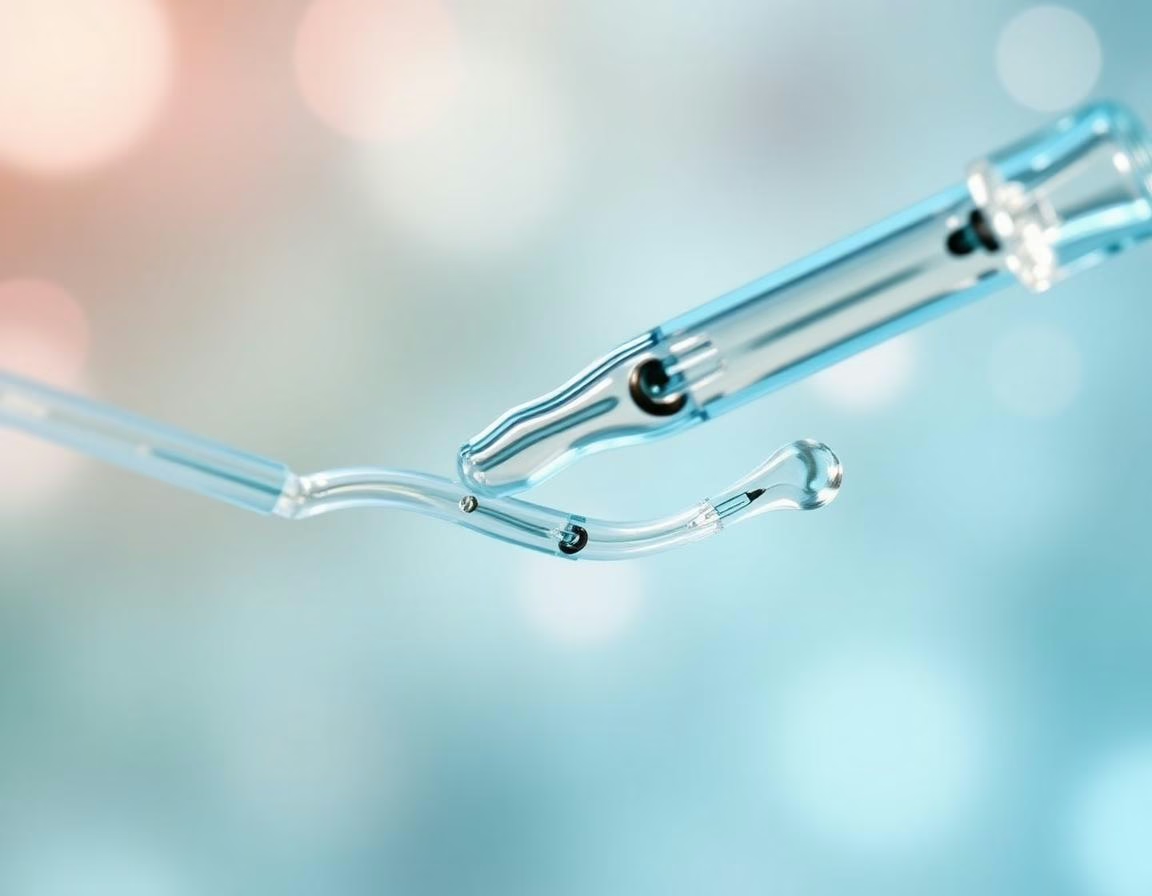
Market Overview
Recent reports indicate that the single-use bioprocessing market is expected to surge from USD 5.8 billion to USD 15.5 billion by 2035, reflecting an impressive compound annual growth rate (CAGR) of 11.5%. This expansion is largely attributed to technological advancements and the industry’s shift from traditional stainless-steel equipment to disposable technologies.
Factors Driving Growth
The surge in biologics’ therapeutic effectiveness has prompted enhancements in traditional manufacturing processes. The adoption of single-use technologies, including bioreactors and mixers, facilitates increased productivity and flexibility, all while maintaining cost-efficiency. These innovations not only accelerate market delivery but have also become essential in biotechnological applications. The COVID-19 pandemic notably highlighted the importance of single-use technologies in the biopharmaceutical sector.
Advantages of Single-Use Systems
Single-use bioprocessing systems offer numerous benefits, such as reduced environmental impact, lower operational costs, and decreased contamination risks. Despite facing challenges like extractables and sterilization complexities, continuous research and development efforts are propelling market progress.
Industry Applications and Innovations
With over 500 types of single-use bioprocessing equipment available, the market demonstrates a robust and growing interest in these solutions. The pharmaceutical industry remains the primary application area, with significant uptake across various operational scales. Companies are competing vigorously to gain a competitive edge, leading to advanced product features and a remarkable number of over 1,800 patents filed, showcasing rapid innovation in the field.
Cost Benefits and Market Dynamics
The economic advantages of single-use technologies are substantial, encouraging widespread adoption throughout the biopharmaceutical sector. The current landscape includes a dynamic mix of established companies and new entrants, primarily based in developed regions. This diverse competitive environment fosters innovation and accelerates market growth.
Global Market Distribution
The opportunities within the global market are well-distributed across different operation scales, product types, and geographical regions. The preclinical and clinical segments dominate the landscape, with disposable filter cartridges projected to experience the most significant growth. Regionally, Asia-Pacific is anticipated to capture a leading market share of 35%, closely followed by North America and Europe.
Key Industry Players
Prominent companies in this field include Avantor, Cytiva, Eppendorf, Merck KGaA, Pall, Premas Biotech, REPROCELL, Sartorius, Thermo Fisher Scientific, among others. These companies are at the forefront of the industry’s evolution, driving innovation and market expansion.
Conclusion
The single-use bioprocessing market is poised for transformative growth, with a projected value tripling by 2035. The ongoing innovations and advantages of single-use technologies will play a crucial role in shaping the future of biopharmaceutical manufacturing. As companies continue to navigate this dynamic landscape, the potential for enhanced efficiency and productivity remains a primary focus.
- Key Takeaways:
- The single-use bioprocessing market is expected to grow significantly, reaching USD 15.5 billion by 2035.
- Asia-Pacific is emerging as a key growth region, projected to hold a 35% market share.
- The pharmaceutical industry is the primary application area for single-use technologies.
- Continuous innovation is evident with over 1,800 patents filed in the sector.
- Single-use systems offer considerable cost and operational benefits.
Read more → finance.yahoo.com



