
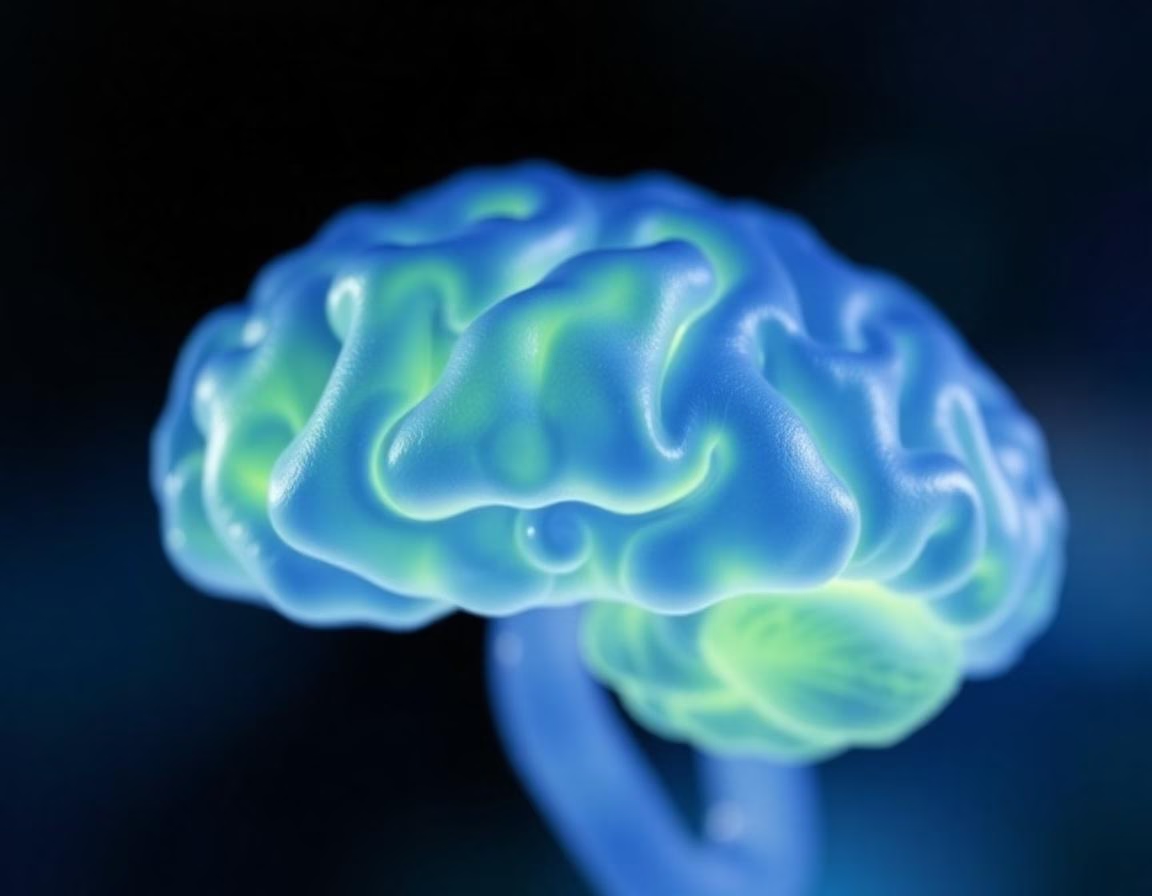
Recent advancements in neuroscience have led to the creation of miniature brain models, known as organoids, which are providing researchers with valuable insights into mental health disorders such as schizophrenia and bipolar disorder. These lab-grown brain structures are opening new avenues for diagnostics and treatment strategies that could enhance patient care.
Understanding Mental Health Diagnostics
Schizophrenia and bipolar disorder profoundly impact an individual’s mood, cognition, and behavior, significantly affecting their daily life. Unfortunately, diagnosing these conditions is not straightforward. Unlike certain neurological disorders, which can be identified through clear biological markers, mental health diagnoses primarily rely on a patient’s reported symptoms, medical history, and thorough clinical evaluation.
This diagnostic ambiguity arises from the variability of symptoms, which can differ widely among individuals. As a result, researchers have been eager to find more objective methods to assess the underlying changes in brain function associated with these psychiatric disorders.
The Creation of Brain Organoids
In a groundbreaking study conducted by researchers at Johns Hopkins University, scientists developed small three-dimensional brain organoids from cells sourced from individuals diagnosed with schizophrenia, those with bipolar disorder, and individuals without either condition. By reprogramming skin or blood cells into stem cells, the team was able to guide these cells into forming pea-sized brain organoids that mimic certain aspects of the human prefrontal cortex. This brain region is critical for higher-order functions such as planning, decision-making, and attention.
These organoids, measuring around three millimeters in diameter, contained various types of brain cells and developed myelin, the protective sheath that surrounds nerve fibers, facilitating efficient electrical signal transmission throughout the nervous system.
Analyzing Brain Activity
To investigate the communication between the cells within the organoids, the researchers utilized small devices equipped with electrodes to monitor the electrical signals generated by the neurons. This setup allowed for real-time observation of brain cell activity patterns.
Leveraging machine learning algorithms, the researchers analyzed the data collected from these organoids to identify distinct electrical patterns associated with healthy brains versus those affected by schizophrenia or bipolar disorder. The results were promising; the machine learning system achieved an accuracy rate of up to 83% in classifying organoids based on their source. When additional electrical stimulation was applied to elicit more activity patterns, the accuracy increased to an impressive 92%.
Implications for Future Research
The findings indicate that schizophrenia and bipolar disorder may produce unique electrical signatures in developing neural networks. These signatures could serve as biological markers, akin to fingerprints, although extensive further research is necessary before such techniques could be implemented in clinical settings.
Moreover, this innovative approach holds potential for pharmaceutical testing. Currently, finding effective psychiatric medications often involves a lengthy trial-and-error process, as responses to treatment can vary significantly from person to person. In the future, it may be feasible to grow organoids from individual patients and test their reactions to various medications in the lab. If the organoid’s response can accurately predict the patient’s reaction, doctors could make more informed decisions regarding treatment options.
Limitations of the Study
It is crucial to note that this study was limited in scope, involving only 12 patient samples. Therefore, the results should be viewed as preliminary proof of concept rather than a definitive diagnostic tool. The research team is actively pursuing additional patient samples to explore how different medications and dosages influence the electrical activity within the organoids.
Conclusion
The study represents a significant step forward in our understanding of complex mental health disorders. By harnessing the power of patient-derived brain organoids, electrical recordings, and advanced computational analysis, researchers are uncovering new ways to study conditions like schizophrenia and bipolar disorder. As the field advances, these insights could lead to more personalized and effective treatment strategies for individuals struggling with mental health issues.
- Key Takeaways:
- Lab-grown brain organoids are aiding research into mental health disorders.
- Machine learning techniques can identify unique electrical patterns in brain organoids.
- Future applications may include personalized medication testing based on organoid responses.
Read more → knowridge.com