
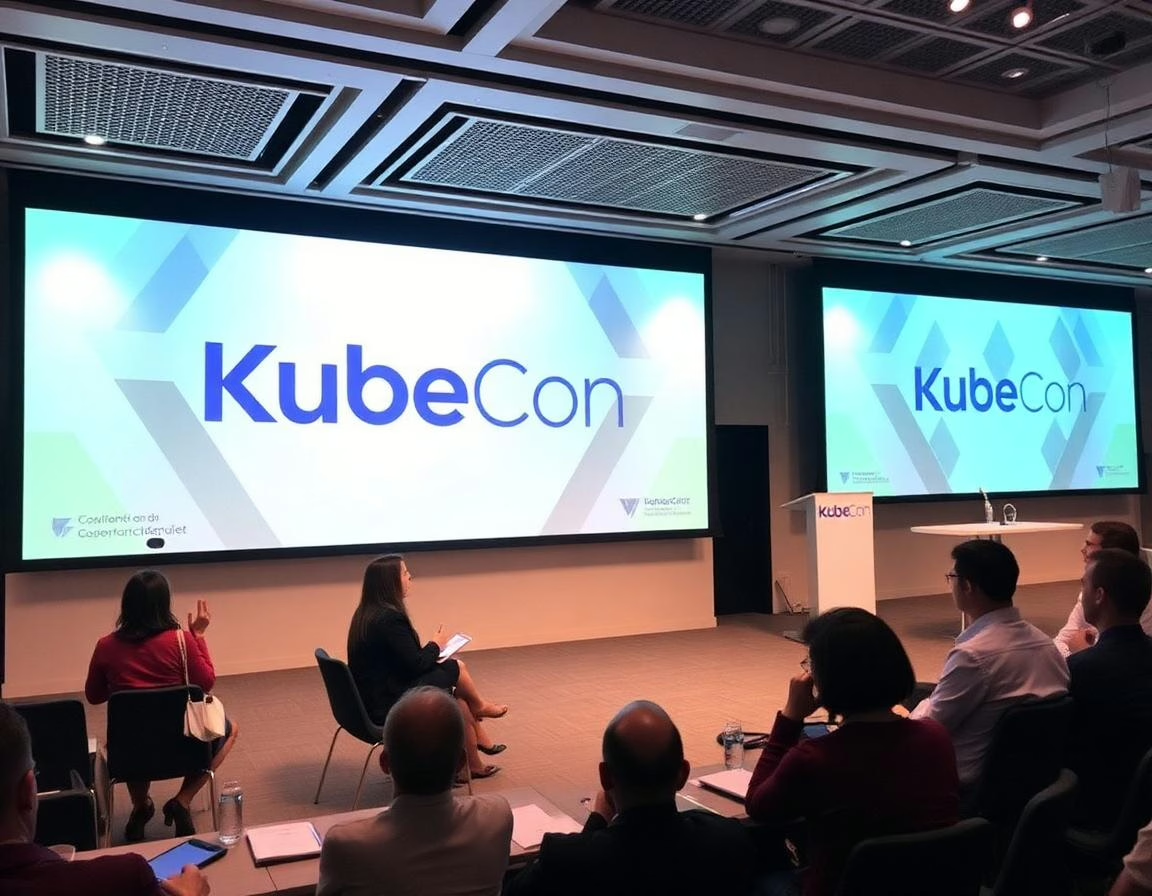
The recent KubeCon Europe 2026, held from March 23-26 in Amsterdam, proved to be an enlightening experience that surpassed my expectations. This event brought together a diverse array of sessions, keynotes, and vendors, focusing on the latest developments in Kubernetes and its applications, particularly in AI and platform engineering. In this article, I will share insights from a pre-event I attended that set the stage for the conference.
Pre-event Highlights
The day preceding KubeCon was bustling with numerous pre-events. I attended “Virtual Machines (VM) on Kubernetes Day: Bridging the Gap Between VMs and Containers,” hosted by Portworx. This session provided a comprehensive overview of running VMs on Kubernetes, covering successful migration strategies, platform implementations, and various use cases.
This event resonated with me as it addressed a significant trend: companies reassessing their data center strategies. Portworx, a pioneer in cloud-native storage solutions for Kubernetes, has evolved since its acquisition by Pure Storage. Their focus on providing robust, container-aware storage solutions has positioned them at the forefront of enabling enterprises to run stateful applications seamlessly.
Shifting Landscape of Data Centers
Historically, enterprise data centers have been centered around VMs. However, a notable shift is occurring as IT leaders grapple with upcoming, costly renewals of their infrastructure software. Many organizations now view Kubernetes as a viable alternative for future-proofing their data center architectures.
As businesses face the urgency of transitioning to Kubernetes, tools like KubeVirt are gaining traction. This open-source extension allows for the management of VMs alongside containers within a single Kubernetes cluster, facilitating a smoother migration path. Presenters shared success stories, including one organization that migrated an impressive 120,000 VMs to a Kubernetes-native stack, highlighting the practicality of the “Everything-on-K8s” approach.
De-risking the Transition
Many companies are opting for a cautious migration strategy, choosing to phase out their existing data center contracts with a planned exit ramp of 24 to 36 months. Rather than a massive overnight shift, they are initially migrating less critical workloads in development and QA environments. This phased approach allows teams to test the waters with KubeVirt, ensuring they are comfortable with the technology before fully decommissioning their legacy systems.
Despite the readiness of the technical components, such as KubeVirt, the cultural and operational shifts required for successful deployment present challenges. The transition from traditional virtualization methods to Kubernetes demands retraining and adaptation from teams accustomed to GUI-based systems.
Managing Challenges in Kubernetes
One significant hurdle in this transition is addressing the “Noisy Neighbors” problem. When one VM consumes excessive resources during operations like boot storms, it can adversely impact the entire cluster. Standard implementations often fall short in ensuring high availability across data centers, necessitating advanced tools like Calico L2 bridge or Cilium to maintain operational integrity.
Kubernetes architecture must be designed to preserve the identities and dependencies of VMs. This is crucial to prevent the need for extensive reconfiguration when shifting from a legacy hypervisor to a Kubernetes-based environment.
Engaging with Vendors
KubeCon is not only a hub for the CNCF but also a vibrant marketplace for innovative cloud-native technologies. Conversations with vendors on the showcase floor provided valuable insights into the evolving ecosystem surrounding Kubernetes.
During my discussion with Leon Kuperman, CTO of CAST AI, I learned about their transformation from a cost-optimization tool to a comprehensive cloud infrastructure automation platform. CAST AI utilizes AI-driven automation to optimize Kubernetes environments, ensuring efficient resource allocation and cost reduction. The introduction of their CLI tool, Kimchi, allows users to leverage open-source AI models, further streamlining AI costs.
The Future of Kubernetes
As organizations increasingly recognize the value of Kubernetes, the potential for innovation and efficiency is vast. The transition from traditional architectures to cloud-native solutions is not merely a trend; it represents a fundamental shift in how businesses approach infrastructure.
Takeaways
- Kubernetes is increasingly viewed as the future of enterprise data centers, prompting companies to reevaluate their existing architectures.
- Tools like KubeVirt facilitate the management of VMs alongside containers, making the transition smoother for organizations.
-
A phased migration strategy helps mitigate risks and allows teams to gain confidence in new technologies before full implementation.
-
Addressing operational challenges, such as resource management and cultural shifts, is crucial for successful Kubernetes adoption.
In conclusion, KubeCon Europe 2026 illuminated the dynamic landscape of Kubernetes and its implications for the future of data centers. The insights gained from both the pre-event and vendor discussions underscore the urgency for organizations to adapt to this evolving environment. As Kubernetes continues to mature, its role in shaping the future of cloud infrastructure becomes increasingly significant.
Read more → virtualizationreview.com



