
Smart biomaterials are revolutionizing the field of regenerative medicine by enabling the body to heal itself at the site of injury. This innovative approach moves away from traditional preformed grafts and instead focuses on materials that actively engage with the body’s natural repair processes. By responding to various internal and external stimuli—such as reactive oxygen species, hypoxia, and acidic pH—these biomaterials enhance tissue healing. The dynamic nature of regeneration necessitates that these smart materials adapt over time, aligning their properties with the evolving conditions of the injured tissue.
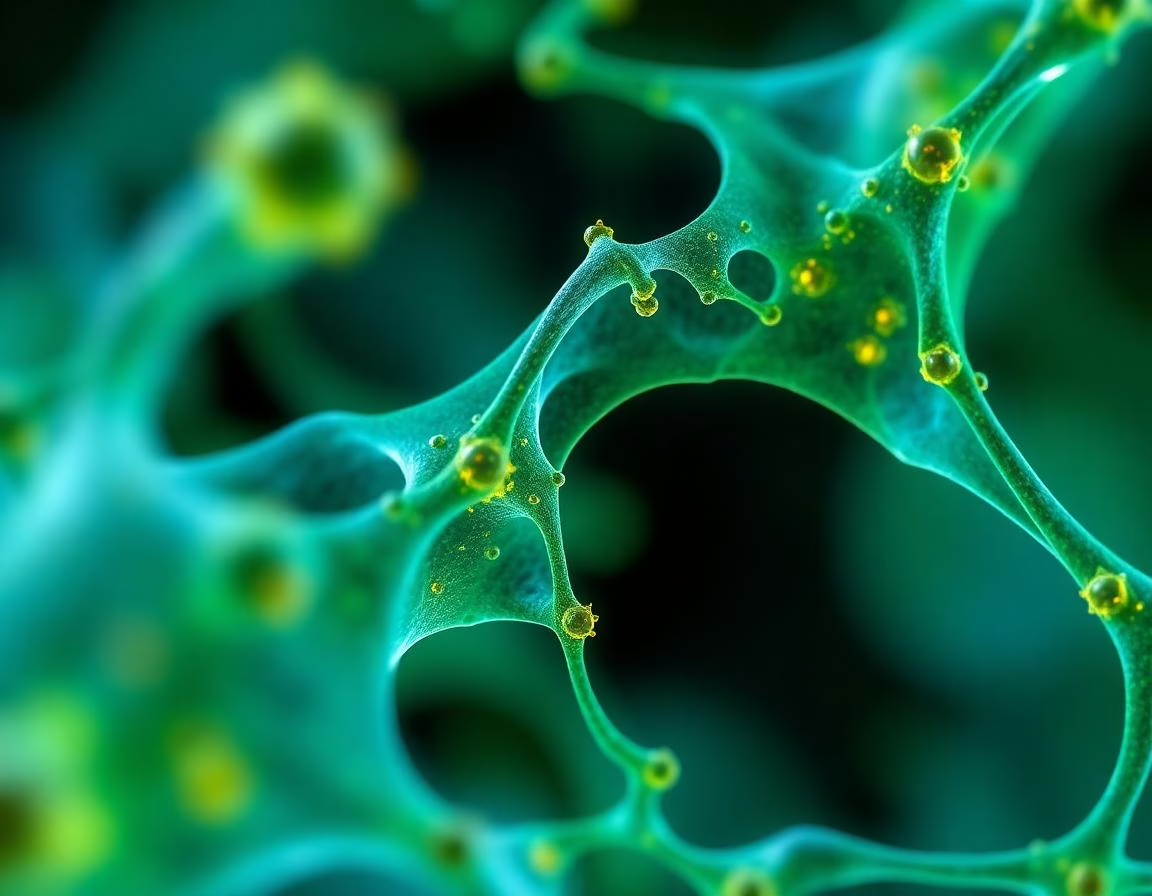
The Emergence of In Situ Regeneration
In situ tissue regeneration marks a significant shift in regenerative medicine, capitalizing on the body’s intrinsic ability to heal. By minimizing the reliance on complex scaffolds or cell preparations, this method streamlines both manufacturing processes and development timelines. It allows for on-demand adjustments to the local microenvironment, which can accelerate functional recovery.
This field has seen substantial research focus on understanding the interactions between materials and tissues. Investigations have resulted in insights into degradation rates, the mechanics of force transfer, and the real-time monitoring of local biochemical changes. Moreover, advanced computational tools—like machine learning and high-throughput discovery—are being integrated into material design and application, paving the way for personalized medicine.
Diverse Applications Across Medical Fields
The application of smart biomaterials spans a wide range of medical specialties. From musculoskeletal and dermatological repairs to cardiovascular and nervous system applications, these materials hold potential for improving patient outcomes across various organ systems. They are also being explored for use in pulmonary, gastrointestinal, hepatic, renal, dental, craniofacial, ophthalmic, and endocrine tissues.
As the field continues to expand, the emphasis on translational research becomes crucial. This includes investigations into sterilization processes, shelf-life, and the stability of bioactivity, along with the reproducibility of results in clinical settings. Establishing standardized in vitro assays and relevant preclinical models is essential for ensuring that these advances can transition smoothly into clinical practice.
Bridging Science with Ethics and Regulation
The development of smart biomaterials raises important ethical considerations and regulatory challenges. Researchers are encouraged to address these issues head-on, discussing the implications of their work in terms of health equity and sustainability. Perspectives on regulatory pathways for combination products are also critical as the field evolves.
Innovative contributions are sought that focus on designing materials capable of detecting biological signals, providing on-demand responses, and adapting to guide healing processes. This multifaceted approach aims to harness the power of the body’s natural repair mechanisms while ensuring safety and efficacy.
Prominent Researchers in the Field
Several leading researchers are at the forefront of advancing smart biomaterials:
Liming Bian, PhD
At South China University of Technology, Dr. Liming Bian specializes in multiscale biomaterials that explore stem cell behavior and promote tissue regeneration. His work has appeared in prestigious journals, highlighting his contributions to the field.
Huaxiao Adam Yang, PhD
Dr. Yang, based at the University of North Texas, integrates bioengineering tools and AI to pioneer new methodologies for studying cardiovascular development and disease. His extensive publication record underscores the impact of his research.
Zhong Alan Li, PhD
As a Vice-Chancellor Assistant Professor at The Chinese University of Hong Kong, Dr. Li’s interdisciplinary research involves organs-on-chips and neuromusculoskeletal regeneration, bridging the gap between engineering, biology, and medicine.
Clotilde Castaldo, MD, PhD
Dr. Castaldo focuses on cardiac regenerative medicine at the University of Naples Federico II, emphasizing 3D cell culture techniques to address heart failure.
Jung Seung Lee, PhD
At Sungkyunkwan University, Dr. Lee develops advanced biomaterials and organoids, aiming to meet critical medical needs through innovative engineering solutions.
Future Directions in Smart Biomaterials
The future of smart biomaterials looks promising as researchers continue to explore their potential in various applications. The focus will be on enhancing the responsiveness and adaptability of these materials, ensuring that they can effectively support the body’s healing processes.
As the field of regenerative medicine progresses, collaborations between scientists, engineers, and clinicians will be vital in translating research findings into practical therapies. By prioritizing ethical considerations and regulatory compliance, the development of smart biomaterials can advance toward broader clinical implementation.
Key Takeaways
- Smart biomaterials are transforming tissue regeneration by engaging with the body’s healing processes directly at the injury site.
- The focus on in situ regeneration simplifies manufacturing and enhances the healing environment.
-
Ethical considerations and regulatory pathways are crucial for the responsible advancement of smart biomaterials.
-
Interdisciplinary collaboration is essential for translating research into clinical applications.
In summary, the integration of smart biomaterials into regenerative medicine offers exciting possibilities for future treatments. As research continues to evolve, these innovations have the potential to significantly improve patient care and recovery outcomes.
Read more → www.nature.com



