
Welcome to the fascinating realm of additive manufacturing of ceramics for extreme environments, where scientific ingenuity meets industrial innovation to push the boundaries of material applications. In this exciting journey, we explore how ceramics, with their exceptional properties, are revolutionizing industries by withstanding extreme conditions that challenge conventional materials. From chemical reactors to aerospace components, ceramics have become indispensable in various critical fields due to their high hardness, resistance to high temperatures, and chemical inertness.
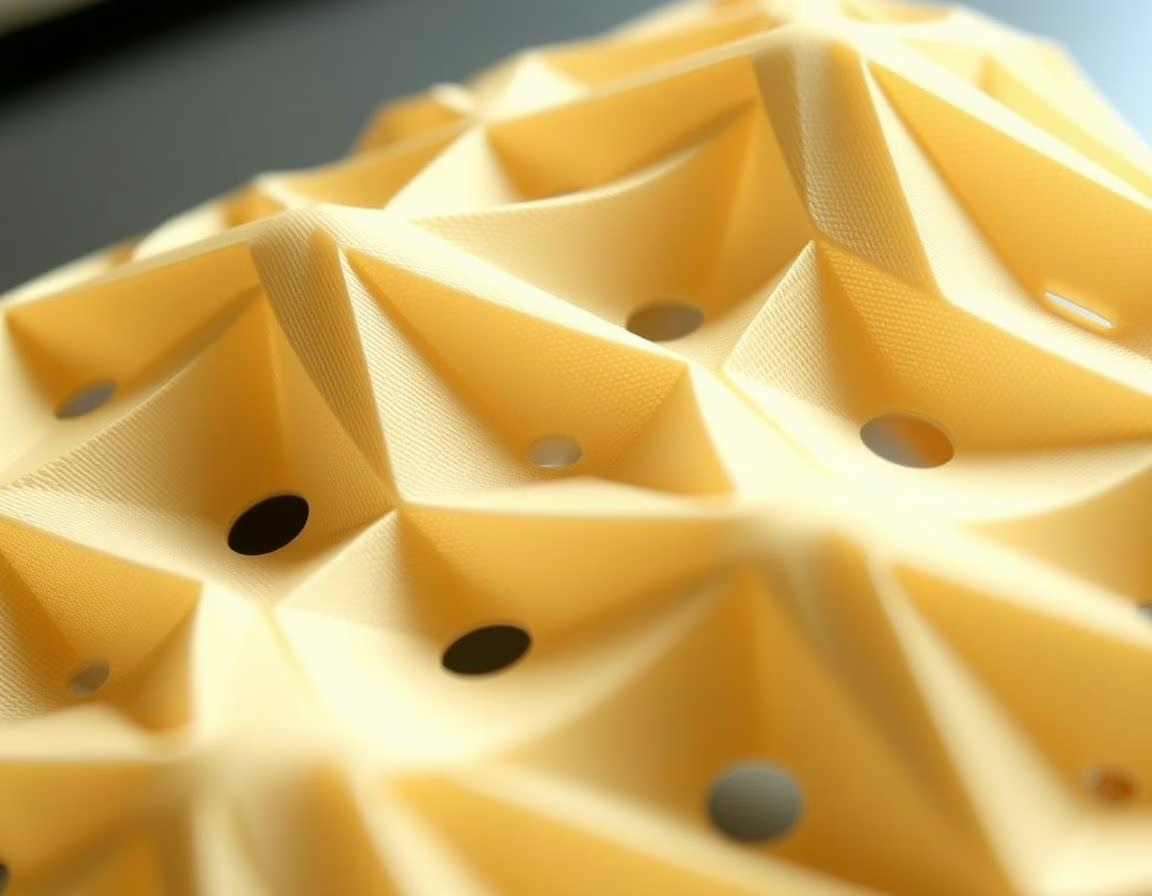
Ceramics, though superior in properties, have traditionally posed challenges in shaping due to their inherent characteristics. However, the advent of additive manufacturing (AM) has opened new avenues for incorporating ceramics into existing industrial processes. By leveraging the design flexibility offered by AM, engineers can now create intricate structures for filters, heat exchangers, and chemical reactors, maximizing the material’s potential in extreme environments. To ensure the seamless integration of additively manufactured ceramics into industrial workflows, rigorous characterization and qualification processes are essential, including real-world testing in extreme conditions.
Unleashing the Potential of Ceramics through Additive Manufacturing
The ongoing topical collection on AM of ceramics for extreme environments aims to showcase the latest advancements in this field, bridging the gap between research and practical applications. Collaborative efforts from renowned institutions worldwide, including Dipartimento di Ingegneria Industriale, Università di Padova, and Oak Ridge National Laboratory, underscore the global significance of this research domain. By publishing original research articles, reviews, and perspectives, the collection serves as a platform for disseminating cutting-edge insights and fostering a community of innovators in ceramics manufacturing.
Exploring Global Innovations in Ceramic Additive Manufacturing
Diving deeper into the global landscape of ceramic AM, institutions such as the Federal Institute for Materials Research and Testing in Germany and the Institute of Research for Ceramics in France are at the forefront of advancing this transformative technology. Their contributions not only push the boundaries of material science but also lay the foundation for sustainable consumption and production patterns in line with SDG 12. By embracing AM, industries can revolutionize their manufacturing processes, enhancing efficiency and sustainability while meeting the demands of extreme applications.
In the realm of extreme-environment reactors and aerospace components, the integration of additively manufactured ceramics presents a paradigm shift in material engineering. The high melting point and oxidation resistance of ceramics make them ideal for withstanding the harsh conditions encountered in these industries. Moreover, the chemical inertness of ceramics ensures long-term reliability, reducing maintenance costs and enhancing operational safety—a crucial factor in high-stakes environments such as nuclear reactors and defense systems.
The Intersection of Design Innovation and Industrial Application
One of the key challenges in harnessing the full potential of ceramics through additive manufacturing lies in optimizing design strategies to align with AM capabilities. By reimagining traditional components as complex, geometrically intricate structures, engineers can maximize the performance of ceramics in extreme environments. Filters and heat exchangers, critical components in various industrial processes, can now be tailored for enhanced efficiency and durability, thanks to the design freedom offered by AM technologies.
In the pursuit of widespread acceptance of additively manufactured ceramics, standardization and rigorous testing protocols play a pivotal role. By developing industry-wide standards and robust characterization methods, manufacturers can ensure the quality and reliability of AM ceramics, paving the way for their seamless integration into industrial applications. Real-world testing in simulated extreme environments serves as a litmus test for the performance and durability of these materials, providing valuable insights for further refinement and optimization.
Embracing a Future of Sustainable Innovation
As we navigate the evolving landscape of additive manufacturing of ceramics, it is essential to embrace a future fueled by sustainable innovation and technological advancement. By harnessing the unique properties of ceramics and leveraging the design freedom offered by AM, industries can unlock new possibilities in extreme-environment applications. From energy-efficient chemical reactors to next-generation aerospace components, ceramics are poised to drive innovation and sustainability across diverse sectors, shaping a future where resilience and reliability are paramount.
In conclusion, the additive manufacturing of ceramics for extreme environments represents a transformative leap in material science, with far-reaching implications for industries worldwide. By synergizing scientific research with industrial applications, we can unlock the full potential of ceramics and pave the way for a future where innovation thrives in even the harshest conditions. As we continue to push the boundaries of material engineering, let us embrace the possibilities offered by additive manufacturing and embark on a journey towards sustainable consumption, production, and technological excellence in extreme environments.
Key Takeaways:
- Additive manufacturing revolutionizes ceramic production for extreme environments.
- Design flexibility in AM enhances the performance of ceramics in challenging applications.
- Rigorous testing and standardization are crucial for ensuring the reliability of additively manufactured ceramics.
- Collaboration among global institutions drives innovation in ceramic additive manufacturing.
- Ceramics play a vital role in sustainable consumption and production patterns for extreme applications.
Read more on nature.com



