
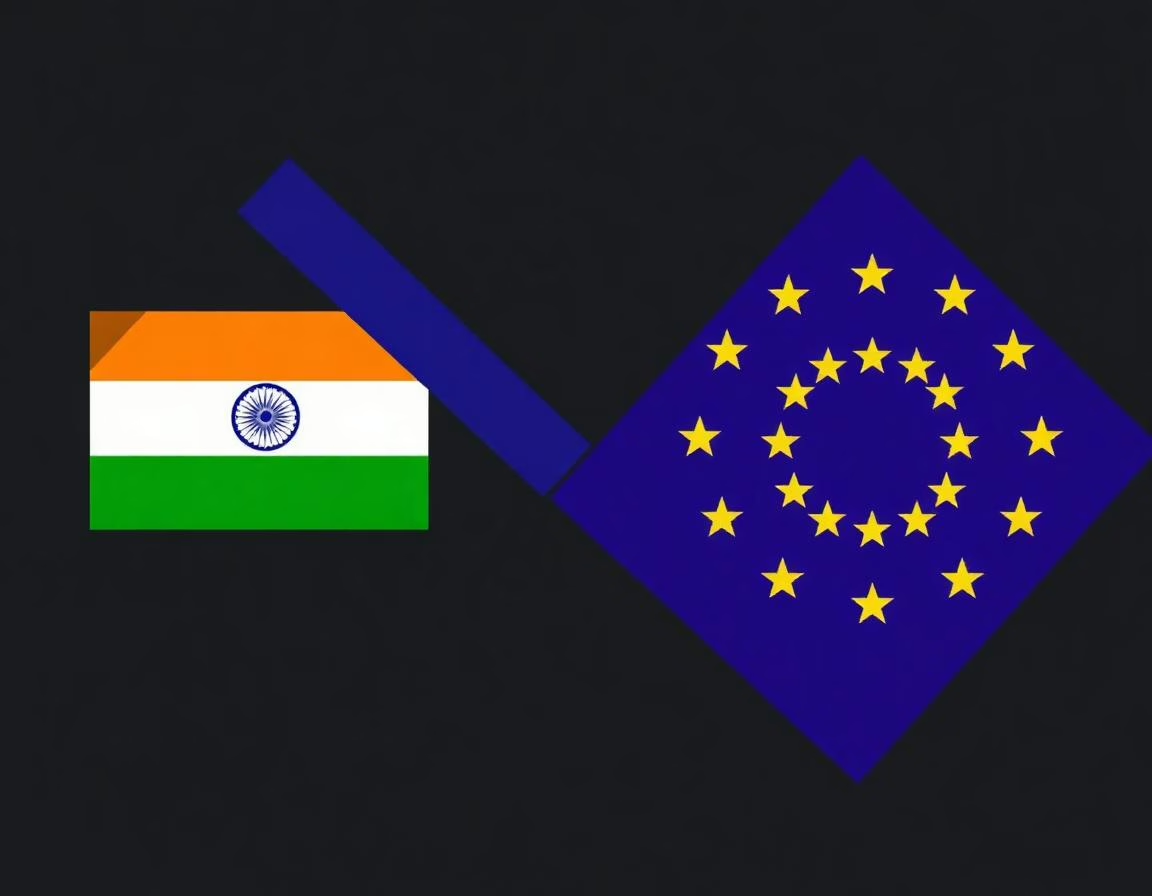
The recent finalization of the Free Trade Agreement (FTA) between India and the European Union marks a significant milestone in international trade relations. This comprehensive deal is anticipated to enhance Indian exports, especially in key sectors like textiles, pharmaceuticals, and services. By reducing tariffs and expanding market access, the agreement aims to strengthen economic ties between India and Europe, creating a more favorable environment for trade and investment.
High-Level Discussions
During the 16th India-EU Summit, Prime Minister Narendra Modi engaged in crucial discussions with European Commission President Ursula von der Leyen and European Council President António Costa. The successful conclusion of the FTA negotiations was confirmed by Commerce Secretary Rajesh Agrawal, with an official announcement set for January 27.
Prime Minister Modi expressed optimism about the pact, stating that it would “drive trade, investment, and innovation.” He emphasized its role in bolstering the strategic relationship between the two regions, highlighting the potential for a mutually beneficial economic partnership.
The “Mother of All Deals”
European Commission President Ursula von der Leyen characterized the agreement as the “mother of all deals,” underscoring its wide-reaching implications. She projected a future of enhanced collaboration between the two economies, noting that the agreement creates a free trade zone for around two billion people. This collaboration is viewed as a pivotal moment for both regions, setting the stage for further economic growth.
Economic Benefits for India
The FTA is poised to offer significant economic advantages for India, particularly in the manufacturing and services sectors. Prime Minister Modi pointed out that the agreement encompasses 25 percent of global GDP and one-third of global trade, underscoring its importance.
The FTA will provide preferential access to 97 percent of tariff lines for Indian goods entering the EU, accounting for 99.5 percent of trade value. This will lead to reduced tariffs on EU exports to India, translating into approximately €4 billion in annual savings for the EU.
Key Industries Impacted
Several key Indian exports are expected to gain from the FTA. These include:
- Textiles and Apparel: Tariff reductions will facilitate easier access for Indian textiles in European markets.
- Pharmaceuticals: The agreement is likely to bolster India’s robust pharma sector, enabling greater export opportunities.
-
Machinery and Electrical Equipment: Tariffs on these goods will drop significantly, promoting competitive pricing.
-
Automobiles: The import duty on cars will decrease from as high as 110% to 10%, albeit with a quota of 250,000 vehicles, benefiting both consumers and manufacturers.
Tariff Reductions Across Sectors
The deal encompasses substantial tariff reductions across various sectors. For instance:
- Machinery & Electrical Equipment: Tariffs will reduce from as high as 44% to 0%.
-
Optical and Medical Equipment: Tariffs will be eliminated for 90% of products, down from 27.5%.
-
Wine and Olive Oil: Import duties will see drastic cuts, with wine tariffs reduced from 150% to 20% for premium ranges.
These reductions will not only make Indian goods more competitive in EU markets but will also benefit European imports into India.
Geopolitical Context
The FTA arrives at a time of heightened geopolitical tensions, especially given the high tariffs imposed by the United States on international trade. Despite ongoing negotiations with the US, the India-EU FTA provides Indian exporters with an opportunity to diversify their markets and reduce reliance on any single region, notably China.
Investment Opportunities
The EU is a significant player in India’s foreign direct investment landscape, with cumulative investments amounting to USD 117.4 billion from April 2000 to September 2024. Approximately 6,000 EU firms operate in India, primarily from countries like the Netherlands, Germany, and France. This agreement is expected to further attract European investment in India, fostering growth across various sectors.
A Long Journey to Finalization
Negotiations for this trade agreement began in 2007 but faced hurdles due to disagreements over specific sectors, including automobiles and public procurement. After a hiatus, discussions resumed in 2022, eventually culminating in this landmark agreement.
While the FTA will officially take effect next year, the text will undergo legal scrutiny for five to six months before formal ratification. This careful approach ensures that both parties are fully prepared for the implementation of the agreement.
Conclusion
The India-EU Free Trade Agreement stands as a pivotal development in international trade, promising substantial economic benefits for both regions. It not only facilitates easier access to markets but also strengthens diplomatic ties between India and Europe. As the world navigates complex geopolitical landscapes, this agreement represents a strategic move toward fostering stability, economic growth, and collaborative innovation.
- Key Takeaways:
- The FTA will reduce tariffs on 97% of Indian goods exported to the EU.
- Key sectors like textiles, pharmaceuticals, and automobiles will see significant benefits.
- The agreement is expected to attract further EU investment into India.
- It marks a strategic pivot for India amid rising global economic challenges.
Read more → www.ibtimes.co.in



