
Environmental DNA (eDNA) is revolutionizing the way we monitor biodiversity. By collecting genetic material shed by organisms into their surroundings, scientists can track species presence and assess ecosystem health through innovative, cost-effective, and non-invasive methods. This approach provides rapid insights into community composition and ecological interactions across various environments, including aquatic, terrestrial, and aerial ecosystems.
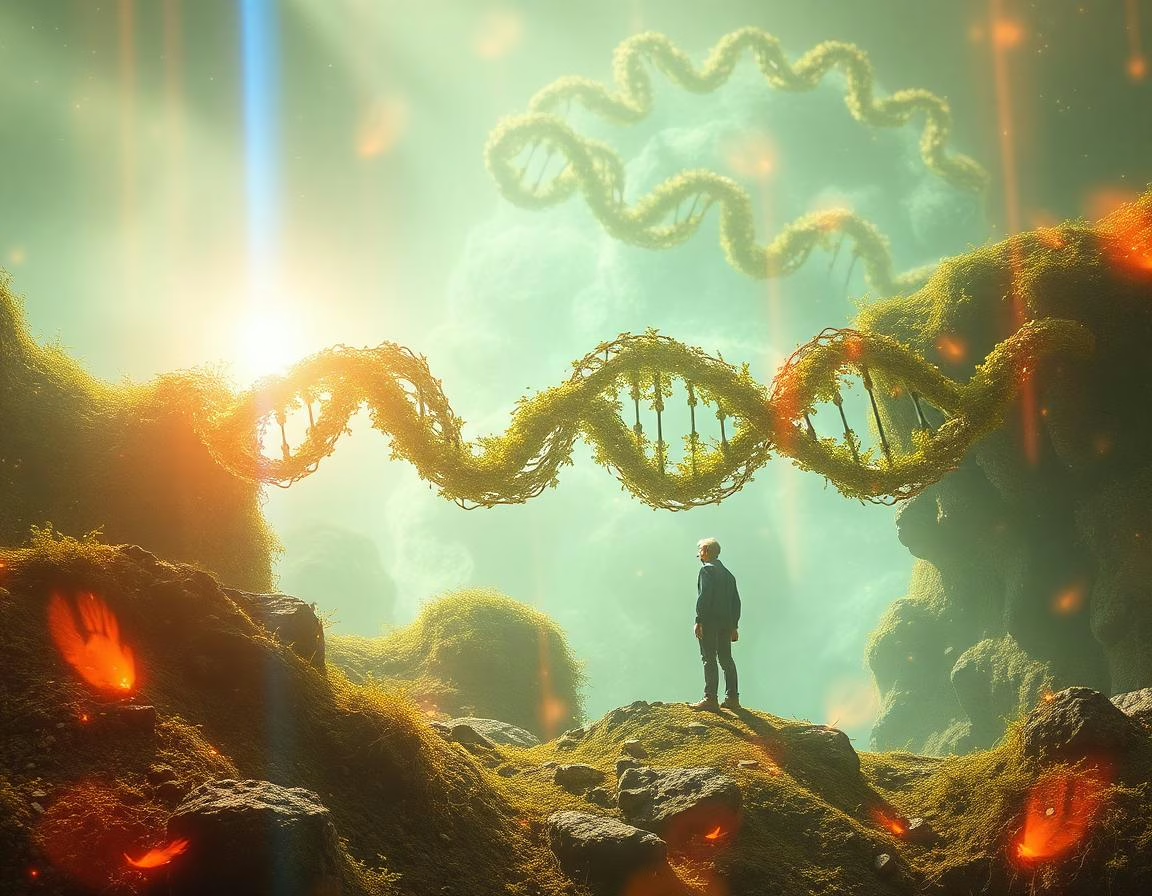
Advancements in eDNA Research
This collection seeks original research contributions that enhance the science of eDNA. It emphasizes innovations in sampling, extraction, and analysis techniques. The collection also encourages studies focused on biodiversity monitoring using eDNA, particularly in conservation biogeography. Such research is vital for detecting invasive species and guiding habitat restoration efforts.
Exploring Environmental Stressors
Another crucial aspect of this collection is the investigation of how environmental stressors affect eDNA persistence and detection. Understanding these dynamics is essential for accurately interpreting eDNA data and its implications for biodiversity assessments. Contributions that delve into metabarcoding, metagenomics, ecological modeling, and airborne eDNA are particularly encouraged.
Profiles of Key Researchers
Several prominent researchers are leading the charge in environmental genomics and eDNA applications:
Luca Fontanesi, PhD
At the University of Bologna, Dr. Luca Fontanesi serves as a Full Professor of Livestock Systems, Animal Breeding, and Genetics. He directs the Animal and Food Genomics Group and focuses on applying genomics, metagenomics, metabolomics, and phenomics in animal production. His work includes unique applications of eDNA analyses for food authentication and environmental characterization. He has been an Editorial Board Member for Scientific Reports since 2019.
Anubhab Khan, PhD
Dr. Anubhab Khan is an Assistant Professor at the Indian Institute of Science, where he conducts research in the Centre for Ecological Sciences. His interests lie in trait evolution and population survival, with a focus on making wildlife genomics accessible. He actively teaches workshops to train academicians and conservationists in wildlife genetics, contributing to the field’s development. Dr. Khan has been an Editorial Board Member for Scientific Reports since 2025.
Maha Mezghani Khemakhem, PhD
Specializing in environmental genomics, Dr. Maha Mezghani Khemakhem is a molecular geneticist at the University of Tunis El Manar. Her research encompasses microbial diversity, DNA barcoding, and eDNA-based biosignatures. She investigates metagenomics and microbial community dynamics in both terrestrial and aquatic ecosystems, with applications in assessing biodiversity and antimicrobial resistance. Dr. Mezghani Khemakhem has been an Editorial Board Member for Scientific Reports since 2022.
The Future of Biodiversity Monitoring
As the field of environmental genomics continues to evolve, the integration of eDNA methodologies promises significant advances in biodiversity monitoring and conservation strategies. Researchers are encouraged to contribute their findings, fostering a collaborative environment that enhances our understanding of ecosystems and the species that inhabit them.
Key Takeaways
- eDNA is a transformative tool for monitoring biodiversity and assessing ecosystem health.
- The current research collection emphasizes innovations in eDNA sampling, extraction, and analysis.
-
Understanding how environmental stressors affect eDNA detection is crucial for accurate biodiversity assessments.
-
Prominent researchers in the field are committed to advancing knowledge and accessibility in environmental genomics.
In conclusion, the application of environmental DNA is paving the way for a new era of biodiversity research. By leveraging innovative techniques and collaborative efforts, we can gain deeper insights into ecosystem dynamics and enhance conservation practices. With continued advancements, eDNA will undoubtedly play a pivotal role in safeguarding our planet’s biodiversity for future generations.
Read more → www.nature.com



