
The Federal Reserve stands at a critical juncture as policymakers navigate the complexities of interest rates in the face of persistent inflation. Recent discussions reveal a growing divide, highlighting the challenges of maintaining economic stability while addressing inflationary pressures.
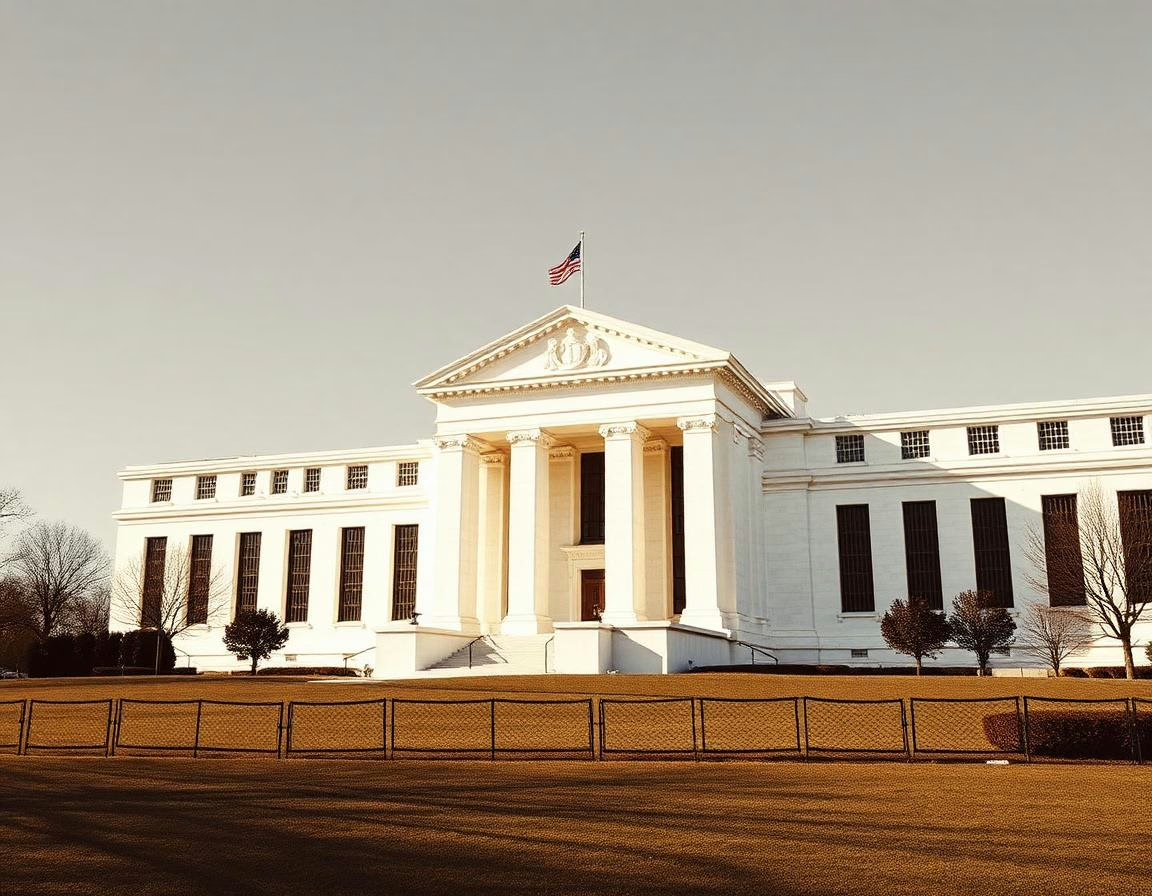
Recent Policy Decisions
In the latest meeting of the Federal Open Market Committee (FOMC), the decision to keep interest rates unchanged was largely unanimous. The panel voted 10-2 to maintain the benchmark federal funds rate within the range of 3.5% to 3.75%. However, dissenting voices emerged, particularly from Fed governors Christopher Waller and Stephen Miran, who expressed concerns regarding the labor market’s trajectory.
Inflationary Pressures
Despite the consensus on keeping rates steady, inflation remains a central concern. The FOMC minutes indicate that several members advocated for language in the announcement that would signal the potential for future rate hikes if inflation persists above the Fed’s 2% target. This reflects a cautious approach as officials grapple with the implications of sustained inflation on economic growth.
Divergent Views on Rate Adjustments
The minutes further revealed that some policymakers expressed support for a dual approach to future interest rate decisions. They acknowledged that upward adjustments might be necessary if inflation continues to exceed desired levels. Conversely, a faction within the committee believes that a prudent wait-and-see approach is warranted, allowing time to assess incoming economic data before making further policy adjustments.
Economic Indicators and Predictions
The Fed’s preferred inflation gauge, the Personal Consumption Expenditures (PCE) index, continues to present a challenging landscape. The latest readings show PCE inflation significantly above the central bank’s target, with implications for future policy. In November, PCE inflation reached 2.8%, matching its highest level since October 2023. Core PCE, which filters out volatile food and energy prices, also stood at 2.8%.
Effects of Tariffs on Inflation
Recent economic policies, particularly tariffs introduced during the previous administration, have played a role in exacerbating inflationary trends. Fed Chair Jerome Powell noted that without the impact of tariffs, core PCE inflation would likely hover “just a bit above 2%.” This acknowledgment underscores the interconnectedness of fiscal policy and inflation dynamics.
Observations on Future Policy Directions
As policymakers weigh their options, the sentiment among several committee members leans toward a cautious assessment of inflation trends. They emphasize the necessity for clear signals of disinflation before considering any reduction in the federal funds rate. This reflects a broader strategy to ensure that inflationary pressures are adequately addressed without undermining economic momentum.
Conclusion
The Federal Reserve’s current stance on interest rates encapsulates the delicate balance between fostering economic growth and curbing inflation. As dissent grows among policymakers, the path forward will require careful consideration of economic indicators and a commitment to adapting strategies in response to evolving conditions. Navigating this landscape will be pivotal in shaping the future of U.S. monetary policy.
- The Fed maintained interest rates at 3.5% to 3.75% amid inflation concerns.
- Dissenting voices within the FOMC call for potential future rate hikes.
- Inflation continues to exceed the Fed’s 2% target, complicating policy decisions.
- The impact of tariffs has been significant in shaping current inflation rates.
- Policymakers advocate for a cautious approach, awaiting clearer signs of disinflation.
Read more → www.aol.com



