
Aging is a multifaceted process that impacts not only the intrinsic functions of cells but also the intricate communications between them. While the focus often lies on cellular damage and dysfunction, emerging research highlights the significance of neuron-glia interactions in the aging brain. Neurons depend on glial cells for various critical roles, including nutrient supply, waste management, and repair mechanisms. A breakdown in this communication is increasingly recognized as a key feature of brain aging, prompting scientists to explore the underlying changes in these interactions.
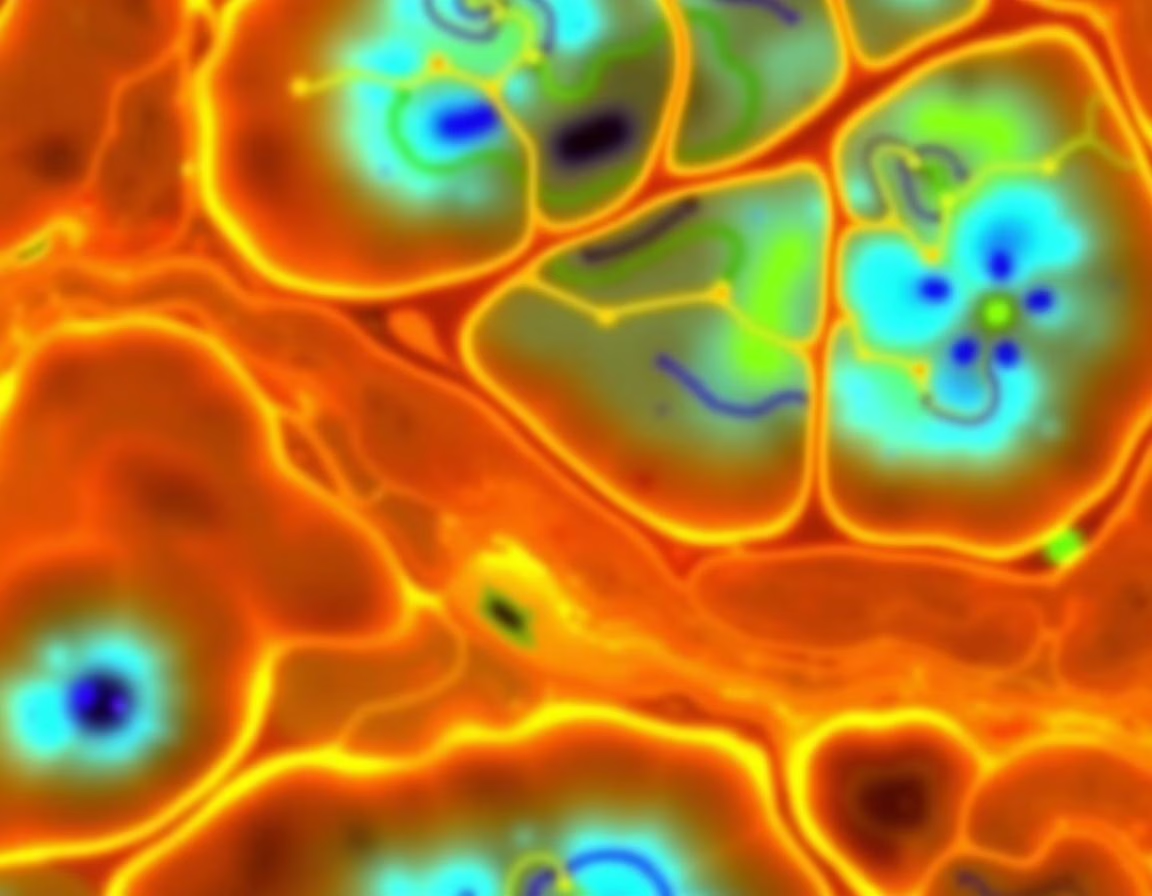
The Challenge of Measuring Cell-Surface Proteins
Cell-surface communication plays a vital role in how cells respond to their environment and connect with one another. However, studying cell-surface proteins poses significant challenges. These proteins are typically present in low quantities, embedded within membranes, and influenced by the surrounding tissue. Traditional biochemical methods can disrupt the delicate interactions that researchers aim to study, making it difficult to accurately assess the state of cell-surface proteomes.
Recent advancements in proteomics have introduced novel techniques that allow researchers to investigate cell-surface proteins in their native contexts, providing insights into neural interactions. Despite these advancements, the application of such methodologies to understand aging-related changes in neuron-glia communications remains limited.
A Breakthrough Study in Drosophila
In an innovative study published in eLife, researchers led by Hongjie Li from Baylor College of Medicine explored how neuron-glia communications shift with age in fruit flies, Drosophila. The team, including first author Madeline Marques, adapted in situ labeling methods to profile the proteins present at the surface of glial cells in the brains of both young (5-day-old) and old (50-day-old) flies. Their analysis revealed 872 proteins exhibiting significant age-related differences in abundance.
The findings indicated that proteins increasing with age were predominantly linked to functions such as localization and transport, suggesting that older brains may require enhanced homeostasis and trafficking mechanisms. Conversely, proteins that decreased in abundance were primarily associated with synaptic organization and axon guidance, shedding light on the cellular changes that accompany aging.
Uncovering Functional Implications
To transition from correlation to functional understanding, the researchers selected 48 genes that showed the most significant changes between the young and old glial surface proteomes. They manipulated these genes in adult flies, given that many wiring proteins are essential during development, and their alteration in young flies could obscure aging-related effects. Intriguingly, the results revealed that certain genes had sex-specific effects on lifespan, suggesting that aging is not a uniform process but rather follows distinct trajectories influenced by various factors.
The Role of DIP-β in Lifespan Extension
Among the identified candidates, DIP-β, a cell adhesion protein, emerged as a notable factor. Overexpression of DIP-β in glial cells extended lifespan in both male and female flies. Additionally, older flies with elevated levels of DIP-β demonstrated improved physical performance, indicating enhanced late-life functionality alongside increased longevity.
To elucidate the molecular mechanisms underlying DIP-β’s effects, the researchers conducted single-nucleus RNA sequencing on aged fly heads. This analysis, combined with a computational approach called FlyPhoneDB2, indicated that DIP-β overexpression modulated intercellular signaling between glia and neurons, as well as with fat cells. The findings pointed to significant shifts in several signaling pathways, such as TGF-beta, Wnt, FGFR, and EGFR, suggesting that DIP-β may act as a remodeling factor, enhancing communication among various cell types.
Mapping the Glial Surface Proteome
This research provides a detailed, cell-type-specific perspective on how the glial surface proteome changes with age. By identifying DIP-β as a critical factor in promoting longevity, the study opens new avenues for understanding the cellular mechanisms of aging. However, several key questions remain. Does DIP-β interact with known binding partners? How does it influence the structural and signaling interactions between glia and neurons? Furthermore, the pronounced sex-specificity of many findings hints at a complex layer of glial aging biology that warrants further investigation.
Implications for Future Research
The insights gained from this study underscore the importance of neuron-glia interactions in the aging process. Understanding these dynamics may not only reveal fundamental principles of brain aging but also inform the development of targeted interventions. The research highlights the potential for exploring sex-specific factors that influence aging, which could lead to tailored approaches in managing age-related conditions.
- Key Takeaways:
- Aging affects neuron-glia communications, impacting brain health.
- Traditional methods for studying cell-surface proteins pose significant challenges.
- The study identified DIP-β as a glial protein that enhances lifespan and function in aged flies.
- There is a need for further research into the mechanisms underlying neuron-glia interactions.
- Sex-specific responses to aging highlight the complexity of biological aging processes.
In summary, the exploration of neuron-glia interactions provides a promising avenue for understanding aging. By elucidating the changes in cell-surface proteomes and their functional implications, researchers can pave the way for innovative strategies to enhance healthspan and longevity. As we unlock the mysteries of these cellular dynamics, the future of aging research looks brighter than ever.
Read more → elifesciences.org



