
The evolution of DNA polymerases to recognize and amplify C2’-modified DNA has opened new avenues in biotechnology. The development of thermostable polymerases capable of efficiently interconverting C2′-OMe modified oligonucleotides and their DNA counterparts has significant implications for various applications. The ability to evolve polymerases that can transcribe, reverse transcribe, and PCR amplify C2’-modified DNA represents a breakthrough in the field, overcoming limitations posed by nuclease-mediated degradation of aptamers and the challenges of synthesizing modified oligonucleotides using natural polymerases.
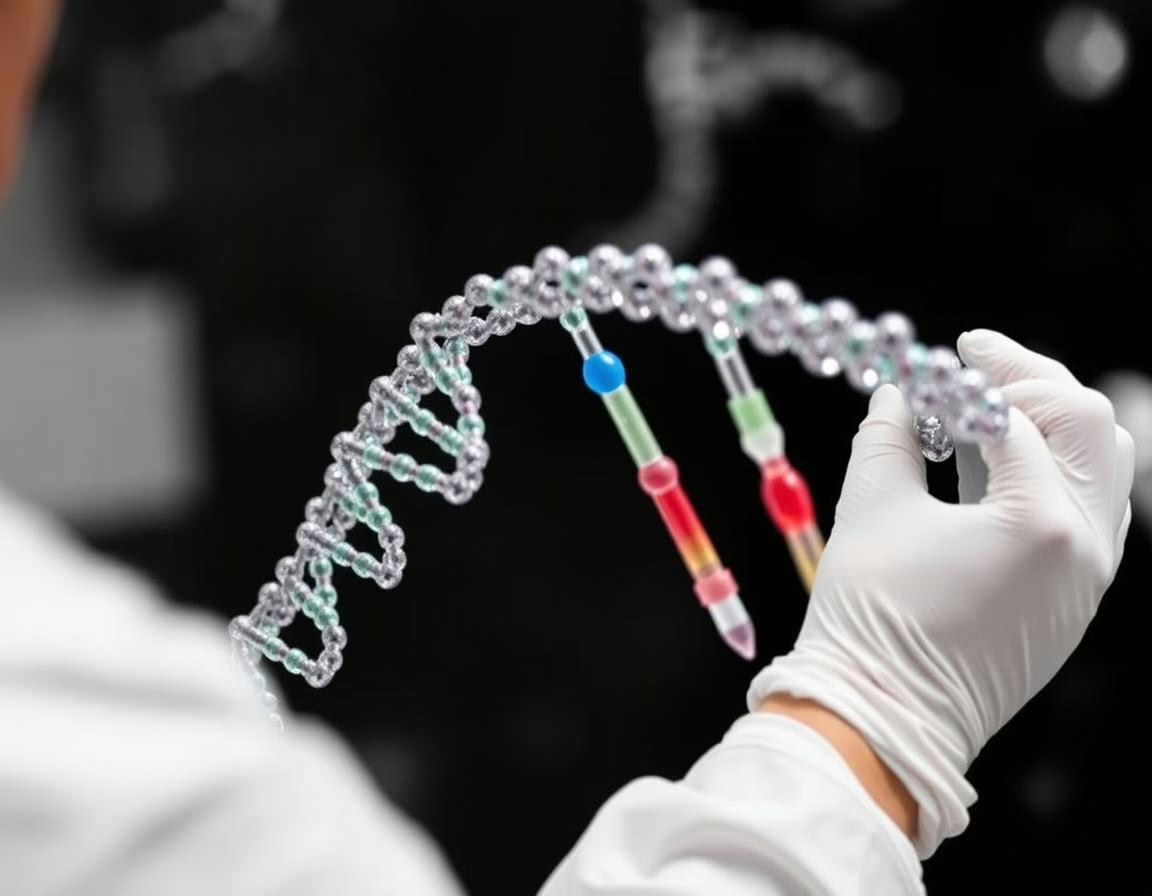
Understanding the Significance of C2’-Modified DNA
DNA polymerases play a crucial role in enzymatic replication and PCR amplification. The evolution of polymerases like Stoffel fragment DNA polymerase to recognize and process C2’-modified substrates represents a remarkable feat of bioengineering. The incorporation of methoxy or fluorine substituents at the C2’ position of nucleotides has garnered attention due to the resistance of the resulting oligonucleotides to nucleases, presenting new opportunities for therapeutic aptamers and other biotechnological applications.
Overcoming Limitations with Modified Oligonucleotides
The modifications at the C2’ position have been shown to enhance the stability and efficacy of therapeutic aptamers. However, the challenge lies in the recognition and amplification of these modified oligonucleotides, a task that natural polymerases are not equipped to handle. The evolution of polymerases capable of transcribing, reverse transcribing, and PCR amplifying C2’-modified DNA addresses a critical gap in current biotechnological processes.
Enhanced Evolution System for Polymerase Development
The development of an improved evolution system involving the optimization of substrate attachment to phages and the introduction of a plate-based screening method has streamlined the process of evolving polymerases with novel functions. This enhanced system has enabled the evolution of polymerases like SFM4-3, SFM4-6, and SFM4-9, which exhibit the ability to transcribe, reverse transcribe, and PCR amplify C2’-modified oligonucleotides with increased efficiency and fidelity.
Mechanistic Insights into Polymerase Evolution
The evolution of polymerases capable of amplifying C2’-modified oligonucleotides was driven by optimizing interdomain interactions that stabilize the catalytically active closed conformation of the polymerase. Mutations at key residues, such as E681 and E520, facilitated the recognition and processing of modified nucleotides, leading to the development of polymerases with unprecedented capabilities in transcribing and amplifying modified DNA sequences.
Practical Implications and Future Applications
The evolved polymerases, particularly SFM4-3, have immediate applications in the development of modified aptamers for diagnostic and therapeutic purposes. The improved stability of C2’-modified oligonucleotides in biological solutions, coupled with the high efficiency and fidelity of the evolved polymerases, opens up new possibilities in biotechnology. Further research in this area could lead to the optimization of other polymerases for diverse functions and applications.
Key Takeaways
- Evolution of polymerases for recognizing and amplifying C2’-modified DNA has revolutionized biotechnological processes.
- Enhanced evolution systems and mechanistic insights have driven the development of polymerases with novel capabilities.
- The ability to transcribe, reverse transcribe, and PCR amplify C2’-modified oligonucleotides offers practical applications in various fields.
- The stability, efficiency, and fidelity of evolved polymerases pave the way for advancements in therapeutic aptamers and diagnostic tools.
- Future research may focus on optimizing polymerases for specific functions and expanding the applications of C2’-modified DNA technology.
Read more on pmc.ncbi.nlm.nih.gov



