
Embarking on a journey to fortify the long-term stability of enveloped viral vectors expressing key antigens is a quest that merges science and art. In the realm of bioprocessing and viral vector therapeutics, the development of liquid formulations stands as a beacon of hope, promising easier logistics and enhanced accessibility. This narrative unfolds through the lens of a Design of Experiments (DOE)-guided approach, where the intricate dance of excipients, buffers, and stress conditions orchestrates a symphony of stability for the recombinant Vesicular Stomatitis Virus (rVSV) expressing the SARS-CoV-2 spike glycoprotein.
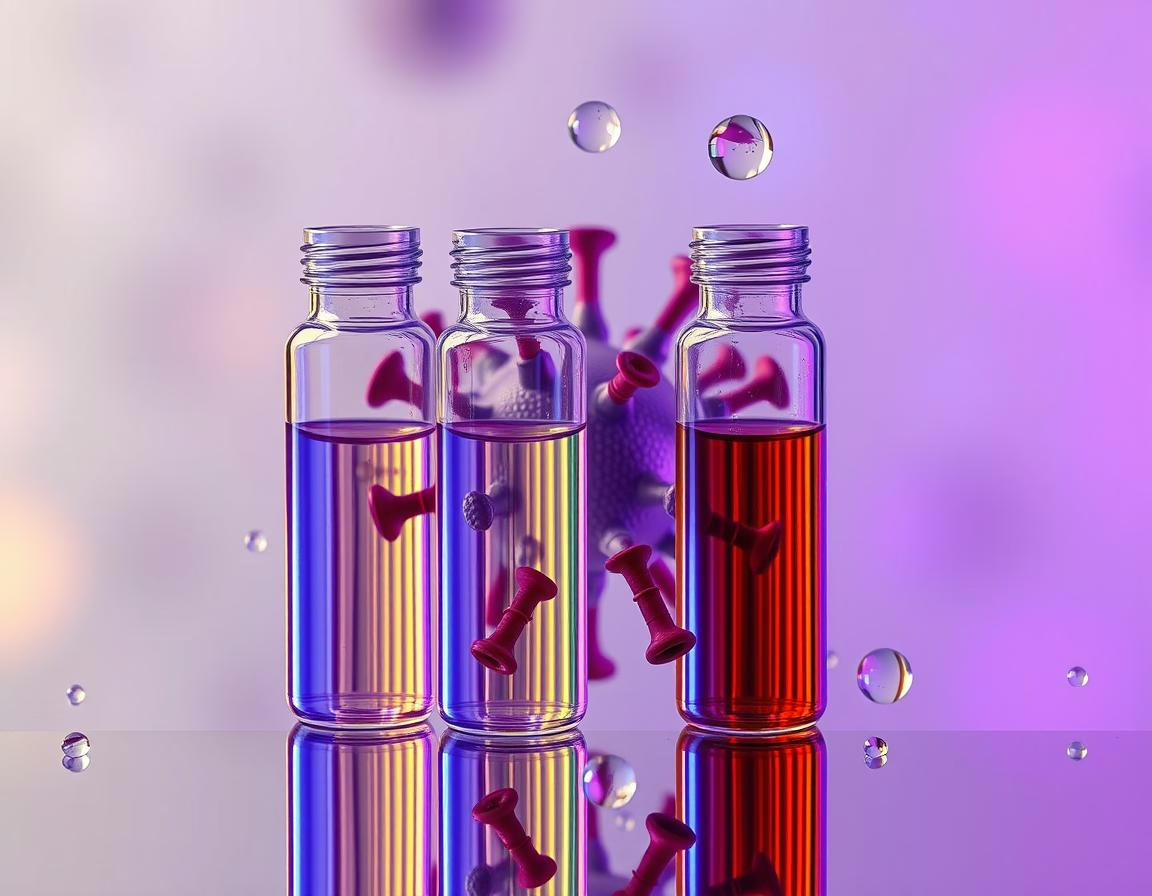
Exploring the Landscape of Liquid Formulations in Viral Vector Vaccines
Liquid formulations, the unsung heroes of vaccine stability, offer a compelling narrative of cost-effectiveness and ease of distribution. In the saga of enveloped viral vectors, the battle against degradation and denaturation is waged through the protective embrace of excipients like trehalose, gelatin, and histidine. These guardian molecules shield the viral integrity against freeze-thaw stress and temperature fluctuations, preserving the potency of the rVSV-SARS-CoV-2 vector with unwavering determination.
Unveiling the DOE Approach: A Tale of Predictability and Precision
Amidst the vast sea of variables, the Design of Experiments emerges as a guiding star, illuminating the path towards optimized formulations. Through a meticulous dance of statistical analyses and response surface plots, the interplay of gelatin, trehalose, histidine, and pH unfolds like a cosmic ballet. Each component plays a crucial role in shaping the destiny of viral infectivity, with gelatin emerging as the mighty sentinel of stability.
The Quest for Long-Term Stability: A Journey of Discovery
As the narrative unfolds, the accelerated stress conditions at 37 °C become the battleground for the DOE-identified formulations. Here, the infectivity of rVSV-SARS-CoV-2 is tested under the watchful gaze of trehalose, gelatin, histidine, and pH. The prediction profiler paints a portrait of infectivity, showcasing the optimal concentrations and interactions that breathe life into the viral vector, ensuring its resilience in the face of adversity.
A Triumph of Stability: Liquid Formulations for the Ages
In the final act, the long-term stability study unveils a tapestry of formulations that stand the test of time. Through the alchemy of sugars and gelatin, the trehalose-rich elixirs of SGH2 and TGH2 emerge as champions of stability at 4 °C. The sorbitol-laden SoGH2 shines bright as a beacon of hope, offering a sanctuary of stability amidst the tumultuous waves of temperature stress.
Limitations and the Road Ahead: A Glimpse into the Future
As the curtain falls on this chapter of liquid formulation development, the shadows of limitations loom large. The need for further exploration, encompassing a broader spectrum of excipients and stress conditions, beckons the intrepid scientist towards uncharted territories. The quest for the ideal formulation conditions for thermostable VSV-vectored vaccines continues, a saga of resilience and adaptation in the face of uncertainty.
Epilogue: A Legacy of Stability and Hope
In the grand tapestry of viral vector vaccines, the legacy of stability and hope shines bright. The journey from preliminary stability studies to DOE-guided formulations is a testament to the power of systematic approaches in bioprocessing. As the world grapples with the challenges of vaccine distribution and accessibility, the tale of liquid formulations for enveloped viral vectors stands as a beacon of innovation and resilience, promising a future where stability paves the way for equitable vaccine access and global health security.
Takeaways:
- Liquid formulations offer a promising avenue for enhancing the stability of enveloped viral vectors, paving the way for improved vaccine accessibility.
- The DOE approach provides a systematic framework for optimizing formulations and predicting the long-term stability of viral vector vaccines.
- Excipients like trehalose, gelatin, and histidine play pivotal roles in maintaining the integrity of viral vectors under stress conditions.
- The quest for stable liquid formulations for viral vectors continues, with further research needed to explore a wider range of excipients and conditions.
- The legacy of stability and hope in viral vector vaccine development heralds a future of resilience and innovation in global health security.
Tags: cell culture, formulation, bioprocess, viral vectors, chromatography, clinical trials, downstream, cell therapy
Read more on pmc.ncbi.nlm.nih.gov



