
Breast cancer remains a formidable opponent in the realm of oncology, affecting millions of individuals worldwide. While traditional treatments like chemotherapy and surgery have been pivotal in managing the disease, the quest for more targeted and effective therapies continues. Enter antibody-drug conjugates (ADCs), a revolutionary class of bioengineered drugs that combine the specificity of monoclonal antibodies with the cytotoxic power of chemotherapy drugs. This innovative approach holds the promise of delivering potent treatment directly to cancer cells while minimizing damage to healthy tissue, offering new hope in the battle against breast cancer.
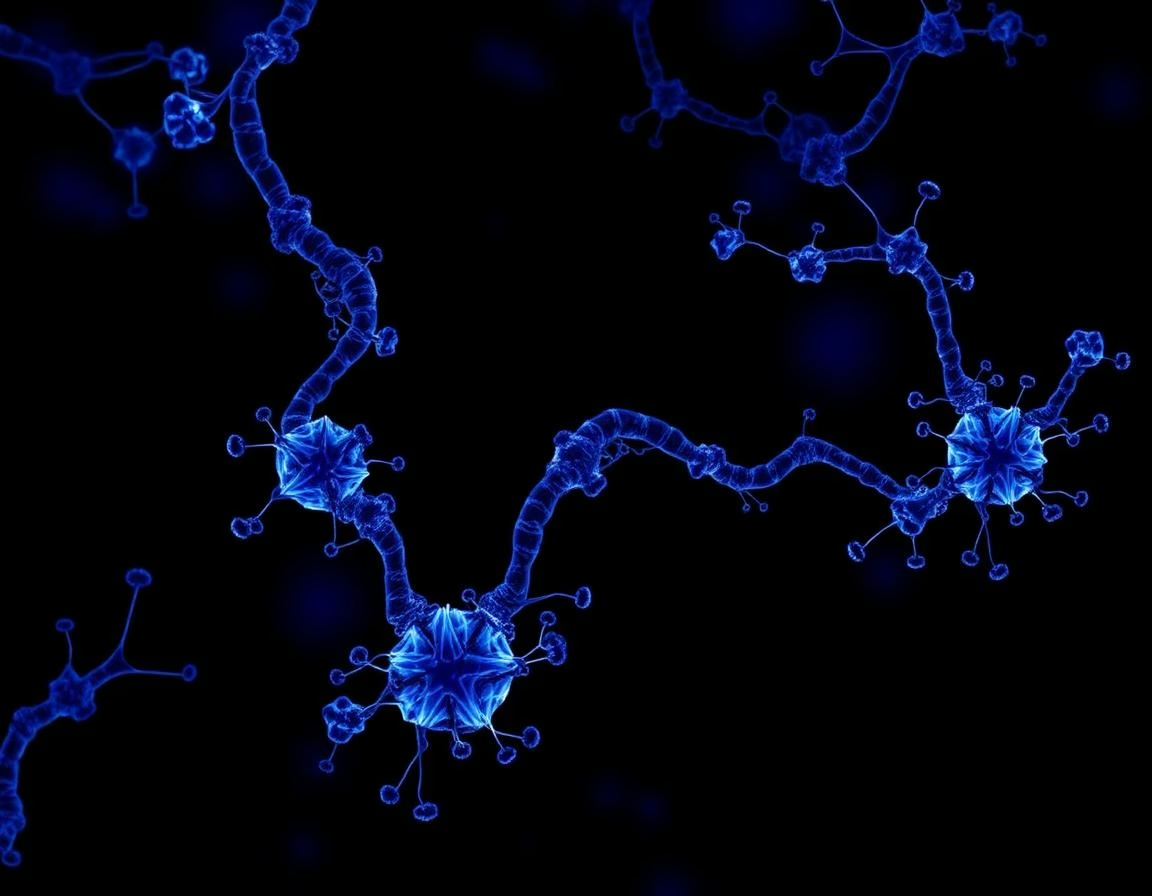
ADCs function by leveraging the exquisite targeting ability of monoclonal antibodies to deliver cytotoxic payloads specifically to cancer cells. The antibody component of an ADC binds to specific antigens on the surface of cancer cells, facilitating the internalization of the attached cytotoxic drug. Once inside the cancer cell, the chemotherapy agent is released, inducing cell death and effectively destroying the malignant target. This precise mechanism of action sets ADCs apart from traditional chemotherapy, which can lead to widespread side effects due to its non-specific nature.
One of the most notable examples of ADCs making waves in breast cancer treatment is ado-trastuzumab emtansine (T-DM1), approved for HER2-positive metastatic breast cancer. T-DM1 combines trastuzumab, a monoclonal antibody targeting HER2 receptors, with the cytotoxic agent DM1. This ADC has demonstrated significant efficacy in clinical trials, showing improved progression-free survival and fewer adverse effects compared to traditional chemotherapy regimens. The success of T-DM1 highlights the transformative potential of ADCs in personalized medicine approaches for breast cancer patients.
Beyond T-DM1, ongoing research is expanding the landscape of ADCs in breast cancer therapy. Novel ADCs are being developed to target a variety of antigens expressed on breast cancer cells, allowing for tailored treatment strategies based on the tumor’s molecular profile. By honing in on specific markers unique to cancer cells, ADCs offer a level of precision that holds great promise for enhancing treatment outcomes while minimizing systemic toxicity.
The development of ADCs involves a meticulous process of bioconjugation, where the antibody and cytotoxic payload are precisely linked to ensure optimal drug delivery and efficacy. Bioengineers play a critical role in designing and optimizing these conjugation techniques, balancing factors such as drug-antibody ratio, stability, and release kinetics to create potent and selective ADCs. Through innovative bioengineering strategies, researchers are continuously refining the design and function of ADCs to maximize their therapeutic potential in breast cancer and other malignancies.
In addition to their direct cytotoxic effects, ADCs have shown promise in overcoming drug resistance mechanisms commonly encountered in breast cancer treatment. By delivering potent chemotherapy directly into cancer cells, ADCs can circumvent resistance pathways that may render traditional chemotherapeutic agents ineffective. This ability to bypass resistance mechanisms represents a significant advantage of ADCs, potentially extending treatment options for patients with refractory or recurrent breast cancer.
The journey of ADCs in breast cancer treatment exemplifies the power of interdisciplinary collaboration between bioengineering, oncology, and pharmacology. By uniting expertise from diverse fields, researchers can innovate novel treatment modalities that address the complex challenges of cancer therapy. Through a synergistic approach that leverages cutting-edge technologies and scientific knowledge, the development of ADCs continues to push the boundaries of precision medicine, offering renewed hope to patients facing the daunting diagnosis of breast cancer.
In conclusion, the rise of antibody-drug conjugates represents a transformative chapter in the management of breast cancer, ushering in a new era of targeted and effective therapies. With their precise targeting capabilities, potent cytotoxic payload, and potential to overcome drug resistance, ADCs hold immense promise in improving treatment outcomes and quality of life for breast cancer patients. As research advances and new ADCs enter clinical practice, the horizon of breast cancer treatment is expanding, offering hope and healing to those impacted by this pervasive disease.
Takeaways:
– Antibody-drug conjugates combine the specificity of monoclonal antibodies with the cytotoxic power of chemotherapy drugs, offering a targeted approach to breast cancer treatment.
– ADCs like T-DM1 have demonstrated significant efficacy in HER2-positive metastatic breast cancer, showcasing the potential of this innovative therapy in personalized medicine.
– The interdisciplinary collaboration between bioengineering, oncology, and pharmacology is driving the development of novel ADCs, expanding treatment options for breast cancer patients.
Read more on <a href=”https://Breast cancer remains a formidable opponent in the realm of oncology, affecting millions of individuals worldwide. While traditional treatments like chemotherapy and surgery have been pivotal in managing the disease, the quest for more targeted and effective therapies continues. Enter antibody-drug conjugates (ADCs), a revolutionary class of bioengineered drugs that combine the specificity of monoclonal antibodies with the cytotoxic power of chemotherapy drugs. This innovative approach holds the promise of delivering potent treatment directly to cancer cells while minimizing damage to healthy tissue, offering new hope in the battle against breast cancer.
ADCs function by leveraging the exquisite targeting ability of monoclonal antibodies to deliver cytotoxic payloads specifically to cancer cells. The antibody component of an ADC binds to specific antigens on the surface of cancer cells, facilitating the internalization of the attached cytotoxic drug. Once inside the cancer cell, the chemotherapy agent is released, inducing cell death and effectively destroying the malignant target. This precise mechanism of action sets ADCs apart from traditional chemotherapy, which can lead to widespread side effects due to its non-specific nature.
One of the most notable examples of ADCs making waves in breast cancer treatment is ado-trastuzumab emtansine (T-DM1), approved for HER2-positive metastatic breast cancer. T-DM1 combines trastuzumab, a monoclonal antibody targeting HER2 receptors, with the cytotoxic agent DM1. This ADC has demonstrated significant efficacy in clinical trials, showing improved progression-free survival and fewer adverse effects compared to traditional chemotherapy regimens. The success of T-DM1 highlights the transformative potential of ADCs in personalized medicine approaches for breast cancer patients.
Beyond T-DM1, ongoing research is expanding the landscape of ADCs in breast cancer therapy. Novel ADCs are being developed to target a variety of antigens expressed on breast cancer cells, allowing for tailored treatment strategies based on the tumor’s molecular profile. By honing in on specific markers unique to cancer cells, ADCs offer a level of precision that holds great promise for enhancing treatment outcomes while minimizing systemic toxicity.
The development of ADCs involves a meticulous process of bioconjugation, where the antibody and cytotoxic payload are precisely linked to ensure optimal drug delivery and efficacy. Bioengineers play a critical role in designing and optimizing these conjugation techniques, balancing factors such as drug-antibody ratio, stability, and release kinetics to create potent and selective ADCs. Through innovative bioengineering strategies, researchers are continuously refining the design and function of ADCs to maximize their therapeutic potential in breast cancer and other malignancies.
In addition to their direct cytotoxic effects, ADCs have shown promise in overcoming drug resistance mechanisms commonly encountered in breast cancer treatment. By delivering potent chemotherapy directly into cancer cells, ADCs can circumvent resistance pathways that may render traditional chemotherapeutic agents ineffective. This ability to bypass resistance mechanisms represents a significant advantage of ADCs, potentially extending treatment options for patients with refractory or recurrent breast cancer.
The journey of ADCs in breast cancer treatment exemplifies the power of interdisciplinary collaboration between bioengineering, oncology, and pharmacology. By uniting expertise from diverse fields, researchers can innovate novel treatment modalities that address the complex challenges of cancer therapy. Through a synergistic approach that leverages cutting-edge technologies and scientific knowledge, the development of ADCs continues to push the boundaries of precision medicine, offering renewed hope to patients facing the daunting diagnosis of breast cancer.
In conclusion, the rise of antibody-drug conjugates represents a transformative chapter in the management of breast cancer, ushering in a new era of targeted and effective therapies. With their precise targeting capabilities, potent cytotoxic payload, and potential to overcome drug resistance, ADCs hold immense promise in improving treatment outcomes and quality of life for breast cancer patients. As research advances and new ADCs enter clinical practice, the horizon of breast cancer treatment is expanding, offering hope and healing to those impacted by this pervasive disease.
Takeaways:
– Antibody-drug conjugates combine the specificity of monoclonal antibodies with the cytotoxic power of chemotherapy drugs, offering a targeted approach to breast cancer treatment.
– ADCs like T-DM1 have demonstrated significant efficacy in HER2-positive metastatic breast cancer, showcasing the potential of this innovative therapy in personalized medicine.
– The interdisciplinary collaboration between bioengineering, oncology, and pharmacology is driving the development of novel ADCs, expanding treatment options for breast cancer patients.” target=”_blank” rel=”noopener”>Breast cancer remains a formidable opponent in the realm of oncology, affecting millions of individuals worldwide. While traditional treatments like chemotherapy and surgery have been pivotal in managing the disease, the quest for more targeted and effective therapies continues. Enter antibody-drug conjugates (ADCs), a revolutionary class of bioengineered drugs that combine the specificity of monoclonal antibodies with the cytotoxic power of chemotherapy drugs. This innovative approach holds the promise of delivering potent treatment directly to cancer cells while minimizing damage to healthy tissue, offering new hope in the battle against breast cancer.ADCs function by leveraging the exquisite targeting ability of monoclonal antibodies to deliver cytotoxic payloads specifically to cancer cells. The antibody component of an ADC binds to specific antigens on the surface of cancer cells, facilitating the internalization of the attached cytotoxic drug. Once inside the cancer cell, the chemotherapy agent is released, inducing cell death and effectively destroying the malignant target. This precise mechanism of action sets ADCs apart from traditional chemotherapy, which can lead to widespread side effects due to its non-specific nature.One of the most notable examples of ADCs making waves in breast cancer treatment is ado-trastuzumab emtansine (T-DM1), approved for HER2-positive metastatic breast cancer. T-DM1 combines trastuzumab, a monoclonal antibody targeting HER2 receptors, with the cytotoxic agent DM1. This ADC has demonstrated significant efficacy in clinical trials, showing improved progression-free survival and fewer adverse effects compared to traditional chemotherapy regimens. The success of T-DM1 highlights the transformative potential of ADCs in personalized medicine approaches for breast cancer patients.Beyond T-DM1, ongoing research is expanding the landscape of ADCs in breast cancer therapy. Novel ADCs are being developed to target a variety of antigens expressed on breast cancer cells, allowing for tailored treatment strategies based on the tumor’s molecular profile. By honing in on specific markers unique to cancer cells, ADCs offer a level of precision that holds great promise for enhancing treatment outcomes while minimizing systemic toxicity.The development of ADCs involves a meticulous process of bioconjugation, where the antibody and cytotoxic payload are precisely linked to ensure optimal drug delivery and efficacy. Bioengineers play a critical role in designing and optimizing these conjugation techniques, balancing factors such as drug-antibody ratio, stability, and release kinetics to create potent and selective ADCs. Through innovative bioengineering strategies, researchers are continuously refining the design and function of ADCs to maximize their therapeutic potential in breast cancer and other malignancies.In addition to their direct cytotoxic effects, ADCs have shown promise in overcoming drug resistance mechanisms commonly encountered in breast cancer treatment. By delivering potent chemotherapy directly into cancer cells, ADCs can circumvent resistance pathways that may render traditional chemotherapeutic agents ineffective. This ability to bypass resistance mechanisms represents a significant advantage of ADCs, potentially extending treatment options for patients with refractory or recurrent breast cancer.The journey of ADCs in breast cancer treatment exemplifies the power of interdisciplinary collaboration between bioengineering, oncology, and pharmacology. By uniting expertise from diverse fields, researchers can innovate novel treatment modalities that address the complex challenges of cancer therapy. Through a synergistic approach that leverages cutting-edge technologies and scientific knowledge, the development of ADCs continues to push the boundaries of precision medicine, offering renewed hope to patients facing the daunting diagnosis of breast cancer.In conclusion, the rise of antibody-drug conjugates represents a transformative chapter in the management of breast cancer, ushering in a new era of targeted and effective therapies. With their precise targeting capabilities, potent cytotoxic payload, and potential to overcome drug resistance, ADCs hold immense promise in improving treatment outcomes and quality of life for breast cancer patients. As research advances and new ADCs enter clinical practice, the horizon of breast cancer treatment is expanding, offering hope and healing to those impacted by this pervasive disease.Takeaways:- Antibody-drug conjugates combine the specificity of monoclonal antibodies with the cytotoxic power of chemotherapy drugs, offering a targeted approach to breast cancer treatment.- ADCs like T-DM1 have demonstrated significant efficacy in HER2-positive metastatic breast cancer, showcasing the potential of this innovative therapy in personalized medicine.- The interdisciplinary collaboration between bioengineering, oncology, and pharmacology is driving the development of novel ADCs, expanding treatment options for breast cancer patients.



