
In the realm of targeted drug delivery, the quest for efficient and precise homing peptides has been a focal point of research. The amalgamation of in vivo phage display and microdialysis unveils a novel approach to unravel the hidden potential of peptides in homing to specific organs or tissues. Unlike traditional methods, this technique is not confined by preconceived notions of target molecules. Instead, it delves into the uncharted territory of vascular homing peptides that possess the unique ability to penetrate tissues, reaching the core of therapeutic action.
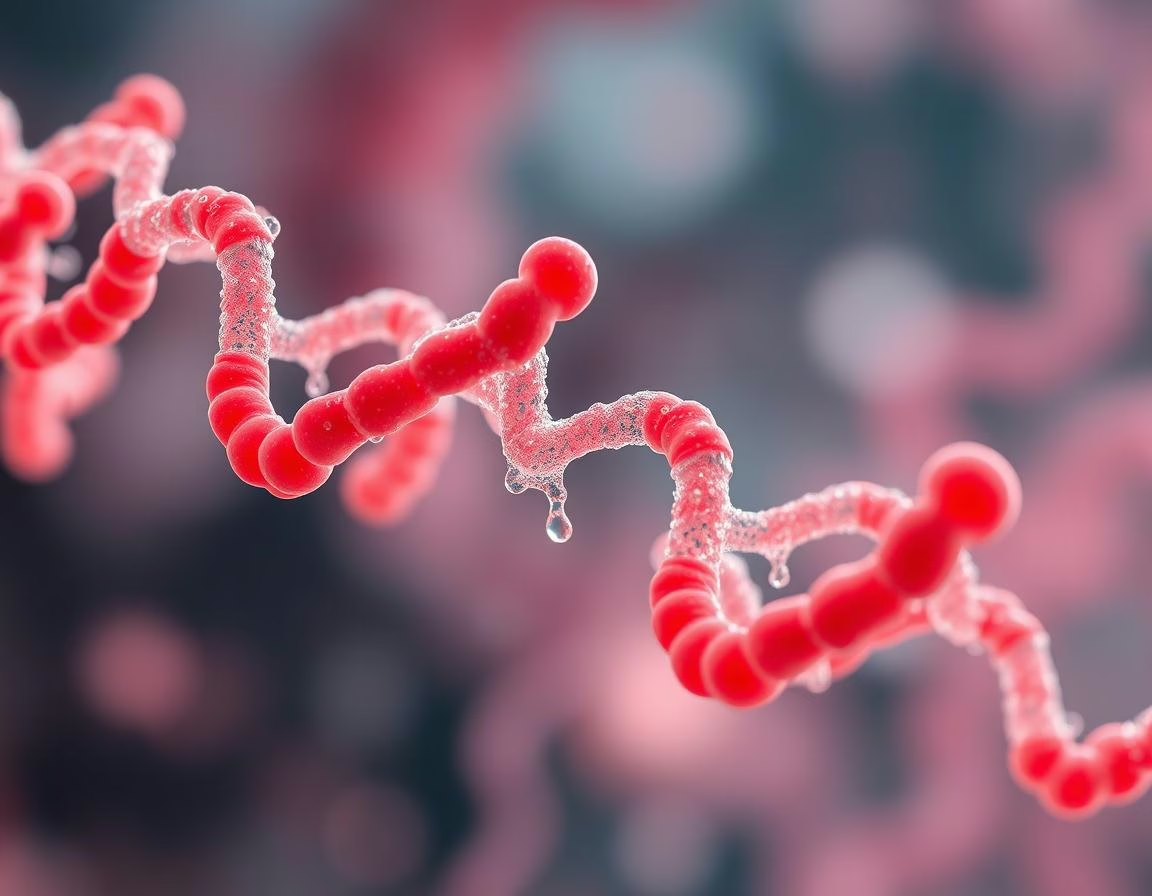
Phage display, a powerful tool in molecular biology, has been harnessed for in vivo exploration, paving the way for the identification of peptides that exhibit organ-specific homing characteristics. However, the conventional in vivo biopanning methods often fall short in selecting peptides that not only home to specific vascular sites but also possess the crucial capability to penetrate tissues effectively. In this innovative approach, the synergy between in vivo phage display and microdialysis offers a paradigm shift by enabling the selection of peptides that not only home to target sites but also facilitate extravasation and deep tissue penetration.
The initial validation of this method in skin wound models showcased its efficacy in segregating peptides with homing abilities from those with enhanced tissue-penetrating properties. Through the screening of a diverse peptide library, this integrated approach identified peptides capable of homing to extravascular granulation tissue in vascularized and diabetic wounds, as well as crossing the formidable blood-retina barrier in retinopathy. This groundbreaking work exemplifies the potential of in vivo phage display coupled with microdialysis as a potent strategy for unearthing vascular homing peptides with superior tissue penetration capabilities, offering new vistas in targeted drug delivery.
The integration of microdialysis, a technique for sampling extracellular fluid in tissues, with in vivo phage display amplifies the precision of peptide selection by capturing the intricate dynamics of peptide extravasation and tissue penetration. By leveraging high-throughput sequencing, this approach not only identifies peptides that home to specific vascular sites but also illuminates their journey into the depths of tissues where therapeutic targets reside. This dual functionality of homing and tissue penetration opens avenues for developing targeted therapeutics that can navigate the complex biological barriers within the body.
The novel peptides uncovered through this innovative screening approach, such as CDD, CPK, and CYH, exhibit remarkable capabilities in penetrating cell membranes and endothelial cells. These peptides not only home to skin wounds but also exhibit a propensity to localize in granulation tissue, showcasing their dual functionality of vascular homing and tissue penetration. Furthermore, the selectivity of these peptides in targeting specific pathological conditions, like diabetic wounds and retinopathy, underscores their potential in tailored drug delivery strategies.
The meticulous mapping of peptide localization in skin wounds and their penetration through the blood-retina barrier underscores the precision and efficacy of this integrated approach. Unlike conventional methods, which may lack the specificity required for targeted drug delivery, the combination of in vivo phage display and microdialysis offers a nuanced understanding of peptide behavior in vivo. This in-depth comprehension of peptide dynamics within biological tissues holds immense promise for designing next-generation therapeutics with enhanced targeting precision and therapeutic efficacy.
The journey of these microdialysis-captured peptides unveils a narrative of precision medicine, where the intricate interplay between vascular homing and tissue penetration dictates the success of targeted drug delivery. The ability of these peptides to selectively home to pathological sites and navigate tissue barriers signifies a paradigm shift in the field of drug delivery, moving towards personalized and effective treatment modalities. By unraveling the complexities of peptide behavior in vivo, researchers can now tailor drug delivery systems that mimic the natural homing and penetration mechanisms of these peptides, enhancing therapeutic outcomes and minimizing off-target effects.
In conclusion, the fusion of in vivo phage display and microdialysis heralds a new era in the discovery of vascular homing peptides with tissue-penetrating capabilities. By unraveling the intricate dance of peptides within biological tissues, this integrated approach offers a roadmap for developing targeted drug delivery systems that can navigate the complex terrain of the human body with precision and efficacy. The implications of this research extend far beyond targeted drug delivery, paving the way for personalized medicine approaches that harness the innate abilities of peptides to seek out and penetrate diseased tissues. As we delve deeper into the realm of peptide therapeutics, the synergy between in vivo phage display and microdialysis holds the key to unlocking the full potential of homing peptides in revolutionizing the landscape of drug delivery and precision medicine.
- The synergy of in vivo phage display and microdialysis offers a novel approach to discovering vascular homing peptides with tissue-penetrating capabilities.
- The integration of high-throughput sequencing enhances the precision of peptide selection, enabling the identification of peptides tailored for targeted drug delivery.
- The selective homing and tissue-penetrating abilities of novel peptides pave the way for personalized drug delivery strategies with enhanced therapeutic efficacy.
- Understanding the dynamics of peptide behavior in vivo is crucial for developing next-generation targeted drug delivery systems.
- The paradigm shift towards precision medicine in drug delivery is propelled by the nuanced understanding of vascular homing and tissue penetration mechanisms.
Read more on pubmed.ncbi.nlm.nih.gov



