
Protein-protein interactions (PPIs) play a pivotal role in the intricate web of biological systems. They are essential for maintaining structural integrity and enabling cellular functions. While robust interactions provide stability, weaker interactions introduce flexibility, allowing cells to adapt and respond to environmental changes.
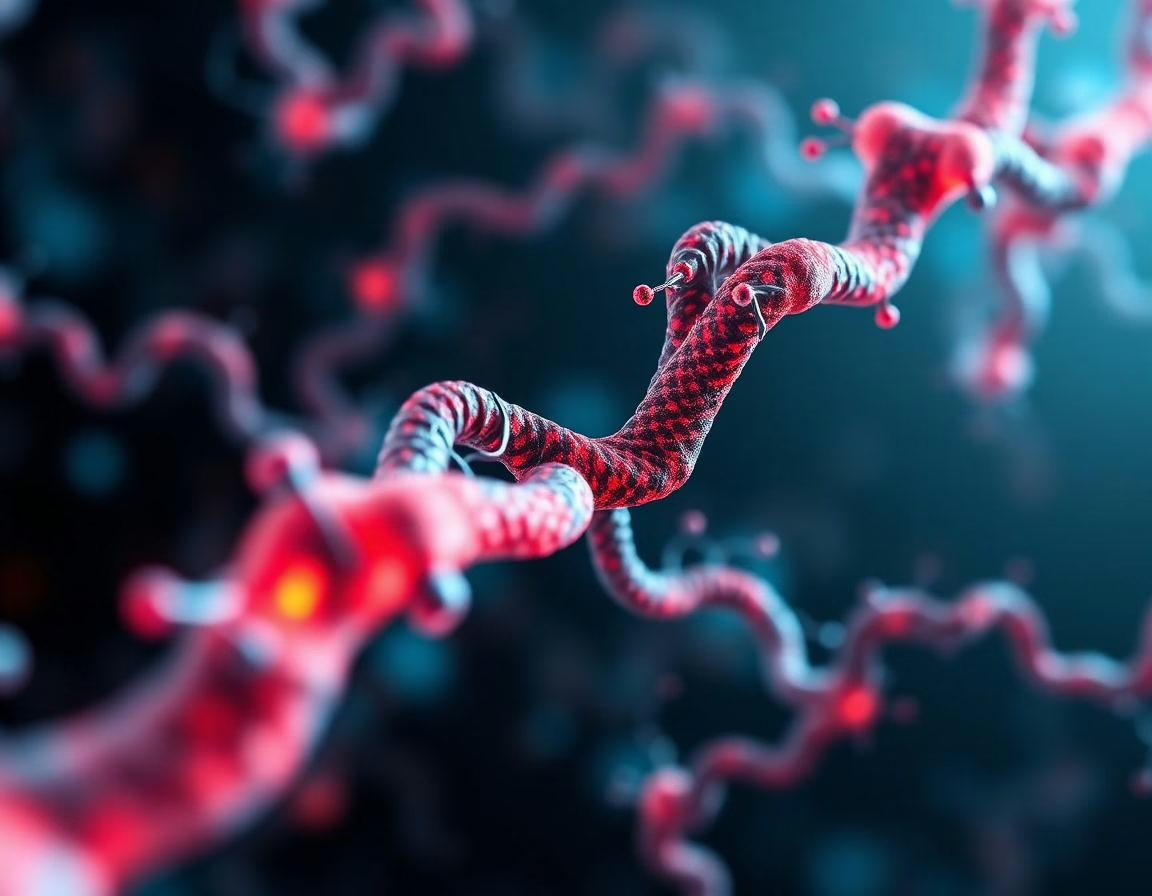
A profound understanding of PPIs is indispensable for advancing cell biology research and the development of novel therapeutics.
Classification of Protein-Protein Interactions
PPIs can be categorized into three primary types based on their characteristics, such as stability and the nature of the proteins involved. Interactions are further divided into obligatory and non-obligate categories. Obligatory interactions occur when proteins cannot maintain their stability in vivo without forming a specific complex. In contrast, non-obligate interactions can exist independently of one another.
Within the non-obligate category, interactions can be either permanent or transient. Permanent interactions are stable complexes, while transient interactions can vary in strength and duration. In literature, the terms “obligate” and “permanent” are often used interchangeably due to their close association.
The Role of Transient Interactions
Transient PPIs are crucial for regulating various cellular functions. Much of the current research focuses on these interactions because they underpin dynamic processes such as signal transduction and metabolism. These weaker, transient interactions are often influenced by modifications like phosphorylation or conformational changes, contributing to the formation of multi-enzyme complexes and affecting cellular morphology and movement.
In contrast, strong PPIs result in stable multi-subunit complexes characterized by low dissociation constants, typically in the nanomolar range. A prime example is RNA polymerase, a well-characterized complex with substantial interactions among its subunits. Similarly, the balance between the anti-apoptotic protein Bcl-2 and the pro-apoptotic protein Bax is critical for cell survival, and disruption of this equilibrium can lead to cancer progression.
Targeting Protein-Protein Interactions in Drug Development
PPIs are increasingly recognized as valuable therapeutic targets in drug discovery. Many drugs aim to either disrupt or enhance specific protein interactions, yielding therapeutic benefits for conditions such as cancer. Numerous interaction modulators, including small molecules, peptides, and monoclonal antibodies, are developed through various screening and optimization strategies.
Monoclonal antibodies targeting the PD-1/PD-L1 axis have revolutionized cancer immunotherapy by inhibiting this immune checkpoint, thereby enhancing antitumor immune responses. Additionally, Nutlin-3, a small molecule that inhibits the interaction between MDM2 and p53, prevents p53 degradation, allowing it to exert its tumor-suppressive effects. This compound is currently undergoing clinical trials, showcasing significant potential in cancer therapy.
Analyzing Protein-Protein Interactions
The analysis of PPIs can be approached using both endpoint and real-time methods. Endpoint assays provide information about interactions at a single time point, making them useful for detecting the presence or absence of interactions. Real-time assays, however, offer a more comprehensive understanding by capturing dynamic interactions and providing detailed kinetic data.
The choice of method is influenced by several factors, including the size of the target proteins, sample availability, and throughput requirements. It is essential to consider the type of interaction being studied, as weak or transient interactions might be overlooked in certain protocols.
For example, an ELISA can yield straightforward yes/no results regarding an interaction. However, to gain deeper insights into dynamic interactions, researchers often resort to label-free, real-time methodologies.
Innovative Solutions for PPI Research
Advancements in technology are facilitating the exploration of PPIs, enabling researchers to develop breakthrough therapeutics. Companies are innovating lab filtration, cell, and protein analysis solutions that enhance the efficiency and accuracy of PPI studies.
These innovations support biotherapeutic discovery and development, ensuring that researchers can confidently navigate the complexities of protein interactions in biological systems.
Key Takeaways
- Protein-protein interactions are essential for cellular function and stability.
-
Interactions can be classified as obligatory or non-obligate, with non-obligate interactions further categorized as permanent or transient.
-
Transient interactions are crucial for dynamic cellular processes and signal transduction.
-
Targeting PPIs in drug development offers promising therapeutic avenues, particularly in cancer treatment.
-
Both endpoint and real-time methods are available for analyzing PPIs, with the choice depending on research needs.
In conclusion, protein-protein interactions are fundamental to the understanding of cellular processes and the development of new therapies. By leveraging advancements in research methodologies and technologies, scientists can unlock the potential of PPIs to address pressing health challenges. The future of cell biology research lies in the intricate dance of proteins, where each interaction holds the key to new discoveries.
Read more → www.news-medical.net



