
The biotech landscape in New York City is currently experiencing significant challenges, particularly in Harlem. While there are signs of a recovering life sciences market in other parts of the city and the nation, Harlem has been left behind, grappling with high vacancy rates and rising uncertainty.
Increasing Activity in Other Areas
Throughout the United States, life sciences real estate activity is beginning to rebound after years of stagnation. However, this growth has yet to impact the New York City market meaningfully. Landlords have initiated a few new leasing agreements, but the overall demand for lab space in the city remains low, particularly in Harlem.
As of the first quarter, New York City reported the highest availability rate for life sciences buildings in the country at 37%. This is compounded by high rent prices, with asking rates averaging $99.17 per square foot—significantly higher than Boston’s $76.72 per square foot, the largest life sciences real estate market.
Harlem’s Struggle with Vacancies
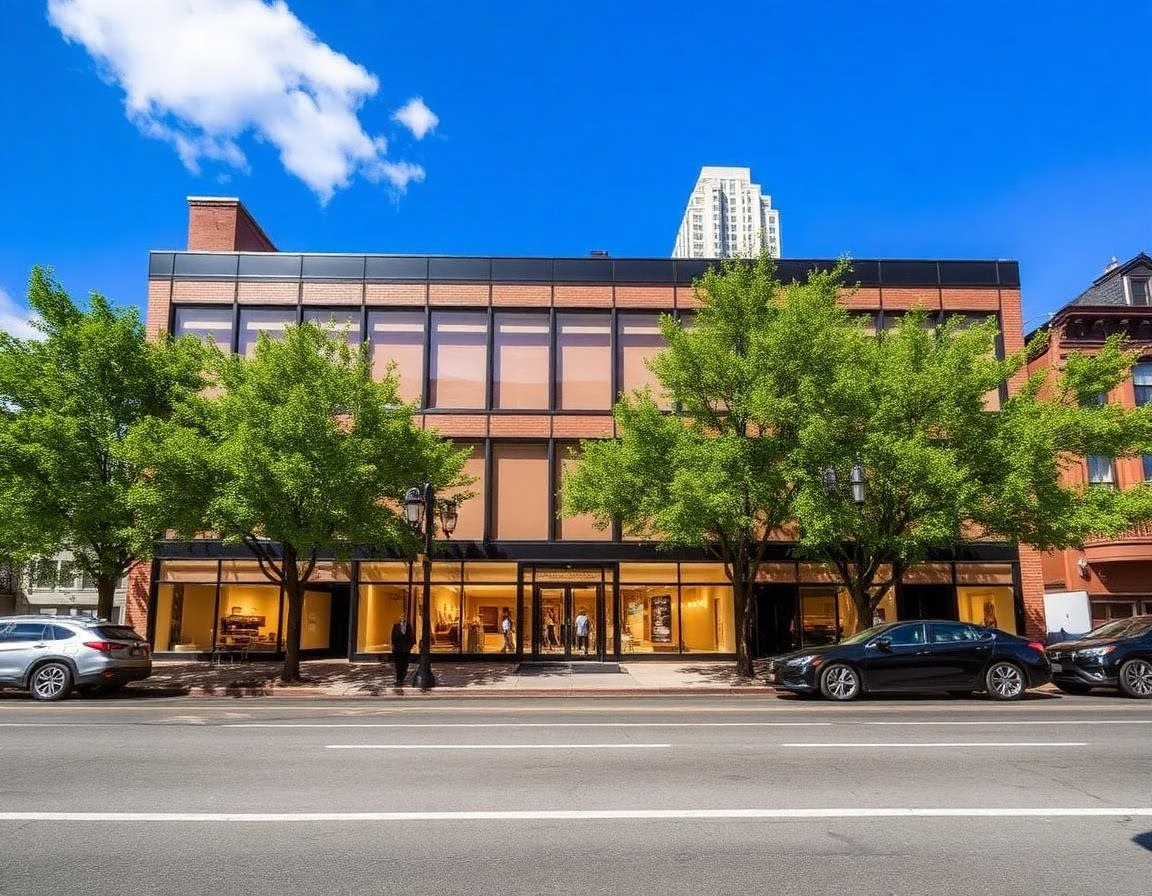
In stark contrast to the activity seen in other neighborhoods, Harlem’s recently constructed lab spaces are largely unoccupied. Developers put considerable resources into creating lab space post-pandemic, but the anticipated demand has not materialized. For instance, the Taystee Lab Building, a $700 million project, has remained empty since its opening in 2022 and is now facing foreclosure.
Another notable project, The Labs On 121, delivered in 2024, is also struggling with vacancies. Compounding these issues are scandals surrounding key figures involved in its development, which have likely hindered leasing efforts.
Loss of Life Sciences Companies
The situation has worsened with the departure of life sciences firms from Harlem. Volastra Therapeutics recently announced plans to vacate its lab space in the Mink Building, relocating to a larger facility in Kips Bay. This move is emblematic of the broader trend affecting the Harlem biotech sector, where optimism for growth has faded.
While some developers maintain that Harlem’s commercial real estate market is not struggling more than other areas of the city, the lack of successful tenant placement tells a different story. Various factors contribute to this stagnation, including the ongoing volatility in the economy and the rising cost of doing business.
The Impact of Federal Funding Cuts
Another significant barrier to Harlem’s life sciences potential is the reduction in federal research funding. The National Institutes of Health’s grants dropped from $44.9 billion to $35.3 billion in fiscal year 2025, disrupting research initiatives and limiting the potential for startups to thrive. Many of these startups depend on federal grants for growth, and the absence of this funding has stunted their development.
Institutions like Columbia University have been pivotal in attracting biotech firms to the area, but the cuts in funding leave a gap that makes Harlem less attractive to potential tenants.
Transportation and Ecosystem Challenges
The unique challenges facing Harlem’s biotech sector are also tied to its geographical and infrastructural disadvantages. Compared to other neighborhoods like Kips Bay, Harlem lacks the same level of public transit access and vibrant commercial environment, making it less appealing for biotech employees who may commute from other boroughs or New Jersey.
The Future of Harlem’s Biotech Market
Despite these challenges, some stakeholders remain hopeful. Venture capital funding in the U.S. totaled $29.8 billion last year, indicating an interest in the life sciences sector. However, the focus remains on established companies rather than early-stage startups, as firms prioritize maintaining lean operations to attract future investments.
Some property owners are taking steps to adapt to the changing market by offloading struggling assets. For example, Bill Ackman recently acquired a lab building that had been grappling with high vacancy rates, anticipating that it could serve a brain research institute.
Conclusion
Harlem’s biotech sector faces a confluence of challenges, from high vacancy rates and federal funding cuts to infrastructure issues that hinder growth. While there are lessons to be learned from successful hubs elsewhere, the future of Harlem’s life sciences market will depend on addressing these critical barriers and fostering a supportive ecosystem for innovation and investment.
Key Takeaways:
- Harlem’s biotech market struggles with high vacancy rates and lacks recent tenant activity.
- Federal funding cuts significantly impact the growth potential of startups in the area.
- Transportation and local infrastructure issues contribute to Harlem’s lower appeal for biotech companies.
- There is ongoing interest and investment in biotech, but focus is currently on more mature companies.
Read more → www.bisnow.com



