
Recent advancements in biotechnology have led to promising developments in the realm of spinal cord injury treatment. Researchers at Northwestern University have made significant strides by utilizing lab-grown human spinal cord organoids to explore the mechanisms of healing and regeneration. This innovative approach offers new insights into spinal injury research and paves the way for potential therapies in human medicine.
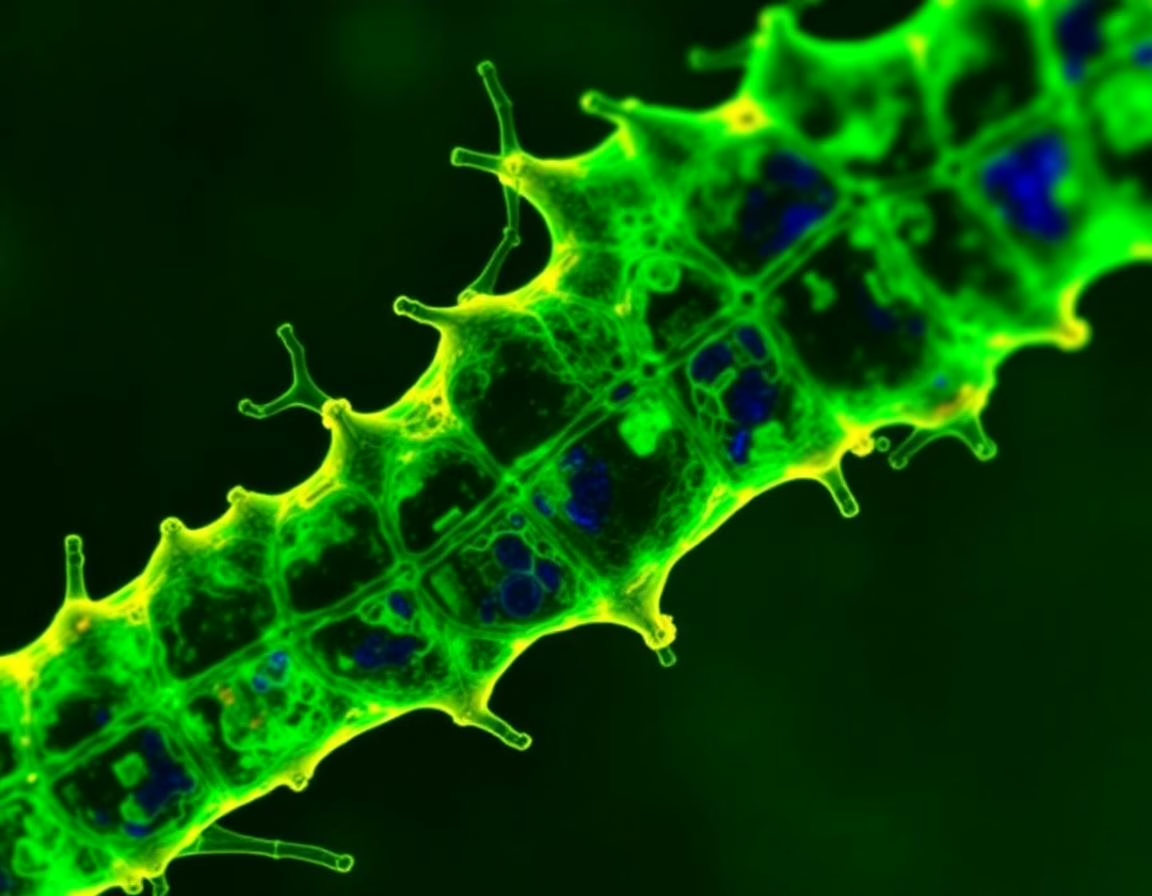
Understanding Spinal Cord Organoids
The team at Northwestern University has been studying miniature, lab-created versions of the human spinal cord, known as organoids. These three-dimensional tissues are derived from human stem cells and replicate essential features of the spinal cord, including various cell types such as neurons, astrocytes, and microglia. The organoids serve as a powerful model for investigating spinal cord injuries and testing potential therapeutic interventions.
Molecular Dynamics in Healing
One of the most intriguing findings from this study is the wave-like molecular behavior observed within the organoids. Researchers employed advanced imaging techniques to track the movement of molecules as the organoids developed and healed. This coordinated movement, likened to a “dance,” reflects complex biochemical signaling processes that guide cell differentiation and tissue organization during spinal cord development.
Promising Therapeutic Interventions
Dr. Samuel I. Stupp, who spearheaded the research, emphasized the potential of organoids for testing new therapies directly on human tissues. The team created two distinct injury models within the organoids—laceration and compressive contusion—both of which induced significant cellular damage and inflammation. They then applied a peptide-based therapy known as “dancing molecules,” previously shown to reverse paralysis in animal studies.
The results were encouraging. Following treatment, the organoids exhibited marked healing, characterized by reduced scar tissue and notable nerve growth. These observations suggest that the therapeutic approach could have real-world applications for human spinal cord repair.
The Role of Microglia in Regeneration
A critical advancement in this research was the incorporation of microglia, the immune cells responsible for responding to injury in the nervous system. By including these cells in the spinal cord organoids, researchers were able to create a more accurate representation of human tissue responses. This enhancement allows for a deeper understanding of how the spinal cord reacts to injury and the subsequent healing processes.
Validation of Therapy in Organoid Models
The study builds on previous animal research, which demonstrated that a single injection of the therapeutic agent, administered shortly after injury, enabled mice to regain mobility within weeks. In the organoid experiments, the therapy not only alleviated inflammation but also promoted organized neuronal regrowth and reduced glial scarring, further validating its potential effectiveness in human applications.
Future Directions in Spinal Injury Research
The implications of this research extend beyond the laboratory. By developing organoid models that closely mimic human spinal cord injuries, researchers can explore new therapeutic strategies with greater precision. The ability to test therapies on human-like tissues represents a significant leap forward in regenerative medicine, potentially accelerating the path to effective treatments for spinal cord injuries.
Conclusion
This breakthrough in lab-grown spinal cord tissue represents a pivotal moment in the quest for effective treatments for paralysis. With the ability to model human injury and test innovative therapies, researchers are poised to make significant advancements in spinal cord repair. As these studies progress, they hold the promise of transforming the therapeutic landscape for patients suffering from spinal injuries.
- Key Takeaways:
- Lab-grown spinal cord organoids mimic human tissue and offer insights into healing.
- Coordinated molecular movements observed in organoids enhance understanding of spinal development.
- Peptide-based therapies demonstrate potential in promoting nerve growth and reducing scar tissue.
- Inclusion of microglia in organoids creates a realistic model for studying injury responses.
- Research signifies a step closer to effective human therapies for spinal cord injuries.
Read more → www.techjuice.pk



